

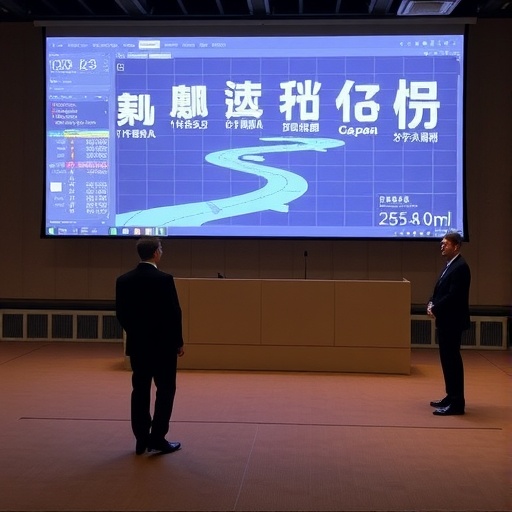
In a groundbreaking development for open science initiatives, Japan has launched the Japan Open Science Monitor, a sophisticated platform designed to track and analyze the country’s progress in open science practices. This venture adopts methodologies from the internationally acclaimed French Open Science Monitor, ensuring consistency and comparability with global standards. As the worldwide momentum towards open science accelerates, this platform represents a critical tool for enhancing transparency, policy-making, and collaboration within the scientific community.
Open science monitoring—the systematic observation and evaluation of open science activities—has become an imperative in the global landscape. It enables stakeholders to assess how widely research outputs such as publications, data, and software are shared openly. Japan’s new monitor addresses pressing challenges inherent in conventional monitoring methodologies, which have often been criticized for obscuring their calculation methods and lack of data transparency. By harnessing open-source code and openly accessible datasets, the Japan Open Science Monitor guarantees reproducibility and objectivity in reporting, setting a new benchmark for monitoring platforms.
The development leverages OpenAlex, a comprehensive open bibliographic database curated by the United States-based nonprofit OurResearch, to derive indicators of open access specific to Japanese scholarly publications. OpenAlex’s expansive coverage of institutional information and research outputs allows for an extensive and reliable assessment of open access trends. Utilizing such a global database facilitates direct comparison between Japan’s progress and that of other nations, promoting an evidence-based dialogue on open science policies across borders.
At its core, this monitor is inspired by the French Open Science Monitor, a pioneering initiative developed by France’s Ministry of Higher Education, Research, and Space (MESRE). The French model exemplifies transparency by making its source code, user interface, and methodology open access under clearly defined licenses. This ensures that users worldwide can adapt and reuse the platform’s tools, fostering international collaboration. Japan’s adaptation of this methodology reinforces not only technical harmonization but also a shared commitment to open science principles on a global scale.
The platform’s initial focus is on open access indicators pertaining to research publications. These indicators provide quantifiable metrics that reflect the extent to which Japanese research articles are available openly. This transparency supports policymakers, academic institutions, and publishers in understanding current dissemination practices and identifying areas needing improvement. The precise and verifiable nature of the data also lends credibility to such assessments, which are essential for crafting effective incentives for researchers to embrace open science.
Looking ahead, the Japan Open Science Monitor plans to broaden its scope beyond publications, incorporating metrics related to research data and scientific software. This gradual expansion aligns with evolving international trends in open science, recognizing that sharing comprehensive research outputs is pivotal to accelerating scientific discovery. The inclusion of diverse data types will present technical challenges but promises a more holistic view of the openness of Japan’s research ecosystem.
A particularly innovative element in the monitor’s future development is the integration of Japan’s Institutional Repositories Database (IRDB). Unlike OpenAlex, which currently lacks exhaustive coverage of Japan’s unique repository landscape, the IRDB aggregates metadata from academic institutions nationwide. Incorporating this additional data source will enhance the accuracy of open access assessments and fill gaps in the international bibliographic datasets, tailoring the monitoring to Japan’s research environment.
The societal implications of this initiative are substantial. By enabling the open sharing of its methodologies and data, Japan fosters transparent discourse on open science advancements. This openness not only builds trust within the scientific community but also encourages collaborative efforts in tackling challenges related to data sharing, reproducibility, and research accessibility. Furthermore, by adopting a globally recognized framework, Japan positions itself as an active contributor to the international open science movement, enhancing the visibility and impact of its research outputs.
Statements from key figures involved underscore the collaborative spirit and transformative potential of the Japan Open Science Monitor. Jean-Luc Moullet, Director General for Research and Innovation at France’s MESRE, highlighted the mutual benefits of adopting open science principles in monitor development, emphasizing strengthened bilateral cooperation and a unified approach to tracking open science. His endorsement signals robust international support for Japan’s efforts.
Mikiko Tanifuji, Director of NII’s Research Center for Open Science and Data Platform, stressed the importance of objective, transparent measurement of open science progress. She expressed strong confidence that this platform would support evidence-based research policies while evolving uniquely with the Japanese academic culture. Her vision includes expanding beyond publications to cover data and software, thus creating an all-encompassing infrastructure for open science monitoring.
The project was institutionally supported by the Ministry of Education, Culture, Sports, Science and Technology (MEXT) through its Open Access Acceleration Project, underscoring governmental commitment to advancing open access. This backing is crucial for sustaining the technical development, fostering adoption, and ensuring the platform’s alignment with national research priorities.
Japan’s National Institute of Informatics (NII) serves as the project lead, embodying its mission to create future value through informatics. NII’s role encompasses the development of academic infrastructure critical for open science, including data platforms capable of integrating diverse sources and delivering actionable insights. As a unique institution in Japan’s informatics landscape, NII exemplifies the technological expertise and research vision requisite for such an ambitious endeavor.
The Research Organization of Information and Systems (ROIS), the parent organization overseeing multiple national research institutes including NII, supports cross-institutional collaboration and the advancement of integrated research methodologies. Through the Japan Open Science Monitor, ROIS facilitates the translation of open science principles into measurable outcomes, promoting transparency and innovation at the national level and beyond.
In sum, the Japan Open Science Monitor represents a state-of-the-art initiative that not only tracks the openness of Japanese research but also contributes to the global open science movement. Its commitment to transparency, data integration, and international cooperation sets a precedent for other nations aiming to harness open data and open source methodologies to catalyze research innovation. As open science increasingly shapes research culture worldwide, Japan’s monitor will serve as an indispensable instrument for scientists, policymakers, and institutions fostering a future where scientific knowledge is freely and openly accessible to all.
Subject of Research: Open Science Monitoring and Open Access Indicators for Scholarly Publications in Japan
Article Title: Japan Launches Open Science Monitor to Track National Progress Using Global Standards
News Publication Date: Not specified in the provided content
Image Credits: © National Institute of Informatics (NII)
Keywords: Open Science, Open Access, Research Monitoring, Japan, OpenAlex, Institutional Repositories, Open Science Indicators, Bibliographic Databases, Research Policy, Open Data, Research Transparency, International Collaboration


