

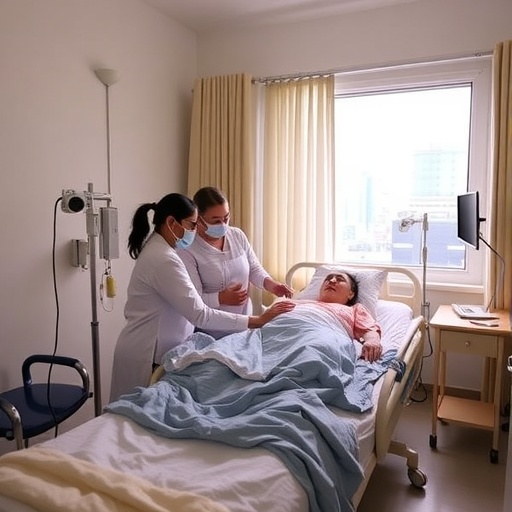
In a fascinating exploration of language dynamics in healthcare, a recent study published in the Journal of General Internal Medicine unveils significant findings regarding hospitalized patients with non-English language preferences. The researchers, led by Avila, Shirkhodaie, and Ruiz, delve into how language barriers can lead to disparities in patient care, particularly in the frequency of room visits by healthcare providers. The implications of these findings extend beyond mere statistics; they resonate deeply with the ongoing discussions about equity and accessibility in the medical field.
The essence of patient care hinges on effective communication. For hospitalized individuals who prefer languages other than English, a notable lack of engagement from healthcare professionals can lead to poorer outcomes. This research sheds light on how these patients experience fewer interactions, raising concerns about their overall health management during hospital stays. Language not only serves as a means of communication but also as a critical tool for conveying empathy, understanding, and support in healthcare settings.
The study employed a comprehensive methodology, focusing on data collected from a diverse patient population across several healthcare facilities. By analyzing the frequency of room visits made by healthcare staff, the researchers were able to quantify the impact of language preference on patient-provider interactions. The findings indicate that patients who prefer communicating in a non-English language received significantly fewer visits, which could exacerbate feelings of isolation and neglect during a vulnerable time.
One of the key findings underscores the importance of interpretation services in hospitals. Without appropriate language support, healthcare professionals may inadvertently overlook or misinterpret vital patient concerns. This deficit highlights the need for systemic changes in how hospitals approach language needs, emphasizing the necessity of comprehensive training for staff in cultural competence and effective communication strategies. The study advocates for the integration of multilingual resources and staff trained in various language skills to enhance patient experiences.
Patient outcomes are closely linked to the quality of interactions with healthcare providers. For non-English-speaking patients, reduced visits can signify a lack of emotional and medical support, which is pivotal for recovery. The data collected suggests that these patients may face additional hurdles in understanding medical instructions or communicating symptoms effectively. The study prompts an urgent reflection on healthcare disparities that are often invisible but profoundly affect patient recovery journeys.
The implications of this research extend beyond individual patient experiences. They beckon a broader examination of healthcare policies that govern language access and patient engagement. Hospitals must recognize the significance of language preferences as a critical factor in delivering equitable care. The proposal for systematic changes includes enhancing training programs for healthcare workers, creating clear protocols for engaging with non-English-speaking patients, and promoting awareness of language services available within institutions.
Moreover, the research points to the intersection of technology and language in healthcare as an area ripe for exploration. The integration of telehealth services has opened new avenues for patient care, yet there remains a crucial need for ensuring these platforms are accessible to non-English speakers. By leveraging technology, healthcare professionals can develop innovative solutions that bridge language gaps and facilitate more frequent engagement with patients, ultimately improving their hospital experience.
As healthcare continues to evolve in the wake of global challenges, the importance of inclusivity and cultural sensitivity cannot be overstated. The disproportionate effect of language barriers on patient care calls for urgent attention from policymakers, hospital administrators, and healthcare professionals alike. This study illuminates a pathway toward more equitable healthcare practices that honor the diverse language preferences of patients.
In light of these findings, a collective effort is required to push for advancements in how hospitals handle language diversity. Advocacy for comprehensive language access services and ongoing education for medical staff will not only enhance patient satisfaction but can also lead to improved health outcomes for a vulnerable population. Engaging with patients in their preferred languages is not just a logistical necessity but a fundamental ethical obligation.
Acknowledging and addressing language preferences within healthcare systems will require concerted efforts from all stakeholders involved. This includes fostering partnerships with community organizations, expanding access to language training for healthcare workers, and implementing research-backed strategies to ensure that all patients receive equitable treatment and consideration. As highlighted in the study, making these changes is essential for building a more just healthcare system that respects and responds to the needs of all individuals, regardless of language preference.
As the conversation around patient care continues to evolve, the findings from this research will serve as a foundational piece in advocating for systemic change. With the right adjustments, healthcare facilities can create an environment where all patients feel valued and understood, thus enhancing their overall experience and paving the way for successful recoveries. It is incumbent upon the healthcare community to act on these observations, fostering a culture that embraces diversity and inclusivity at every level of care.
This study not only sheds light on significant language barriers but also invites a deeper introspection regarding empathy and understanding in healthcare contexts. The ability to communicate effectively is fundamental in building trust between patients and healthcare providers. Moving forward, the challenge lies in transforming these insights into actionable strategies that will enhance patient engagement and satisfaction, ensuring that no patient feels isolated due to language differences.
As the healthcare landscape continues to transform, it is crucial to remember that behind every statistic, there is a patient. These findings, while alarming, provide an opportunity for growth, reflection, and improvement. Advocating for multilingual support systems and enhancing healthcare access for non-English speakers will require a unified approach, one that prioritizes the voices of those who are often unheard. The work produced by Avila and colleagues serves as a clarion call to prioritize inclusivity, one room visit at a time, transforming the patient experience for the better.
Subject of Research: Language preference and its impact on patient care in hospitals.
Article Title: Hospitalized Patients with Non-English Language Preference Experience Fewer Room Visits.
Article References:
Avila, S., Shirkhodaie, C., Ruiz, M.J. et al. Hospitalized Patients with Non-English Language Preference Experience Fewer Room Visits.
J GEN INTERN MED (2026). https://doi.org/10.1007/s11606-025-10118-3
Image Credits: AI Generated
DOI: https://doi.org/10.1007/s11606-025-10118-3
Keywords: Healthcare equity, language barriers, patient engagement, cultural competence, hospital administration.


