

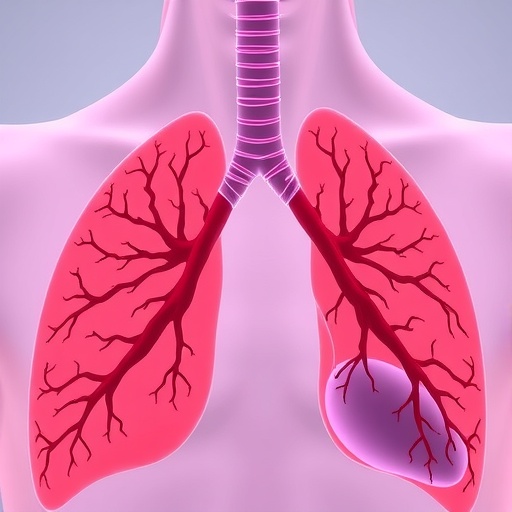
In a groundbreaking review published in Current Molecular Pharmacology, researchers from Shanghai Pulmonary Hospital, led by Yong Xu, have unveiled an intricate and previously underappreciated role of lactylation, a novel post-translational modification, in the progression of lung cancer and its notorious resistance to therapies. This comprehensive analysis bridges the gap between cancer metabolism and epigenetics, highlighting lactate’s transformation from a mere metabolic byproduct to a central signaling molecule that drives tumor evolution and evades drug-induced cytotoxicity.
Lactate was traditionally considered metabolic waste formed during anaerobic glycolysis, particularly abundant in the hypoxic microenvironment of tumors. However, recent evidence, as thoroughly compiled in this review, positions lactate as a metabolic sentinel capable of remodeling chromatin architecture through lactylation — the covalent attachment of lactyl groups to lysine residues on histones and other proteins. This epigenetic modification alters gene expression patterns and contributes to oncogenic reprogramming that underpins lung cancer malignancy.
The review delineates a sophisticated “reflex arc” regulatory framework for lactylation dynamics. Specific enzymes termed “writers,” including the acetyltransferase p300 and aminoacyl-tRNA synthetases AARS1 and AARS2, are responsible for sensing intracellular lactate levels and catalyzing the addition of lactyl groups to target proteins. Conversely, “eraser” enzymes such as various histone deacetylases (HDACs) and sirtuins (SIRT1 and SIRT3) remove these lactyl modifications, thus enabling a dynamic and reversible regulatory system. The “readers,” notably the chromatin remodeler BRG1, recognize lactyl marks and modulate downstream transcriptional programs essential for tumor growth and adaptation.
Within lung cancer pathology, histone H3 lactylation at lysine 18 (H3K18la) emerges as a pivotal epigenetic signal promoting immune evasion. In non-small cell lung cancer (NSCLC), this modification activates the POM121/MYC/PD-L1 axis, facilitating immune checkpoint upregulation that allows tumor cells to subvert cytotoxic T cell responses. In small cell lung cancer (SCLC), a distinct mechanistic pathway involving LDH-mediated H3K18 lactylation influences the Nur77 nuclear receptor, further sculpting cell fate decisions toward resistance and survival.
The authors emphasize the presence of self-reinforcing feedback loops that sustain oncogenic lactylation signaling. For instance, the CTHRC1 (collagen triple helix repeat containing 1) protein amplifies glycolytic flux and H3K18 lactylation, creating a metabolic-epigenetic cycle that perpetuates therapeutic resistance. Another intricate loop involving nicotinamide N-methyltransferase (NNMT), early growth response 1 (EGR1), and lactate production stabilizes an environment conducive to acquired resistance against epidermal growth factor receptor tyrosine kinase inhibitors (EGFR-TKIs), a mainstay treatment for certain lung cancers.
This insight into lactylation as a metabolic-epigenetic nexus offers profound therapeutic implications. Targeting the enzymes responsible for lactyl mark deposition or removal presents an opportunity to reprogram tumor epigenetic states and reverse deleterious drug resistance phenotypes. Strategies that reduce lactate accumulation—either by inhibiting glycolytic enzymes or modulating tumor microenvironment acidity—may further disrupt lactylation-driven pathways, restoring sensitivity to existing treatments.
Yong Xu and colleagues advocate for integrating this novel lactylation paradigm into precision oncology frameworks. By designing therapies that specifically intercept lactylation writers, readers, or erasers, it may be possible to dismantle the molecular circuitry that empowers lung cancer cells to circumvent standard therapies. Such approaches could potentiate efficacy, delay relapse, and improve patient survival outcomes.
Furthermore, the review calls for intensified research into the nuanced interplay between metabolic rewiring and epigenetic modifications in cancer. Understanding how lactylation interfaces with other histone modifications and transcription factor networks will be vital to fully exploit this axis. The dynamic regulatory milieu uncovered here underscores cancer’s remarkable plasticity and the necessity for multi-modal treatment strategies.
As the role of lactate as an epigenetic modulator gains prominence, it challenges prior dogmas regarding metabolic byproducts in oncology. This review not only reframes lactate as a driver of malignancy but also spotlights the broader implications for tumor immunology and metabolic crosstalk within the tumor microenvironment.
In summary, the findings compiled by Xu’s team constitute a pivotal step toward unraveling the complex molecular architecture of lung cancer resistance mechanisms. By illuminating the centrality of lactylation in integrating metabolic signals with epigenetic control, this work charts a promising roadmap for innovative treatment modalities aimed at overcoming therapeutic resistance in lung cancer.
Subject of Research:
Role of lactylation in lung cancer progression and drug resistance.
Article Title:
Not explicitly provided.
News Publication Date:
Not explicitly provided.
Web References:
http://dx.doi.org/10.1016/j.cmp.2026.03.004
Keywords:
Lung cancer, lactylation, epigenetics, metabolism, drug resistance, H3K18la, tumor immune escape, EGFR-TKIs, lactate signaling, histone modifications.


