

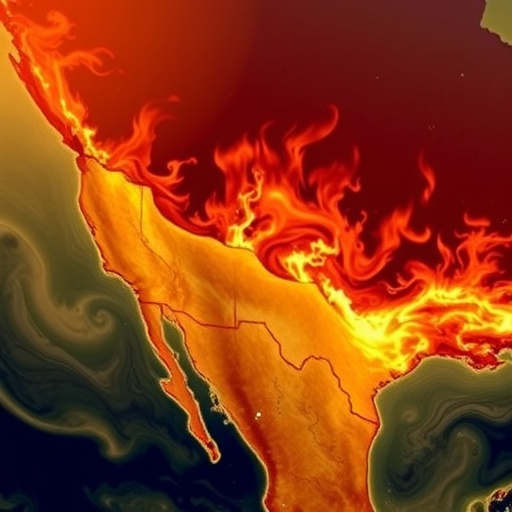
In a compelling study brought to light by Ipiña et al., the environmental impacts of a pronounced three-year La Niña phenomenon in Northeastern Mexico have been meticulously analyzed. The research focuses primarily on the alarming frequency of drought conditions and the unprecedented wildfires that have arisen during this period. The implications of these natural events extend beyond ecological concerns, as they profoundly affect air quality and public health in the region. Through extensive monitoring and assessment, this research provides invaluable insights into the intricate interplay between climate events and environmental health.
Over the past few years, Mexico’s northeastern region has faced a catastrophic spate of droughts, with negative consequences for agriculture, water supply, and local ecosystems. The data gathered by Ipiña’s team reveals that these drought conditions have not only persisted but have intensified during the La Niña years, leading to a substantial decline in soil moisture levels. The lack of precipitation has forced farmers to contend with dwindling crop yields, which can have far-reaching implications for food security and local economies. The long-term effects of persistent droughts can be crippling, inducing a cycle of poverty and hardship in communities that rely heavily on agriculture.
Compounding the challenges posed by droughts are the record-breaking wildfires that have increasingly plagued the region. The first two years of the La Niña event witnessed a staggering increase in wildfire incidents, with flames raging across vast stretches of forest and grassland. These fires, often ignited by lightning strikes exacerbated by dry conditions, have eradicated vast swathes of biodiversity, threatening the habitats of numerous species. Ipiña et al. emphasize that the combination of drought and wildfire creates a feedback loop that spikes carbon emissions, further exacerbating air quality issues and climate change.
Air pollution in Northeastern Mexico has reached alarming levels due to the effects of both drought and wildfire. The study highlights the role of particulate matter and other pollutants released during wildfires, which pose serious health risks to the local population. The increased frequency of respiratory illnesses among residents can be directly correlated to the surge in smoke and particulate matter in the air. Vulnerable populations, including children and the elderly, are particularly at risk, and the burden on healthcare systems continues to grow.
Ipiña and the research team employed a comprehensive suite of monitoring tools to assess air quality variations across Northeastern Mexico. Their findings indicate significant spikes in air pollution levels that correlate with wildfire activity. The research reveals that during the peak months of wildfire season, particulate matter concentrations surpassed safe thresholds, leading to public health advisories. This trend is alarming, as it suggests that the intersection of climate change, extreme weather, and public health must be urgently addressed.
The study also sheds light on the socioeconomic dimension of these environmental crises. Many communities in Northeastern Mexico rely heavily on local resources, which have been severely affected by climate variability. Families that depend on farming are now forced to seek alternative livelihoods due to crop failures and diminishing water supplies. It underscores the urgent need for policy-makers to implement adaptive strategies to manage these climate risks effectively. Investments in infrastructure, education, and public health resources are critical to ensuring that communities can withstand the shocks brought on by climate extremes.
Furthermore, Ipiña and colleagues call for comprehensive climate adaptation strategies in policy discussions. They highlight the necessity for local governments to engage with communities in developing actionable plans to mitigate the impacts of drought and wildfire. This involves investments in climate-resilient agricultural practices, water conservation initiatives, and early warning systems for extreme weather events. Building community resilience is essential to safeguard against the cascading effects of climate change in these vulnerable regions.
The ecological implications of the study are profound as well. The increasing frequency of wildfires not only destroys existing forests but also alters entire ecosystems. Ipiña et al. discuss the long-term consequences on biodiversity and ecosystem services that are vital for human well-being. Restoration efforts will be necessary to rehabilitate damaged ecosystems and help facilitate biodiversity recovery. This, however, requires sustained efforts and adequate funding to ensure ecosystems can recover from fire damage and continue to provide essential services.
As the climate crisis continues to unfold, the research conducted by Ipiña and the team serves as a critical reminder of the urgency to address environmental and public health issues arising from extreme weather events. The findings underscore the interconnectedness of human activities, climate variability, and health outcomes. La Niña periods, in particular, have been underestimated in their potential to trigger significant environmental impacts, and this study aims to highlight their importance in ongoing climate discussions.
In light of their findings, the authors emphasize the necessity for further research to understand the long-term impacts of these climate phenomena on air quality and public health. Ongoing monitoring is vital to gather data on how these factors interact and evolve over time. By harnessing advanced technological solutions such as satellite imagery and real-time air quality monitoring, researchers can gain deeper insights that can inform effective climate policy and public health strategies.
The study performed by Ipiña et al. is not just an academic endeavor; it serves as a clarion call for action. It advocates for collaborative efforts among scientists, policymakers, and communities to create a blueprint for addressing the impending challenges of climate change. There is an essential need for resilience-building, education, and proactive measures to protect both lives and the environment, especially in regions susceptible to the adverse effects of climate variability.
In summary, the alarming insights unearthed by Ipiña and colleagues underscore the increasing frequency and severity of droughts and wildfires in Northeastern Mexico, magnified by La Niña disturbances. These events present significant challenges not only to environmental sustainability but also to public health and socio-economic development. The comprehensive nature of their study illuminates the intertwined relationship between climate phenomena and human health, emphasizing the urgent need for strategies that mitigate these risks. As the world grapples with the broader implications of climate change, the resilience of communities will hinge on proactive measures that address not only environmental concerns but also health and wellness in the face of an uncertain future.
Subject of Research: Impact of drought and wildfires during La Niña on air pollution in Northeastern Mexico
Article Title: Drought and record wildfires during the 3-year La Niña: assessing air pollution impacts in Northeastern Mexico
Article References: Ipiña, A., López-Padilla, G., Zúñiga-Villareal, C. et al. Drought and record wildfires during the 3-year La Niña: assessing air pollution impacts in Northeastern Mexico. Environ Monit Assess 198, 15 (2026). https://doi.org/10.1007/s10661-025-14833-6
Image Credits: AI Generated
DOI: https://doi.org/10.1007/s10661-025-14833-6
Keywords: Drought, Wildfires, La Niña, Air Quality, Environmental Health, Climate Change, Northeastern Mexico, Public Health.


