

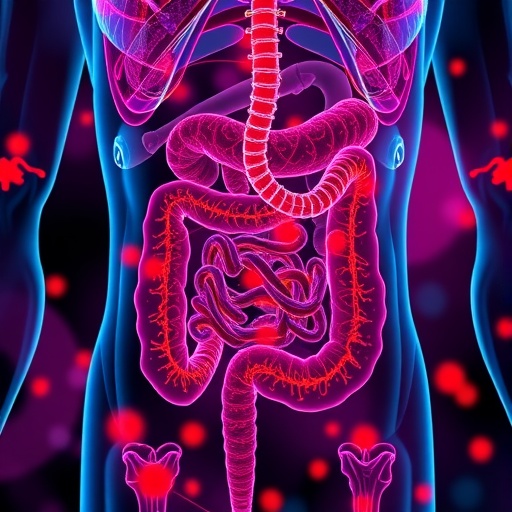
Chemotherapy remains one of the most effective weapons in the fight against cancer, yet its use is often accompanied by debilitating side effects that significantly affect patient quality of life. Among these, intestinal toxicity is a pervasive and challenging complication, manifesting through severe inflammation, nausea, diarrhea, and compromised nutrient absorption. Recent groundbreaking research has illuminated a complex molecular interplay involving the gut microbiota and host metabolites, with kynurenine emerging as a pivotal mediator in chemotherapy-induced intestinal damage. This revelation opens new avenues for therapeutic interventions that could mitigate one of the most devastating consequences of cancer treatment.
Traditionally, the adverse effects of chemotherapy on the gastrointestinal tract have been attributed primarily to the direct cytotoxic damage inflicted on rapidly dividing epithelial cells. However, accumulating evidence suggests that the gut microbiota, a densely populated and metabolically active microbial ecosystem, plays an essential role in modulating mucosal resilience and immune homeostasis. The study by Xie, Yang, Wu, and colleagues, published in Nature Communications in 2026, uncovers how the metabolite kynurenine functions as a critical signaling molecule orchestrating the crosstalk between chemotherapy agents, host cellular responses, and alterations within gut microbial communities.
Kynurenine is a metabolite derived from the amino acid tryptophan via the kynurenine pathway, a major route of tryptophan catabolism with extensive immunomodulatory functions. Under physiological conditions, kynurenine acts to regulate immune tolerance and inflammation. However, during chemotherapy, its levels rise dramatically, triggering a cascade of events that disrupts intestinal homeostasis. The researchers demonstrated that elevated kynurenine modulates the gut microbiota composition, favoring the proliferation of bacteria with pro-inflammatory properties while suppressing beneficial microbes that maintain mucosal integrity. This dysbiosis exacerbates chemotherapy toxicity, leading to an inflammatory milieu that further damages the intestinal lining.
Central to these findings is the role of specific microbial taxa whose populations shift markedly in response to increased kynurenine concentrations. The study identifies a decline in short-chain fatty acid-producing bacteria, crucial for supplying energy to colonocytes and reinforcing the mucosal barrier. Conversely, there is an overgrowth of pathobionts that produce endotoxins, which aggravate epithelial damage and recruit immune cells to the site. The synergistic effect between elevated kynurenine and the altered microbiota creates a vicious cycle of inflammation and cell death, contributing to the clinical symptoms of mucositis and intestinal permeability observed in patients undergoing chemotherapy.
The authors employed a multi-omics approach, integrating metabolomics, microbiome profiling, and transcriptomics from murine models subjected to common chemotherapeutic agents such as 5-fluorouracil and oxaliplatin. This comprehensive analysis revealed upregulation of indoleamine 2,3-dioxygenase 1 (IDO1), the key enzyme catalyzing the conversion of tryptophan to kynurenine in the intestinal mucosa. Pharmacological inhibition or genetic knockout of IDO1 resulted in markedly reduced kynurenine levels, preservation of gut microbial balance, and attenuation of mucosal injury. These findings suggest IDO1 as a potential target for the development of protective strategies during chemotherapy.
One of the most compelling aspects of this research is the demonstration that modulation of the gut microbiota can influence kynurenine levels and, consequently, the severity of intestinal toxicity. Administration of prebiotics and probiotics that promote the growth of beneficial commensal bacteria was shown to prevent the kynurenine-induced dysbiosis, reduce mucosal inflammation, and improve survival rates in treated mice. This implicates a bidirectional relationship where not only does kynurenine shape microbial communities, but the microbiota in turn regulate the tryptophan-kynurenine metabolic axis.
The clinical implications of these discoveries are profound. Intestinal toxicity remains a dose-limiting factor for many chemotherapy regimens, often forcing dose reductions or treatment interruptions that compromise cancer control. By identifying kynurenine as a key mediator and unveiling its connection to gut microbial dynamics, this research lays the groundwork for novel adjunct therapies. These could include selective IDO1 inhibitors, individualized microbiota-targeted interventions, or dietary modifications aimed at stabilizing tryptophan metabolism. Such solutions hold promise for preserving gastrointestinal health without undermining anticancer efficacy.
Moreover, this study sheds light on the broader concept of metabolite-mediated microbiota-host interactions in drug toxicity. It exemplifies how systemic treatments can inadvertently tip the delicate ecological balance of the gut, transforming a symbiotic community into a source of pathological inflammation. Deciphering these pathways not only enhances our understanding of chemotherapy side effects but also underscores the importance of considering the microbiome as an integral factor in pharmacology and personalized medicine.
Future research inspired by these findings might focus on longitudinal patient studies to correlate kynurenine levels, microbial profiles, and clinical outcomes during chemotherapy. Additionally, investigations into how other metabolites and microbial-derived compounds contribute to therapeutic toxicities could unravel further complex networks. Integrating such insights will lead to a paradigm shift wherein cancer treatment is coupled not only with oncologic precision but also with microbiome-informed supportive care.
There is also a growing interest in exploring the use of fecal microbiota transplantation (FMT) as a means to restore gut homeostasis disrupted by chemotherapy and kynurenine-driven dysbiosis. By transferring a healthy microbiome, it may be possible to rebalance the microbial ecosystem and reduce inflammation. While still experimental, the combination of microbiota engineering with metabolite modulation could pave the way for holistic approaches that mitigate gastrointestinal toxicity.
In addition to direct patient care, these findings raise important questions about the evolutionary and ecological implications of chemotherapy-induced biochemical shifts. The kynurenine pathway and its microbial interactions may represent ancient mechanisms whereby host and microbiome jointly respond to external insults. Understanding these dynamics could provide clues on resilience and adaptation in complex biological systems under pharmacological pressure.
Importantly, this research also highlights the necessity for interdisciplinary collaboration among oncologists, microbiologists, immunologists, and systems biologists. Disentangling the web of interactions between host metabolism, microbial ecology, and drug effects requires cutting-edge technologies and integrative analyses. The success of this study exemplifies the power of such cross-disciplinary efforts to uncover hidden layers of biomedical complexity.
The public health impact of these discoveries cannot be overstated. Chemotherapy-induced intestinal toxicity affects millions worldwide, often diminishing quality of life and increasing healthcare costs. By advancing our understanding of the underpinning molecular mechanisms, this study represents a significant step toward more effective and tolerable cancer therapies. It empowers clinicians and researchers with novel biomarkers and targets, ultimately contributing to improved patient outcomes and survivorship.
As the field moves forward, emphasis on precision medicine approaches that incorporate microbiome status and metabolic profiling will become increasingly vital. Tailoring chemotherapy regimens based not only on tumor genetics but also on host-microbiome interactions may revolutionize oncologic care. Monitoring kynurenine and other metabolic indicators could become routine, guiding interventions to preemptively protect gastrointestinal health.
In summary, the compelling research conducted by Xie, Yang, Wu, and colleagues establishes kynurenine as a central mediator of chemotherapy-induced intestinal toxicity through its modulation of the gut microbiota. This discovery challenges conventional paradigms by integrating metabolic and microbial mechanisms into the pathophysiology of treatment side effects. It charts a promising direction for future therapies aimed at preserving the delicate balance of the gut ecosystem, enhancing patient quality of life, and optimizing cancer treatment efficacy.
Subject of Research: Chemotherapy-induced intestinal toxicity and its molecular mediation by kynurenine through modulation of the gut microbiota.
Article Title: Kynurenine mediates the chemotherapy-induced intestinal toxicity through modulation of gut microbiota.
Article References:
Xie, H., Yang, J., Wu, J. et al. Kynurenine mediates the chemotherapy-induced intestinal toxicity through modulation of gut microbiota. Nat Commun (2026). https://doi.org/10.1038/s41467-026-68741-5
Image Credits: AI Generated


