

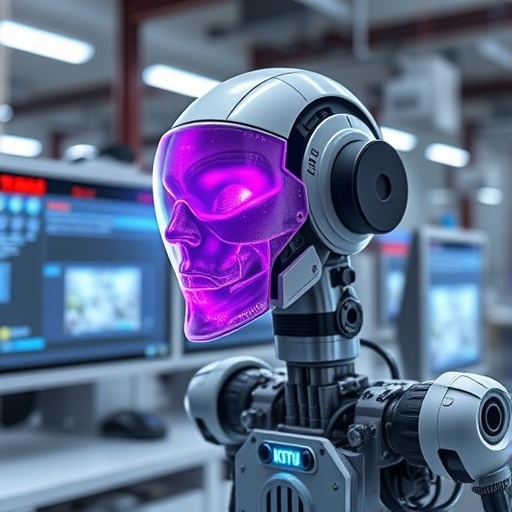
What if machines could truly perceive the world as humans do—not just identifying shapes, but understanding their meaning within complex environments? This capability holds the key to groundbreaking advancements in technologies ranging from autonomous vehicles to intelligent drones and navigation systems. Recognizing a pedestrian waiting at a crosswalk, a misplaced bicycle on a sidewalk, or a dog darting across a yard are instantaneous for humans, yet they pose substantial challenges for machines reliant on raw data. This conundrum is now being addressed through pioneering work in 3D point cloud analysis, a transformative technology that enables machines to grasp spatial scenes in remarkable detail.
3D point cloud analysis involves collecting millions of laser measurements of physical spaces, such as streets, forests, or entire urban areas, and assembling them into dense three-dimensional maps composed of countless individual points. These intricate point clouds serve as digital landscapes that machines must navigate and interpret. According to Professor Rytis Maskeliūnas of Kaunas University of Technology (KTU), the essence of this technology lies in empowering computers not only to detect shapes but to derive context and meaning from these spatial datasets—a feat critical for autonomous systems operating in dynamic real-world environments.
The practical applications of point cloud technology are already woven into everyday life, albeit often unnoticed. Modern vehicles employ such systems to implement features like automatic emergency braking and adaptive cruise control. These rely on point cloud data to differentiate between pedestrians, other vehicles, and road boundaries. However, current methods face difficulties under low visibility or complex scenarios, where misidentifying objects can have severe safety implications. The ability to enhance computer understanding in these contexts is a pressing technological frontier.
Beyond vehicular safety, 3D point cloud data is revolutionizing urban planning and environmental monitoring. Detailed digital replicas of cities, created from this data, serve as foundational elements for “digital twins,” virtual models that update continuously to reflect changes in infrastructure, greenery, and terrain. These models enable planners and researchers to simulate, predict, and optimize urban development, environmental resilience, and disaster response strategies with unprecedented accuracy.
The hurdles in 3D point cloud interpretation are both profound and multidimensional. Dr. Sarmad Maqsood from KTU highlights that point cloud data is inherently irregular and unstructured, challenging traditional analysis algorithms designed for orderly data. Additionally, density variation complicates matters: nearby objects are captured with dense clusters of points, whereas distant objects are sporadically represented. Critical but less frequent elements—such as pedestrians amid roads and buildings—tend to be underrepresented, complicating their detection. The scale and volume of data require immense computational resources to process efficiently while maintaining fidelity.
Addressing these challenges, the research team at KTU has engineered a novel hybrid model that synergistically melds diverse analytical approaches within a unified framework. It balances local detail extraction with global scene comprehension, enabling the system to capture nuanced spatial relationships while keeping track of the broader layout. This balance is achieved through advanced transformer-based techniques, which excel at modeling long-range dependencies across the entire point set, unlike conventional methods restricted to local neighborhoods.
A crucial innovation lies in the model’s ability to emphasize infrequent but contextually vital features. Often, small or partially obscured objects like pedestrians get lost amid dense, dominant classes such as road surfaces or buildings. By integrating mechanisms to prioritize these rare elements, the model improves recognition accuracy where it matters most, offering a significant leap in robustness and reliability.
Professor Maskeliūnas describes the model metaphorically as an intelligent puzzle-solver assembling a colossal, partially incomplete 3D jigsaw puzzle. When data points are scant or noisy—such as a pedestrian partially hidden at dusk—the system leverages contextual cues from surrounding environmental landmarks to infer the presence and identity of smaller objects. This context-aware interpretation is pivotal for autonomous systems tasked with split-second decisions in safety-critical environments.
Efficiency is equally prioritized alongside accuracy. The KTU team’s model processes complex scenes in just over two seconds per frame, a remarkable feat given the data volumes and computational intensity involved. This performance ensures practical deployment in applications requiring near real-time analysis, such as autonomous navigation and urban monitoring. Additionally, the integration of data compression and transmission capabilities within the pipeline maintains essential detail without imposing prohibitive computational or bandwidth demands.
The ramifications of reliable 3D scene interpretation extend well beyond current uses. Delivery drones navigating unpredictable outdoor environments can benefit from enhanced obstacle recognition and path planning. Similarly, robots deployed in search-and-rescue missions will operate more effectively by accurately interpreting chaotic, partially observable surroundings. Fields as varied as archaeology—where sparse, fragmented data must be reconstructed into meaningful cultural artifacts—and forensic science—where spatial subtleties can unlock crucial evidence—stand to gain.
Advanced augmented reality (AR) also stands to be transformed. Modern AR seeks seamless merging of digital content with complex physical spaces. Richly detailed and contextually aware 3D understanding derived from point clouds can enable immersive, spatially accurate experiences where virtual elements interact intelligently with real-world environments.
On a grander scale, these scientific breakthroughs redefine humanity’s relationship with the environments we inhabit and manage. What once belonged to the realm of speculative fiction is rapidly emerging as practical reality: machines that do not merely see but comprehend spatial complexity. This evolution will unleash new paradigms in technology, urbanism, safety, and human-machine collaboration, heralding a future where digital cognition extends profoundly into the physical world.
For those interested in the technical details of this breakthrough, the research article titled “Hybrid attention-based PTv3-SE model for efficient point cloud segmentation” provides an in-depth explanation of the model architecture, algorithms, and experimental evaluations. Published in “Remote Sensing of Environment,” the article marks a substantial contribution to the field of 3D computer vision and autonomous system design.
Contact and reference details for the research are available through Kaunas University of Technology, with media inquiries directed to Aldona Tuur. This pioneering work exemplifies the spirited innovation at the intersection of artificial intelligence, remote sensing, and applied robotics, paving the way for smarter, safer, and more responsive machines in an increasingly complex world.
Subject of Research: Efficient 3D point cloud segmentation and interpretation using hybrid attention-based models
Article Title: Hybrid attention-based PTv3-SE model for efficient point cloud segmentation
News Publication Date: January 30, 2026
Web References: ScienceDirect Article
References: DOI: 10.1016/j.rsase.2026.101891
Image Credits: Kaunas University of Technology (KTU), featuring Professor Rytis Maskeliūnas
Keywords
3D Point Cloud, Autonomous Vehicles, Transformer Models, Hybrid Attention, Digital Twins, Urban Modeling, Real-time Processing, Spatial Context Understanding, Robotics, Augmented Reality, Data Imbalance, Computational Efficiency


