

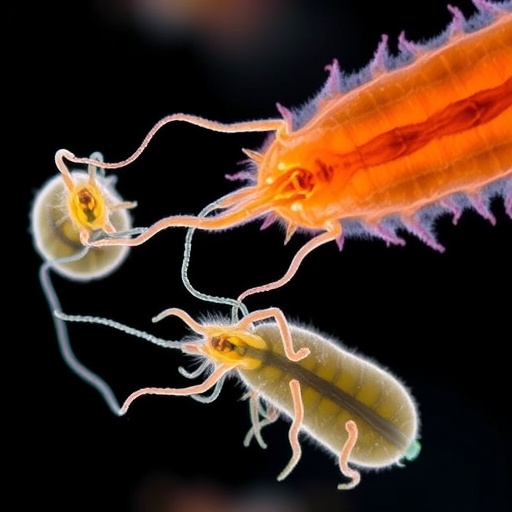
In an extraordinary breakthrough poised to transform our understanding of schistosomiasis diagnostics and immunology, recent research reveals that major human schistosome species exhibit distinct glycan profiles with far-reaching implications. This discovery, unveiled in a forthcoming article in Nature Communications, sheds light on the sophisticated molecular diversity these parasitic worms employ, directly influencing host immune responses and diagnostic strategies. The study meticulously maps the differential glycosylation patterns across key schistosome species, opening new avenues in targeted disease detection and vaccine design.
Schistosomiasis, a parasitic disease afflicting over 200 million people globally, is caused by bloodstream flukes of the genus Schistosoma. The disease leads to chronic illness and, if untreated, can cause severe organ damage. Despite significant progress, the complexity of the parasite’s interactions with the human immune system continues to challenge researchers. Central to this complexity is the role played by glycans—intricate sugar molecules present on the surface of parasites that modulate host immune recognition. The new study intricately deciphers these glycan landscapes, revealing how different schistosome species deploy unique glycan signatures.
The research team employed advanced glycomic technologies combining high-resolution mass spectrometry and lectin microarrays to systematically characterize glycans from Schistosoma mansoni, Schistosoma haematobium, and Schistosoma japonicum. By profiling these distinct species in parallel, the study demonstrated species-specific glycosylation patterns underpinning varying immunogenic properties. As a result, it delineates a blueprint of glycan expression that not only marks evolutionary adaptations but also guides differential host immune engagements.
Analysis revealed that Schistosoma mansoni expresses a rich diversity of fucosylated and xylosylated glycans previously linked to strong immune activation and chronic inflammation. Conversely, Schistosoma haematobium presented a predominance of sialylated structures, molecules known to engage immune inhibitory pathways and promote persistence within the bladder vasculature. Schistosoma japonicum’s glycans demonstrated a unique hybrid profile combining features from both species, hinting at a complex evolutionary convergence designed to evade diverse host responses across geographic regions.
This intricate glycan variability is not merely a static molecular signature but has profound implications for immunological outcomes. The study explores how specific glycan motifs modulate interactions with host pattern recognition receptors, such as C-type lectin receptors and toll-like receptors, which orchestrate the balance between protective immunity and pathological inflammation. Distinct glycan motifs act as molecular decoys or immunomodulators, enabling parasites to sculpt host immunity for their survival advantage while limiting overt immune damage that could compromise their niche.
One of the most impactful aspects of this research lies in its diagnostic promise. Current diagnostic tools for schistosomiasis rely heavily on detecting parasite eggs or circulating antigens with limited sensitivity, especially in low-transmission settings. By identifying unique glycan markers specific to each schistosome species, the study introduces a paradigm shift. These glycan structures can serve as highly sensitive and specific biomarkers, amenable to innovative detection platforms such as glycan-binding antibody assays or synthetic lectin sensors, promising earlier and more accurate disease detection.
Furthermore, this glycan-centric perspective invigorates vaccine development by highlighting candidate glyco-epitopes that elicit protective immune responses. Given the limited efficacy of existing vaccine targets focusing on proteins alone, incorporating glycan antigens could enhance immunogenicity and broaden protection. The research discusses how targeted immunization against species-specific glycan moieties could overcome antigenic variability and immune evasion, offering a tailored approach to schistosomiasis control.
Beyond human health, the study’s insights extend to understanding parasite evolution and transmission dynamics. Glycan variations reflect adaptation to different host environments and immune landscapes, influencing not only disease severity but also transmission potential. Elucidating these molecular adaptations helps clarify why certain schistosome species predominate in various regions and how environmental or host factors pressure these parasites to modify their glycan repertoires over time.
The collaborative nature of this work, crossing fields from glycobiology and immunology to parasitology and diagnostics, underscores the intricate complexity of host-pathogen interactions at a molecular level. Such interdisciplinary synergy was crucial in overcoming past technical challenges in isolating and characterizing parasite glycans, which are notoriously difficult due to their structural complexity and diversity. The study leveraged cutting-edge instrumentation and computational modeling to reconstruct the glycan landscapes with unprecedented depth and accuracy.
Importantly, the findings challenge longstanding assumptions that schistosome species share broadly similar surface glycans, a notion that previously limited species-specific diagnostic and therapeutic approaches. By demonstrating clear divergence, researchers now advocate for revisiting schistosome diagnostics with a refined lens that respects molecular heterogeneity rather than a one-size-fits-all approach. This reevaluation holds promise for more effective disease management policies tailored for endemic regions.
This research also opens fundamental scientific questions about the biosynthetic pathways generating these glycans and their regulation during parasite development. Understanding the enzymatic machinery responsible for glycan synthesis and remodeling could identify new drug targets capable of disrupting parasite immune evasion mechanisms. The paper suggests future studies aimed at decoding gene expression patterns linked to glycosyltransferases and glycosidases to unravel these biosynthetic networks.
Technological innovation was pivotal in this discovery. The integration of glycan array technology enabled the profiling of parasite glycan binding to a broad spectrum of host lectins and antibodies, simulating aspects of the host immune surveillance. These functional insights complemented structural analyses and were essential in correlating glycan composition with immune responses observed in infected individuals from different schistosomiasis-endemic regions. This multi-modal approach sets a new standard for parasite glycomics research.
From a public health perspective, advancing diagnostics and vaccines grounded in glycan biology can revolutionize schistosomiasis control strategies. Early case detection and species-specific interventions can reduce morbidity and interrupt transmission cycles. Additionally, because glycans are often conserved across parasite life stages, this approach offers potential for broad-spectrum applications encompassing early infection and chronic disease amelioration.
The research team emphasizes the necessity of integrating these glycan-based biomarkers into field-deployable diagnostic devices, such as point-of-care rapid tests, to bridge laboratory findings with practical applications. Such tools could empower healthcare workers in resource-limited settings to monitor infection dynamics in real time, adapt treatment regimens, and effectively allocate resources. These innovations are aligned with global health goals targeting schistosomiasis elimination.
Critically, the study also advocates for comprehensive population-based studies evaluating the prevalence and immunological impact of these glycan markers across diverse endemic areas. Such epidemiological surveys will be vital for validating glycan signatures as reliable clinical tools and understanding their variation in response to environmental pressures and host genetics. This will ensure that interventions developed from these findings are globally applicable and equitable.
In closing, this landmark investigation illuminates the previously underappreciated glycan heterogeneity among schistosome species, highlighting its central role in immune modulation, disease diagnostics, and control. The integration of molecular glycomics into parasitology heralds a new era of precision medicine for neglected tropical diseases, with the potential to drastically reduce the health burden of schistosomiasis worldwide.
Subject of Research:
Differential glycan expression in major human schistosome species and its immunological and diagnostic implications.
Article Title:
Major human schistosome species express different glycans with immunological and diagnostic implications.
Article References:
Petralia, L.M.C., van Diepen, A., Zhang, T. et al. Major human schistosome species express different glycans with immunological and diagnostic implications. Nat Commun (2026). https://doi.org/10.1038/s41467-026-70850-0
Image Credits: AI Generated


