

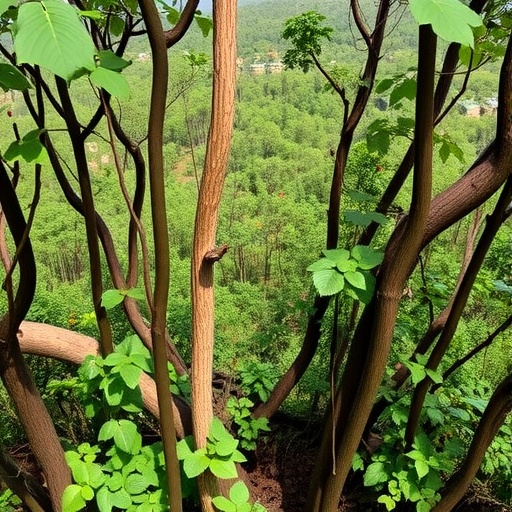
In the heart of the Democratic Republic of Congo lies the expansive Miombo woodlands, a vital ecosystem that drives both biodiversity and local livelihoods. The Lubumbashi charcoal production basin is currently facing severe challenges that threaten its ecological integrity and the myriad of species it harbors. Recent research conducted by a team of experts sheds light on the underlying drivers of degradation within this critical habitat. The findings highlight the urgent need for sustainable management practices to ensure the preservation of the Miombo ecosystem and its rich biodiversity.
The Miombo woodlands, characterized by their deciduous trees and extensive grassy understories, serve as a home to a multitude of flora and fauna. This region is not just a natural treasure; it is a source of economic sustenance for many local communities that rely heavily on the woodlands for fuel, food, and building materials. The ongoing charcoal production activities in Lubumbashi exemplify the delicate balance between human needs and environmental sustainability. As demand for charcoal continues to rise, the pressure on these woodlands intensifies, leading to alarming rates of deforestation and habitat loss.
This research identifies several key drivers of Miombo degradation, including unsustainable charcoal production, agricultural expansion, and urbanization. By analyzing satellite imagery and conducting field surveys, the researchers gathered critical data that elucidates the extent of environmental degradation in the region. Their findings indicate that between 2000 and 2020, there has been a significant reduction in forest cover, with charcoal production being one of the leading causes of this depletion. The implications for biodiversity are severe, as many species rely on the unique habitats provided by the Miombo ecosystem.
Biodiversity indicators play a crucial role in understanding the health of ecosystems. The study highlights specific species that serve as indicators of environmental change within the Miombo woodlands. These species are sensitive to alterations in their habitat, making them valuable for assessing the overall ecological status of the region. The presence or absence of these indicators can provide insight into the effects of human activity on biodiversity and the effectiveness of conservation efforts.
Community engagement is essential for addressing the drivers of degradation and fostering sustainable practices. The research emphasizes the importance of involving local populations in conservation strategies. By educating communities about the ecological value of the Miombo woodlands and providing alternative livelihoods, there is potential to reduce reliance on unsustainable charcoal production. Successful initiatives in other regions have shown that when communities are empowered to manage their natural resources, both biodiversity and human well-being can thrive.
The findings from this research are timely, as policymakers are increasingly recognizing the need for sustainable forestry practices. Integrating scientific research with traditional knowledge offers a pathway to develop effective conservation strategies that benefit both the environment and local communities. The researchers advocate for multi-stakeholder approaches that bring together government, NGOs, and local populations to collaboratively work towards sustainable management of the Miombo woodlands.
In addition to policy changes, the research underscores the importance of monitoring and assessment. Regular evaluation of biodiversity indicators is vital for understanding the impact of conservation measures and adapting strategies as needed. Long-term monitoring can help track changes in species populations and habitat conditions, providing invaluable data for future conservation planning. The researchers emphasize that funding and resources need to be allocated to ensure the sustainability of these monitoring efforts.
As climate change continues to exacerbate environmental challenges, the resilience of the Miombo woodlands is increasingly precarious. The study acknowledges the role of climate variability in influencing the health of ecosystems and calls for further research into adaptive management strategies that can help mitigate these impacts in the region. Understanding the interplay between climate change and human activities is critical for creating a sustainable future for the Miombo woodlands.
The research provides a comprehensive overview of the multi-faceted issues contributing to Miombo degradation, offering a framework for future studies to build upon. By highlighting the urgency of this situation, the scientists hope to galvanize action at local, national, and international levels. The stakes are high: failing to address the degradation of the Miombo woodlands could lead to irreversible losses in biodiversity and detrimental effects on local communities that depend on these resources.
Moving forward, collaboration with international conservation organizations can enhance efforts to promote sustainable practices. Learning from successful conservation models implemented in similar ecosystems worldwide can offer invaluable insights into effective strategies for the Miombo woodlands. The global community’s support is crucial in ensuring that conservation efforts in the Upper Katanga region garner the attention and resources they deserve.
Public awareness campaigns aimed at educating wider audiences about the significance of the Miombo ecosystem and the challenges it faces are essential to fostering a culture of environmental stewardship. As more people become aware of the threats to biodiversity and the importance of forests, there can be greater collective action toward sustainable practices. Grassroots movements can encourage authorities to prioritize conservation initiatives that benefit both the environment and local economies.
In conclusion, the research conducted on the drivers and biodiversity indicators of Miombo degradation provides a critical framework for understanding the intricate challenges faced by this essential ecosystem. By addressing the drivers of degradation through sustainable resource management, community involvement, and robust policy frameworks, there is potential to not only protect the Miombo woodlands but also to enhance the resilience of local communities. The battle for the preservation of the Miombo woodlands is a shared responsibility that requires commitment, innovation, and collaboration across all sectors of society.
Subject of Research: Miombo degradation drivers and biodiversity indicators in Lubumbashi, DR Congo.
Article Title: Drivers and biodiversity indicators of Miombo degradation in the Lubumbashi charcoal production basin (Upper Katanga, DR Congo).
Article References:
Khoji Muteya, H., N’tambwe Nghonda, Dd., Yona Mleci, J. et al. Drivers and biodiversity indicators of Miombo degradation in the Lubumbashi charcoal production basin (Upper Katanga, DR Congo).
Discov. For. 2, 4 (2026). https://doi.org/10.1007/s44415-025-00060-x
Image Credits: AI Generated
DOI: https://doi.org/10.1007/s44415-025-00060-x
Keywords: Miombo woodlands, biodiversity, charcoal production, sustainability, conservation strategies, Upper Katanga, ecological integrity


