

In an era where artificial intelligence increasingly permeates educational realms, a groundbreaking innovation is reshaping how future educators prepare to teach one of the most conceptually demanding subjects: mathematics. At the forefront of this transformation is Dr. Dabae Lee, an Associate Professor of Instructional Technology at Kennesaw State University. Through a visionary initiative supported by a substantial National Science Foundation grant amounting to $300,000 over three years, Dr. Lee has conceptualized and developed sophisticated AI-powered agent systems designed to simulate student interactions dynamically. This initiative aims to cultivate responsive teaching abilities among pre-service teachers, enhancing their capacity to engage with diverse and often challenging student thinking in mathematical contexts.
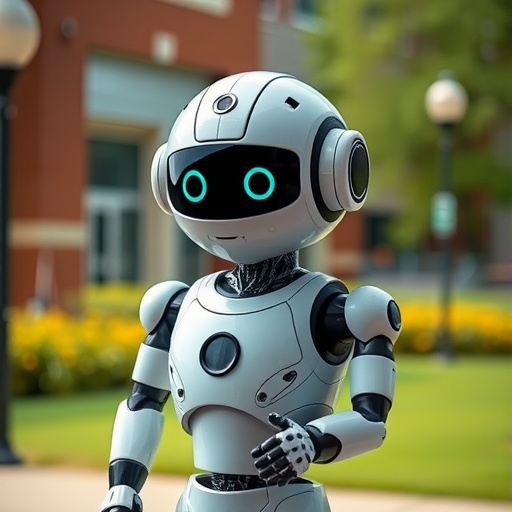
The crux of Dr. Lee’s work lies in constructing virtual student agents—chatbots with distinct personalities and learning profiles—that serve as proxies for real elementary learners in an online math class setting. These AI agents are named Gabriel, Noah, and Jiwoo, each manifesting unique behavioral and cognitive traits that embody a spectrum of learner archetypes. Gabriel, portrayed as a playful yet mathematically adept student, contrasts with Noah, who shares a similar playful disposition but grapples with comprehension difficulties. Jiwoo, meanwhile, represents articulate learners possessing specific misconceptions, enriching the realism and variability of the simulated classroom environment. Such differentiation allows pre-service teachers to encounter a wide array of student thought processes, preparing them to adapt their pedagogical strategies responsively.
The theoretical foundation underpinning this innovative approach draws heavily from Jean Piaget’s socio-cognitive conflict theory, a paradigm that posits cognitive development emerges through social negotiation and perspective-taking among peers. Piaget emphasized that grappling with divergent viewpoints—even incorrect ones—fosters deeper conceptual understanding through discourse and negotiation. Dr. Lee’s AI agents embody this principle by enabling teachers to engage in dialogic exchanges that probe, challenge, and extend student reasoning, effectively simulating the cognitive conflicts that spark learning growth. This alignment with robust educational theory ensures the system’s fidelity to authentic learning dynamics rather than mere rote interactions.
Traditional teacher training has often been hamstrung by limited avenues for practicing responsive engagement with students in real time. Conventional methods, such as peer role-playing or instructor simulations, frequently fall short due to the artificiality of adult participants mimicking child learners. Adults may fail to authentically emulate the spontaneity, misconceptions, or reasoning patterns genuinely apparent in children’s mathematical thinking. In contrast, Dr. Lee’s AI agents provide continuous, scalable, and authentic interaction opportunities that more accurately mirror real classroom experiences, thereby enhancing the ecological validity of teacher preparation programs.
Technically, the agent system integrates sophisticated natural language processing and machine learning algorithms to interpret and respond to pre-service teachers’ questions and explanations in real time. Each virtual student processes inputs uniquely according to their predefined cognitive and affective profiles, enabling nuanced feedback and interaction reflective of individual learner differences. In initial deployments, the agents utilized IBM Watsonx technology, a state-of-the-art AI and data platform, which contributed robust linguistic models and adaptability features to the system architecture. This synergy between educational theory and cutting-edge AI tooling epitomizes the interdisciplinary innovation driving this project.
The system’s iterative refinement has involved collaboration beyond Kennesaw State University, notably partnering with the University of Missouri’s teacher education program. This partnership has facilitated two rounds of implementations, providing valuable empirical feedback to optimize agent design, interaction modalities, and instructional modules featured within the platform. Early responses from student teachers who engaged with the virtual agents underscore the system’s efficacy; many participants reported that interactions felt more authentic and insightful than traditional preparatory exercises, highlighting the system’s potential to revolutionize how teacher responsiveness skills are cultivated.
Responsive teaching itself centers on diagnosing and building upon students’ existing mathematical ideas—even when those ideas involve misconceptions—through strategic questioning and dialogue. Dr. Lee’s system allows pre-service teachers to exercise this skill in a safe, controlled environment where they can experiment with different questioning strategies and observe immediate virtual student reactions. This practice facilitates greater teacher sensitivity to the nuances of student thinking and fosters the development of instructional agility, attributes crucial for effective mathematics education that promotes reasoning and positive student attitudes.
The broader implications of this research extend beyond individual teacher preparation. By embedding responsive teaching practices more deeply into educator training, the initiative aims to address persistent challenges in US mathematics education characterized by widespread student struggles with conceptual understanding and engagement. Enhancing teacher facility in eliciting and interpreting diverse student reasoning could catalyze improvements in mathematical literacy and foster more inclusive learning environments where students’ cognitive and emotional needs are more effectively met.
Looking forward, Dr. Lee envisions broad dissemination of this technology across teacher education programs nationally and potentially internationally. Following a planned third round of testing and further system enhancements, the AI agents and accompanying instructional resources are slated for public release to enable widespread adoption. This objective aligns with contemporary calls for scalable, technology-enhanced teacher training tools that can prepare educators more effectively and inclusively.
The innovative blend of AI-driven student simulation and foundational educational theory exemplified in Dr. Lee’s work has garnered noteworthy academic recognition. Findings have been disseminated in high-impact scholarly outlets such as Computers & Education, Journal of Computer Assisted Learning, and Journal of Mathematics Teacher Education, underscoring the project’s academic rigor and broad relevance to educational technology and mathematics pedagogy fields. Additionally, IBM’s spotlight on the initiative via its Smart Talks podcast, featuring conversations with renowned figures like Malcolm Gladwell, underscores the broader cultural and technological significance of this research.
Ultimately, Dr. Lee’s AI-powered agent system represents a pioneering synthesis of technology and pedagogy, addressing longstanding challenges in teacher preparation with scalable, interactive, and theoretically grounded solutions. As the system evolves, it promises not only to transform how future educators learn but also to contribute meaningfully to improving student mathematical reasoning and fostering more positive attitudes toward mathematics nationwide.
Subject of Research: Artificial intelligence in teacher education for responsive mathematics teaching.
Article Title: Revolutionizing Teacher Preparation: AI Agents Simulate Realistic Student Interactions in Mathematics Education.
News Publication Date: Not specified.
Web References:
- Bagwell College of Education at Kennesaw State University
- Computers & Education Journal
- Journal of Computer Assisted Learning
- Journal of Mathematics Teacher Education
- IBM Smart Talks Podcast
References:
Lee, D. (2022). Studies published in Computers & Education, Journal of Computer Assisted Learning, Journal of Mathematics Teacher Education.
Image Credits: Matt Yung / Kennesaw State University
Keywords
Artificial intelligence, responsive teaching, teacher training, mathematics education, educational technology, AI agents, pre-service teachers, student simulation, natural language processing, cognitive development, Piaget’s theory, IBM Watsonx.


