

Antimicrobial resistance stands as one of the most critical threats to global public health today. According to the Centers for Disease Control and Prevention, bacteria and fungi’s increasing ability to defend themselves against established medicines designed to eradicate them poses a looming crisis. As traditional antibiotics lose their efficacy against resistant strains, scientific communities worldwide are urgently seeking innovative solutions. Among the promising alternatives is the exploration of bacteriophages—viruses that specifically target and destroy bacteria without harming the surrounding beneficial microbiota.
At Indiana University Bloomington, the Gerdt Lab is pioneering research aimed at undermining bacterial defense mechanisms to empower bacteriophages as precision tools against resistant bacterial infections. By focusing on how bacterial immune systems work and discovering chemical means to disrupt them, this research could redefine treatment approaches against stubborn pathogens. “Bacteria get sick too,” explains J.P. Gerdt, assistant professor of chemistry. “Understanding and eventually inhibiting their complex immune systems opens new paths to combating infections that no longer respond well to traditional antibiotics.”
Bacteriophages have several advantages over antibiotics. Their ability to selectively kill specific bacterial strains allows preservation of the human microbiome and reduces collateral damage to beneficial bacteria, a notable downside of broad-spectrum antibiotics. This level of specificity is invaluable not only in healthcare but also in agriculture, where the indiscriminate use of antibiotics accelerates resistance development and disrupts microbial ecosystems essential for soil and plant health.
Yet bacteria are not defenseless against these viral predators. Much like how bacteria evolve mechanisms to resist antibiotics, they can also develop immunity to bacteriophages. This presents a formidable challenge for phage therapy, which hinges on the ability of viruses to infect and lyse bacterial cells effectively. Overcoming bacterial immune responses to phages is therefore critical to turning these viruses into reliable antimicrobial agents.
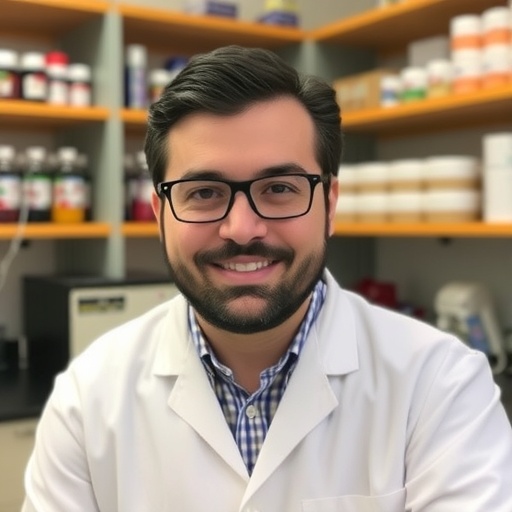
Addressing this challenge, former Gerdt Lab member Zhiyu Zang—now a post-doctoral researcher at the Swiss Federal Institute of Technology Lausanne—has discovered a small chemical molecule that partners with bacteriophages to overwhelm bacterial immune defenses. This breakthrough was detailed in the recent publication “Chemical inhibition of a bacterial immune system” in the journal Cell Host & Microbe. By chemically impairing the immune responses of bacteria, these molecules enable viruses to breach defenses more efficiently, restoring phage efficacy in resistant bacterial populations.
The implications of this discovery extend beyond laboratory observations. While antibiotics remain the frontline treatment for many bacterial infections, the rise of multi-drug resistant strains necessitates alternative strategies. The Gerdt Lab’s work suggests that combining bacteriophage therapy with targeted immune inhibitors could provide a powerful one-two punch against resistant pathogens, especially in cases where antibiotics fail. Moreover, in agricultural contexts, such an approach could reduce reliance on antibiotics, minimizing the ecological impact of their overuse and potentially slowing the spread of resistance genes in the environment.
The search for these chemical inhibitors, however, is akin to finding needles in a haystack. With millions of bacterial species and potentially even more chemical compounds to explore, the task is daunting. Gerdt envisions a future where libraries of inhibitors tailored to diverse bacterial immune systems exist, paving the way for customizable therapeutic cocktails that adapt to evolving bacterial threats. This ambitious goal drives ongoing screening efforts within the lab, often involving undergraduate researchers gaining hands-on experience in cutting-edge chemical biology.
In pursuit of workable candidates, the Gerdt Lab initially focused on bacteria that are safer and more manageable for students to study in the lab setting. Notably, Olivia Duncan, an undergraduate at the time and now a Ph.D. student at Cornell University, contributed to identifying molecules that could chemically suppress bacterial immune responses. Their collaboration exemplifies the synergy between training new scientists and pushing the frontiers of antimicrobial research.
The immune system targeted in this study is not a niche phenomenon; it is present in approximately 2,000 bacterial species, many of which are pathogens of high clinical relevance. Bacteria such as Pseudomonas aeruginosa and Staphylococcus aureus—common culprits behind hospital-acquired infections and notorious for their antibiotic resistance—share similar immune architectures. This broad presence means that molecules discovered today could potentially have sweeping therapeutic applications.
Significantly, the inhibitor discovered in this study is noted to enhance bacteriophage infection by chemically disrupting bacterial immune defense mechanisms with precision. This represents a paradigm shift: instead of solely relying on enhancing the virus or finding new antibiotics, researchers can now modulate bacterial immune systems to serve as enablers of phage therapy.
The paper’s authors hope their findings inspire widespread research endeavors across multiple laboratories, fostering a communal push towards developing targeted therapies against bacterial pathogens. “Our goal is to have a collection of inhibitors that will work for different immune systems,” Gerdt stated. The excitement stems from the novelty—the start of an emerging field with vast potential to reshape antimicrobial treatment landscapes.
As the scientific community faces the urgent crisis of antimicrobial resistance, innovations like those emerging from the Gerdt Lab offer much-needed hope. By revealing vulnerabilities within bacteria’s immune shields and strategically partnering viruses with chemical inhibitors, the path towards effective, sustainable, and targeted therapies grows clearer. This research underlines the importance of integrating chemistry, microbiology, and virology to fight back against pathogens that have, until now, remained formidable foes.
Subject of Research: Not applicable
Article Title: Chemical inhibition of a bacterial immune system
News Publication Date: 30-Jan-2026
Web References: http://dx.doi.org/10.1016/j.chom.2026.01.003
References: Zang, Z., Gerdt, J.P. et al. Chemical inhibition of a bacterial immune system, Cell Host & Microbe (2026).
Image Credits: Photo courtesy Zhiyu Zang
Keywords
Chemistry, Biochemistry


