

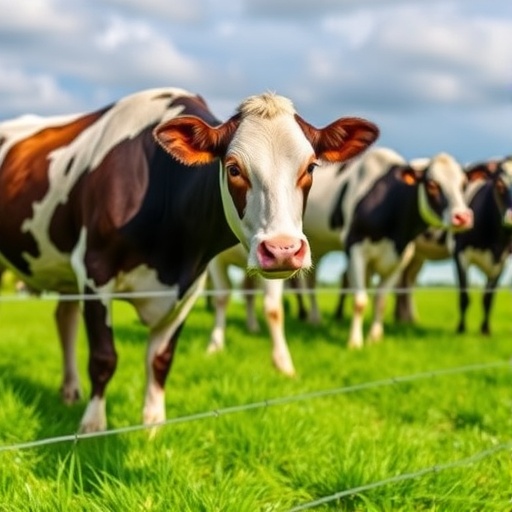
The landscape of the U.S. beef supply chain is undergoing a subtle yet significant transformation that is reshaping the way producers approach cattle breeding and market dynamics. Traditionally, dairy cows have been primarily bred for milk production, with male calves often considered less valuable due to lower meat quality. However, a growing trend has emerged in which dairy cattle are intentionally bred with beef genetics to create calves that are destined for the beef market. This strategy, referred to as “beef on dairy,” is gaining traction among producers who aim to capitalize on the economic advantages of crossbred calves, though comprehensive documentation and data surrounding this market shift have remained scarce.
At the forefront of illuminating this evolving sector is Charles Martinez, an assistant professor and director of the Center for Farm Management at the University of Tennessee’s Department of Agricultural and Resource Economics. Martinez has been invited to present his insights on the impact of beef-on-dairy cattle at the United States Department of Agriculture’s (USDA) 102nd Annual Agricultural Outlook Forum. His research offers a first authoritative glimpse into how the integration of beef genetics into dairy herds is altering both the agricultural economy and the structural dynamics of cattle markets nationwide.
This paradigm shift is fueled by advances in artificial insemination technology, enabling producers to make precise genetic selections that not only optimize dairy production traits but also enhance beef qualities in resulting calves. Whereas beef-on-dairy crosses were once a contingency tactic employed during downturns in dairy commodity prices, recent evidence points to their emergence as a deliberate and economically viable production strategy. Producers are leveraging this approach to diversify revenue streams, creating a category of cattle that aligns with consumer preferences for quality beef without compromising dairy herd productivity.
The beef-dairy cross calves exhibit carcass characteristics superior to traditional dairy steers, including favorable muscle-to-fat ratios and enhanced meat quality metrics. These attributes have allowed crossbred calves to command significant premiums in cattle markets, signaling strong demand from beef processors who value their consistent performance and yield. For instance, data from Tennessee in 2025 revealed that a 550-pound beef-on-dairy calf was valued at approximately $1,851, in stark contrast to the $1,320 valuation for a standard dairy calf of similar weight—a difference of over $500 per head. This economic differential underscores the tangible benefits that producers derive from embracing crossbreeding strategies.
Martinez’s analysis indicates that as of 2025, beef-on-dairy crosses represented roughly 25% of all cattle sales through U.S. markets, marking a substantial shift from historical norms. This shift reflects both a change in breeding philosophy and an adaptation to market signals favoring hybrid vigor and superior meat quality. The integration of beef genetics into dairy herds is, therefore, redefining traditional categorizations within the cattle industry and challenging the adequacy of current data recording practices that fail to fully capture this emerging segment.
Current market data systems categorize beef-on-dairy cattle sales simply as beef sales, obscuring the unique characteristics and economic dynamics of this crossbred population. Martinez advocates for the establishment of a distinct “beef on dairy” classification within cattle market data systems to enable more precise tracking and analysis. Such differentiation would empower industry stakeholders, economists, and policymakers with the nuanced information necessary to make informed decisions regarding production trends, pricing strategies, and resource allocation across both the beef and dairy sectors.
The broader relevance of this research is amplified by context: the USDA recently reported a seventy-five-year low in U.S. cattle inventory, with numbers dropping to 86.2 million head of cattle and calves. In this constrained supply environment, understanding the interplay between dairy production and beef supply chains is critical. Beef-on-dairy crosses could represent a strategic lever to alleviate supply pressures and improve market resiliency by increasing the efficiency with which cattle resources are utilized.
The USDA World Agricultural Outlook Board (WAOB) has recognized the significance of Martinez’s insights, inviting him to deliver his presentation titled “Impact of Beef-on-Dairy on the U.S. Beef Supply Chain” during the livestock luncheon session of the Agricultural Outlook Forum on February 20th. The session is designed to foster dialogue among agricultural economists, industry experts, and policy analysts about the implications of beef-on-dairy growth and its influence on market forecasts and supply chain management.
This research not only deepens our understanding of current agricultural trends but also projects potential future trajectories for livestock production systems. As crossbreeding practices become more refined and adoption rates increase, the beef-on-dairy market segment could catalyze innovations in breeding, genetics, and cattle management protocols that collectively enhance sustainability and profitability within U.S. agriculture.
The University of Tennessee Institute of Agriculture, through its comprehensive network of research, extension, and educational programs, continues to play a pivotal role in advancing agricultural knowledge and fostering data-driven solutions. Martinez’s work exemplifies the land-grant mission of the Institute by addressing real-world challenges and delivering actionable insights to producers, industry stakeholders, and policymakers alike.
In summary, the emergence of beef-on-dairy cattle as a distinct and economically impactful sector within the U.S. beef supply chain heralds a new era for cattle production. This phenomenon exemplifies how genetic innovation and market responsiveness can converge to create value and efficiency in agriculture. Accurately capturing and analyzing this development through dedicated market data classification promises to enhance decision-making and resource optimization across the intertwined beef and dairy industries, ensuring their vitality in an era of changing consumer preferences and supply constraints.
Subject of Research: Cattle breeding strategies and economic impact of beef-on-dairy crossbred cattle on the U.S. beef supply chain.
Article Title: Impact of Beef-on-Dairy Crosses on the U.S. Beef Supply Chain: Economic and Market Implications
News Publication Date: February 20, 2025
Web References: https://utia.tennessee.edu/
Image Credits: Photo by H. Harbin, courtesy University of Tennessee Institute of Agriculture
Keywords: Agriculture; Economics; Beef-on-Dairy; Cattle Breeding; Artificial Insemination; Livestock Market; Genetic Crossbreeding; U.S. Beef Supply Chain; Agricultural Economics


