

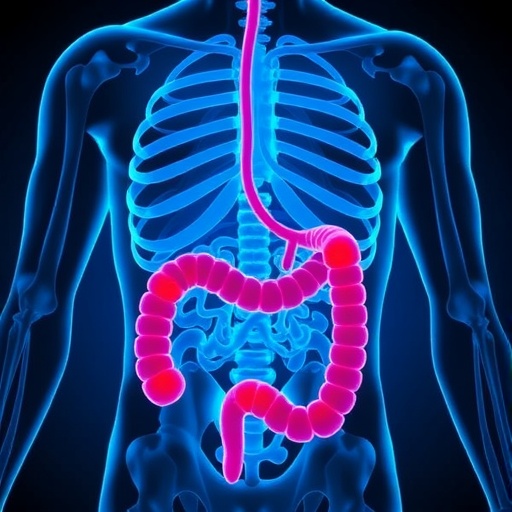
A groundbreaking randomized clinical trial led by the University of Calgary has unveiled promising evidence that time-restricted feeding (TRF), a popular form of intermittent fasting, can dramatically diminish the symptomatic burden and inflammatory markers in adults grappling with Crohn’s disease—particularly those also contending with overweight or obesity. Published in the prestigious journal Gastroenterology, the study meticulously demonstrates that limiting food intake to an 8-hour daily window while fasting for the subsequent 16 hours can slash Crohn’s disease activity by an impressive 40%, and reduce abdominal discomfort by half in a relatively short span of 12 weeks, compared to individuals maintaining their regular eating patterns.
This landmark investigation marks a critical milestone as the first randomized controlled trial (RCT) to probe the physiological and clinical ramifications of TRF on inflammatory bowel disease (IBD), specifically focusing on Crohn’s disease—a chronic, often debilitating inflammatory condition of the gastrointestinal tract. The research draws attention to the significant therapeutic potential embedded not simply in what patients consume, but crucially when they consume it, signaling an innovative paradigm shift in dietary management strategies for chronic inflammatory disorders.
The study enrolled 35 adult patients diagnosed with Crohn’s disease who also presented with obesity or overweight status. Subjects were randomly assigned to either the TRF intervention group, eating exclusively during an 8-hour daily interval, or to a control group adhering to their habitual diet with no imposed timing restrictions. Over the controlled 12-week period, researchers employed a comprehensive array of assessments, including clinical disease activity indices, systemic inflammatory biomarkers, and advanced body composition measurements using validated techniques.
Remarkably, participants adhering to the TRF schedule exhibited not only a significant reduction in Crohn’s disease activity but also experienced a meaningful decrease in visceral adiposity—a form of fat stored within the abdominal cavity closely linked to metabolic and immune dysfunction. The diminution of harmful fat deposits, often implicated in perpetuating inflammatory pathways, thus underscores the multifaceted benefits emerging from temporal modulation of food intake.
Biochemical analyses revealed that intermittent fasting led to substantial declines in circulating leptin and plasminogen activator inhibitor-1 (PAI-1), two molecules intimately involved in inflammatory processes and immune regulation. Leptin, widely recognized for its role in energy homeostasis, also functions as a pro-inflammatory adipokine, potentially exacerbating intestinal inflammation when elevated. PAI-1 is similarly implicated in inflammation and thrombosis, contributing to the complex immunopathology underlying Crohn’s disease. The downregulation of these biomarkers suggests that TRF exerts systemic anti-inflammatory effects that transcend mere weight loss or caloric restriction.
Indeed, the interventions were designed so that calorie intake and diet composition remained largely consistent between groups, highlighting that the timing of eating, rather than quantity or quality of food, likely drove the clinically significant outcomes. This distinction challenges traditional approaches focused exclusively on dietary composition and caloric limitation, redirecting scientific and clinical attention towards circadian biology and metabolic rhythm as pivotal factors in disease modulation.
The observed body weight changes further reinforce the potential metabolic benefits of TRF. While the fasting group lost approximately 5.5 pounds on average, the control cohort paradoxically gained around 3.7 pounds over the same interval. This differential weight trajectory aligns with the reduction in visceral fat and accompanying biochemical marker improvements, implying a synergistic interaction between circadian-aligned feeding regimens and metabolic health.
Lead investigator Dr. Natasha Haskey from the University of British Columbia accentuates the importance of these findings by framing time-restricted eating as a biologically grounded, sustainable lifestyle modification that equips patients with an empowering tool to enhance remission maintenance alongside pharmacotherapy. Her insights advocate for the integration of chrononutrition principles into comprehensive IBD management plans, particularly for patients seeking adjunctive, non-pharmacological interventions.
Senior author Dr. Maitreyi Raman highlights that TRF offers benefits that extend well beyond weight reduction, including meaningful symptomatic relief, metabolic recalibration, and promising alterations in the gut microbiome—the complex bacterial ecosystem intimately linked to immune homeostasis and intestinal health. Emerging evidence suggests that meal timing modulates microbial populations and their metabolites, which in turn influence mucosal inflammation and barrier function, forming a rationale basis for TRF’s therapeutic impact.
Despite the compelling outcomes, the authors emphasize the necessity for larger, long-term studies to validate the safety, efficacy, and mechanistic underpinnings of intermittent fasting in diverse Crohn’s disease populations. Variability in disease phenotype, medication regimens, and individual metabolic responses warrant careful consideration before broad adoption of TRF protocols in clinical practice.
The study was funded by the Crohn’s & Colitis Foundation under the Litwin IBD Pioneers program, reflecting an institutional commitment to pioneering research that places patients at the forefront of novel therapeutic discovery. Dr. Andres Lorenzo Hurtado, Senior Vice President of Translational Research & IBD Ventures at the Foundation, underscores the paradigm-shifting nature of this work, noting that strategic timing of nutrient intake can recalibrate immune function and metabolic health, opening new avenues for sustained remission.
These findings arrive at a critical time when the worldwide burden of IBD continues to rise, and existing treatment options often fall short of completely alleviating symptoms or halting disease progression. Time-restricted feeding represents a low-cost, patient-centered intervention with minimal side effects, potentially revolutionizing disease management by harnessing the inherent circadian regulation of metabolism and immune activity.
In conclusion, this pioneering clinical trial robustly establishes that intermittent fasting, through a disciplined 8-hour eating window, significantly ameliorates clinical disease activity and systemic inflammation in adults with Crohn’s disease and concurrent overweight or obesity. By intersecting the burgeoning fields of chronobiology, immunology, and gastroenterology, these results invite a re-examination of how dietary timing may fundamentally influence inflammatory diseases and represent a transformative step towards integrative therapies that enhance patient quality of life.
Subject of Research: People
Article Title: Time Restricted Feeding Reduces Body Mass Index, Visceral Adiposity, Systemic Inflammation, and Clinical Disease Activity in Adults with Crohn’s Disease: A randomized controlled study
News Publication Date: 9-Feb-2026
Web References:
10.1053/j.gastro.2025.11.008
References:
Published in Gastroenterology, 2026, DOI: 10.1053/j.gastro.2025.11.008
Keywords:
Inflammatory bowel diseases, Crohn’s disease, time-restricted feeding, intermittent fasting, systemic inflammation, visceral adiposity, chrononutrition, randomized controlled trial


