

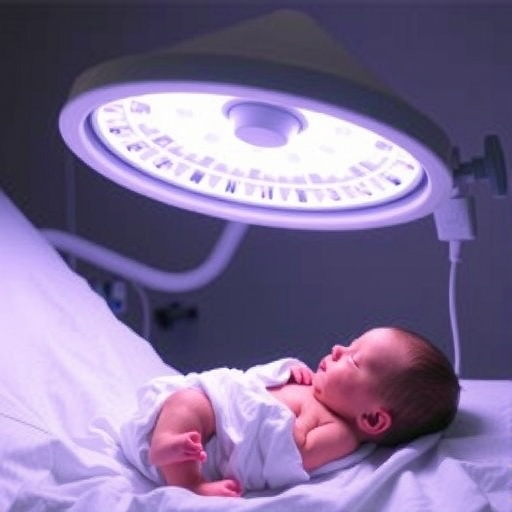
In an era where neonatal care continuously seeks to refine and optimize treatment protocols, a groundbreaking study published recently in Pediatric Research has shone new light on the management of hyperbilirubinemia in newborns. This condition, characterized by elevated levels of bilirubin in the blood, remains a critical clinical challenge due to its potential to cause severe neurological damage if left untreated. The new research from Donneborg, Thorsteinsson, Bruun, and colleagues delves into the efficacy and repercussions of a short-time intensive phototherapy regimen, a treatment modality that has yet to be fully explored from the standpoint of bilirubin rebound and associated risk factors.
Hyperbilirubinemia, clinically observed as neonatal jaundice, occurs when there is an imbalance between bilirubin production and its clearance. The standard treatment approach, phototherapy, utilizes specific wavelengths of light to transform bilirubin into water-soluble isomers, facilitating its excretion without hepatic conjugation. Traditional phototherapy protocols often involve prolonged exposure over several days, raising concerns about potential adverse effects and the stress imposed on neonates and their families. However, the concept of a short-time intensive application of phototherapy has been hypothesized to maintain therapeutic efficacy while potentially reducing treatment duration and hospital stays.
The study comprehensively evaluates the effectiveness of brief but intensive phototherapy sessions in reducing total serum bilirubin levels in neonates diagnosed with hyperbilirubinemia. The researchers meticulously monitored bilirubin concentrations before, immediately after, and at multiple intervals following the phototherapy intervention. A particular focus was given to the phenomenon known as “bilirubin rebound,” wherein bilirubin levels may rise again after the cessation of phototherapy, possibly necessitating additional rounds of treatment.
Data obtained from this research indicates that short-time intensive phototherapy significantly decreases serum bilirubin levels within a condensed timeframe. This rapid decline is clinically desirable, as it mitigates the immediate neurological risks while allowing neonates to return earlier to normal environmental conditions. Importantly, the findings suggest that the rebound effect, often feared as a downside to shorter treatments, does occur but remains clinically manageable in most cases. The incidence and magnitude of bilirubin rebound were carefully quantified, providing valuable insights into its temporal dynamics and identifying neonates at heightened risk.
The researchers explored several risk factors contributing to the propensity for bilirubin rebound. These include variables such as birth weight, gestational age, initial bilirubin concentration, and underlying pathophysiological conditions affecting bilirubin metabolism. The analytic approach employed advanced statistical models to isolate the most significant predictors among a broad array of clinical parameters. This methodological rigor lends credibility to the conclusions drawn and sets a foundation for potential individualized treatment strategies.
A notable strength of the study lies in its incorporation of intensive phototherapy devices designed to maximize surface area exposure and light irradiance within the constraints of a reduced treatment window. The technological advancements in phototherapy delivery are crucial in enabling such abbreviated protocols without compromising the photochemical efficiency of bilirubin isomerization. Moreover, the study discusses the safety profile of this intensified approach, highlighting the absence of adverse effects commonly associated with prolonged phototherapy, such as dehydration, temperature instability, and skin irritation.
From a broader clinical perspective, the implications of these findings are poised to influence neonatal care guidelines significantly. Short-time intensive phototherapy could revolutionize the treatment paradigm by offering a modality that reduces hospital resource utilization and parental stress while maintaining therapeutic efficacy. This innovation addresses both the medical and psychosocial dimensions of neonatal jaundice management, aligning with contemporary models of family-centered care.
The study also advocates for heightened vigilance in post-treatment monitoring to detect and manage rebound hyperbilirubinemia promptly. The refined understanding of risk profiles enables clinicians to stratify neonates according to their probability of rebound and tailor follow-up schedules accordingly. Integrating this risk-based approach may enhance clinical outcomes by preemptively addressing rebound elevations before they reach hazardous levels.
In examining potential limitations, the authors acknowledge the need for larger, multicenter trials to validate their findings across diverse populations. Additionally, longer-term neurodevelopmental assessments would be instrumental in confirming the safety and efficacy of short-time intensive phototherapy beyond immediate bilirubin dynamics. Such comprehensive evaluations are essential to establish this approach as a new standard of care.
Technological evolution plays a pivotal role in this research, with innovations in phototherapy lamp design and light emission spectra enabling optimized treatment delivery. The study underscores the importance of calibrating phototherapy devices to individual patient characteristics, a step towards personalized neonatal care that can adapt to varying clinical presentations and metabolic profiles.
In conclusion, this study represents a significant stride in neonatal hyperbilirubinemia treatment, presenting short-time intensive phototherapy as a viable, efficient, and safe alternative to traditional protocols. By elucidating the efficacy, rebound patterns, and risk factors associated with this novel treatment approach, the research lays the groundwork for future clinical practice modifications that could enhance patient outcomes and healthcare efficiency alike.
As the neonatal care community digests these insights, the potential for reshaping jaundice management guidelines becomes apparent. Clinicians are encouraged to consider the integration of short-time intensive phototherapy into their therapeutic arsenal, pending further validation through expansive clinical studies. This research marks a pivotal moment in advancing neonatal medicine, highlighting how carefully curated innovations can address longstanding clinical dilemmas.
The path forward involves meticulous implementation of these findings and ongoing surveillance to ensure safety and efficacy. Additionally, exploring adjunctive therapies and synergistic combinations with phototherapy may further improve treatment paradigms for hyperbilirubinemic neonates. Interdisciplinary collaboration will be critical to harnessing the full potential of this therapeutic evolution.
Ultimately, this work exemplifies the dynamic nature of medical science, where persistent inquiry and technological advancement converge to refine care for the most vulnerable patients. The neonatal period, marked by rapid physiological transitions, benefits immensely from therapies that are not only effective but also compassionate and minimally disruptive. Short-time intensive phototherapy emerges as a promising candidate to fulfill these criteria, heralding a new chapter in newborn jaundice management.
Subject of Research: Efficacy and rebound effects of short-time intensive phototherapy in neonates with hyperbilirubinemia.
Article Title: Short-time intensive phototherapy of hyperbilirubinemic neonates: efficacy, bilirubin rebound and risk factors for rebound.
Article References:
Donneborg, M.L., Thorsteinsson, K., Bruun, N.H. et al. Short-time intensive phototherapy of hyperbilirubinemic neonates: efficacy, bilirubin rebound and risk factors for rebound. Pediatr Res (2026). https://doi.org/10.1038/s41390-026-04870-3
Image Credits: AI Generated
DOI: 28 February 2026


