

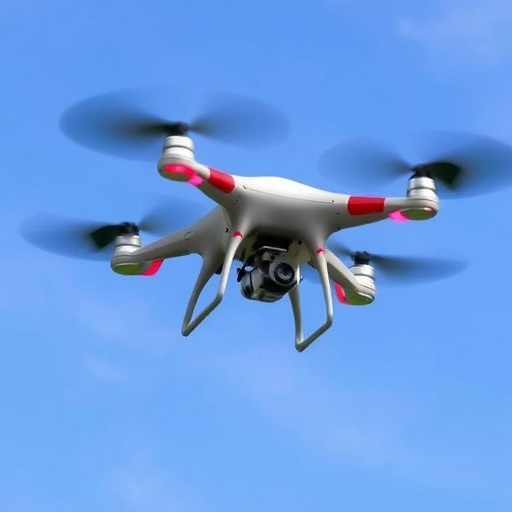
Recent advancements in technology have brought about significant innovations, particularly in the fields of artificial intelligence and machine learning. One of the most intriguing developments in recent years is the utilization of ensemble learning models for the detection of micro-drones. In an era marked by the increasing sophistication of drone technology, which has applications ranging from consumer devices to military operations, the importance of effective detection methods cannot be overstated. A new study by researchers P.K. Sesham, S. Sesham, and M. Ndiaye, published in Discover Artificial Intelligence, pushes the boundaries of traditional drone detection methods by integrating acoustic signatures through ensemble learning techniques.
The primary focus of this research is to address the persistent challenge of micro-drone detection in various environments. Micro-drones, characterized by their small size and relatively quiet operation, pose unique detection difficulties. These devices can evade traditional radar systems, rendering them nearly undetectable by conventional means. The authors propose leveraging acoustic signatures, which are the sounds emitted by these drones, as a viable parameter for detection. By utilizing ensemble learning models, they aim to achieve a higher rate of detection accuracy compared to single-model approaches.
Acoustic signatures provide a rich source of information that can be analyzed by algorithms to differentiate between various types of drones and their operational behaviors. The study underscores the complexity of sound patterns, which can be influenced by several factors including the drone’s design, the materials used in its construction, and its operational conditions. By tuning their ensemble learning models to recognize these nuances, the researchers enhance the model’s capability to detect drones effectively, even in noisy environments where other signals may interfere.
The research teams employ various machine learning techniques to create a robust framework for acoustic detection. Ensemble learning, which combines the predictions from multiple models, offers a powerful strategy to improve predictive performance. By integrating different machine learning algorithms, such as decision trees and support vector machines, the researchers achieve a comprehensive model that can adapt to different scenarios.
One of the standout features of this approach is its focus on real-time detection capabilities. The researchers aim to deploy their models in systems that can operate in real-time, allowing for immediate identification of micro-drones as they enter sensitive airspace. This is particularly critical in security-sensitive environments such as airports, military bases, and public events, where unauthorized drone activity can pose serious risks. The ability to detect these drones promptly can enable swift countermeasures, thereby enhancing safety and security.
The researchers have conducted extensive experiments to validate the efficacy of their proposed models. By collecting acoustic data from various drones operating under different conditions, they created a comprehensive dataset that trained their models. Their findings demonstrate significant improvements in detection accuracy, particularly in environments with high levels of background noise. The innovative approach taken by Sesham, Sesham, and Ndiaye thus reveals the potential of using sound as a strategic layer for detection in an increasingly drone-populated landscape.
Moreover, the implications of this research extend beyond mere detection. Effective micro-drone detection solutions can also pave the way for developing counter-drone technologies. Understanding the acoustic signatures of drones could help design jamming devices or interceptors that target specific frequencies or signal patterns. Hence, the intersection of sound analysis and drone technology presents opportunities for developing comprehensive defense mechanisms against unauthorized drone incursions.
Despite the remarkable advancements outlined in this study, several challenges remain. The research highlights the need for continuous refinement of detection algorithms to adapt to evolving drone technologies and their capabilities. As drone manufacturers develop quieter and more advanced designs, detection systems must evolve in tandem. Thus, further research will need to focus not only on improving acoustic detection methods but also on adapting them in real-time against a rapidly changing technological landscape.
Moreover, the ethical considerations surrounding drone usage and detection cannot be overlooked. The proliferation of drones has raised important questions regarding privacy, data security, and the potential misuse of detection technologies. Researchers and policymakers must collaboratively address these concerns to establish responsible frameworks governing the deployment of drone detection systems, ensuring technological advancements do not come at the expense of individual rights and freedoms.
Looking to the future, the role of ensemble learning models in drone detection is poised to become increasingly relevant. As the market for drones continues to grow and diversify, and as their applications expand into various sectors including agriculture, surveillance, and logistics, the demand for reliable detection methods will become paramount. By harnessing the power of machine learning and integrated acoustic signatures, researchers like Sesham, Sesham, and Ndiaye are setting the stage for significant advancements in the ongoing battle against unauthorized drone activities.
In conclusion, the research conducted by P.K. Sesham, S. Sesham, and M. Ndiaye represents a meaningful step forward in the field of drone detection. Their innovative use of ensemble learning models to analyze integrated acoustic signatures marks a breakthrough that could transform how we approach drone monitoring and safety. The insights gained from this study not only illuminate a path toward effective detection but also underline the necessity for continued research and ethical discourse in the evolving domain of drone technology. The future of drone detection will undoubtedly rely on such innovative methodologies that optimize technology for the safety and security of our shared spaces.
Subject of Research: Detection of micro-drones using auditory signals and machine learning.
Article Title: Ensemble learning models for micro-drone detection using integrated acoustic signatures.
Article References:
Sesham, P.K., Sesham, S. & Ndiaye, M. Ensemble learning models for micro-drone detection using integrated acoustic signatures.
Discov Artif Intell (2026). https://doi.org/10.1007/s44163-026-00869-1
Image Credits: AI Generated
DOI: 10.1007/s44163-026-00869-1
Keywords: Micro-drone detection, Ensemble learning, Acoustic signatures, Machine learning, Real-time detection, Drone technology, Security, Ethical considerations.


