

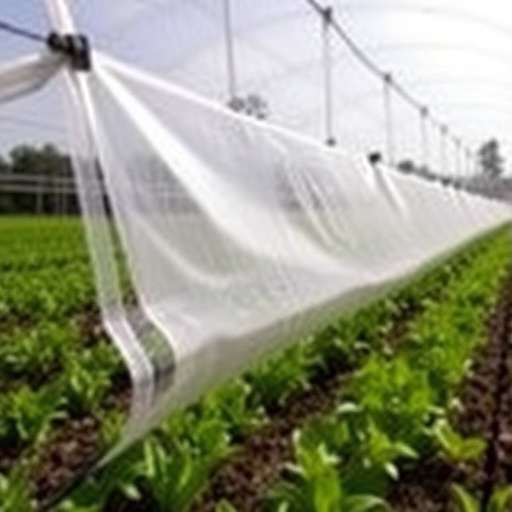
In the relentless pursuit of sustainable agricultural practices, scientists have introduced a groundbreaking advancement that promises to revolutionize the way plastic mulch films are utilized in modern farming. This novel approach employs a multi-layer film technology designed not only to enhance crop yields but also to dramatically reduce the environmental footprint associated with traditional plastic mulching. The significance of this innovation is poised to ripple through global agricultural systems, offering a beacon of hope in the ongoing battle against soil degradation and plastic pollution.
At the heart of this innovation lies a sophisticated multi-layer film, meticulously engineered to optimize performance across various crucial parameters. Unlike conventional plastic mulch films, which often suffer from limited durability and inadequate environmental compatibility, this multi-layer design integrates materials with distinct functional properties. Each layer is tailored to contribute specific benefits—ranging from enhanced moisture retention and thermal regulation to improved mechanical strength and biodegradability. The resulting synergy addresses multiple pain points that have long hindered sustainable plastic mulching practices.
One of the most striking attributes of this multi-layer film is its ability to maintain optimal soil microclimate conditions conducive to healthy plant growth. Traditional single-layer films typically offer a narrow spectrum of benefits, often sacrificing either temperature control or moisture maintenance. By contrast, the innovative film carefully balances these factors through its strategic composition, enabling it to create a microenvironment that fosters robust root development and nutrient uptake. This layered approach thus facilitates a more consistent and resilient growth cycle across diverse crop types.
Besides fostering superior agronomic outcomes, the multi-layer film is engineered to significantly mitigate the plastic residue accumulation that plagues agricultural landscapes. Conventional plastic mulch often fragments into microplastics, persisting in the soil for decades and harming soil biodiversity. By integrating biodegradable polymers within specific layers, the new film achieves controlled degradation under field conditions. This biodegradability ensures that residues decompose into benign compounds post-harvest, eliminating the necessity for cumbersome and costly removal operations that burden farmers and ecosystems alike.
The durability of the multi-layer film also deserves particular attention. While biodegradability is a sought-after trait, maintaining film integrity throughout the growing season is equally vital. The researchers have ingeniously balanced this duality by employing a composite layering technique where outer layers confer mechanical robustness to withstand environmental stresses such as UV radiation, wind abrasion, and temperature fluctuations. Internally, selective degradable components activate only after a predefined temporal threshold, ensuring that the film performs optimally before safely breaking down.
Thermal management capabilities of the multi-layer film further enhance its appeal. Temperature fluctuations in soil can drastically affect seed germination rates and early plant establishment. The film’s layers include materials engineered for selective transmittance and reflectance of solar radiation, modulating soil temperature in ways that promote seedling vigor and reduce water stress. This thermal insulation facet represents a cutting-edge melding of materials science and agronomy, enabling farmers to harness environmental conditions to their advantage without resorting to energy-intensive interventions.
Water conservation, a critical concern in contemporary agriculture, finds a potent ally in this multi-layer film technology. By reducing evaporation from the soil surface and optimizing moisture retention, the film significantly lowers irrigation demands. This attribute not only conserves water resources but also lessens the energy footprint associated with water pumping and distribution infrastructure. The integrated design ensures that water vapor permeability is finely tuned—allowing just enough moisture exchange to maintain soil health while preventing excessive loss.
From an environmental perspective, reducing the reliance on traditional plastic mulch films aligns with broader commitments to sustainability and circular economy principles. The deployment of biodegradable components within the film aspires to curb the proliferation of plastic waste, which currently ranks among the top environmental challenges confronting global agriculture. Moreover, the materials selected are sourced with consideration of lifecycle impacts, enabling a lower carbon footprint relative to conventional alternatives. This holistic approach exemplifies responsible innovation aimed at harmonizing productivity with ecological stewardship.
The multi-layer film’s effectiveness has been validated through extensive field trials across various climatic zones and soil types. These experiments demonstrated tangible improvements in crop yield, water use efficiency, and soil quality metrics when compared to standard plastic mulching. Particularly notable were the increases observed in high-value crops where microclimate optimization translated directly into pricing premiums for farmers. The adaptability of the film across diverse agricultural contexts hints at its potential for widespread adoption.
One transformative aspect of this research is the potential economic benefits it portends for farmers, especially those in regions vulnerable to climate variability and resource scarcity. By increasing yield stability and reducing input costs associated with water and plastic removal, the multi-layer film can bolster farm profitability. Additionally, by improving soil health and reducing plastic pollution, it aids in preserving the long-term viability of agricultural lands. Such economic-environmental synergies are critical for incentivizing transitions to sustainable farming practices.
The manufacturing process underlying the multi-layer film demonstrates remarkable scalability and adaptability. Leveraging advanced extrusion and co-lamination technologies, producers can customize film properties to suit region-specific agricultural requirements and seasonal variations. This flexibility ensures that the material can meet diverse global demands without sacrificing performance or sustainability. Moreover, the integration of biodegradable polymers does not compromise the feasibility of mass production, paving the way for cost-competitive market offerings.
Addressing potential concerns regarding biodegradability, the researchers have conducted rigorous assessments to ensure that the breakdown products of the film do not introduce toxins or otherwise disrupt soil microbial communities. Analytical studies confirmed that the degradation byproducts are largely inert and compatible with soil health. This finding assuages fears that biodegradable polymers might inadvertently harm ecosystems, underscoring the thoughtful balance struck between innovation and ecological responsibility.
Furthermore, the research highlights that the multi-layer film’s lifecycle extends beyond a single cropping cycle. By facilitating healthier soil biota and minimizing contamination, it supports sustainable soil management practices, fostering resilience in agroecosystems over time. This potential for regenerative impacts signals a hopeful trajectory for agricultural systems increasingly threatened by degradation, offering farmers a tool to repair and sustain their productive landscapes.
The introduction of this multi-layer film technology may also catalyze policy shifts and incentives that promote sustainable plastic mulching adoption. Clear evidence of environmental and economic benefits could inspire governments and agricultural bodies to support farmer transitions through subsidies, educational programs, and regulatory frameworks. Such systemic support is essential to amplify the ripple effects of this innovation, embedding sustainability within mainstream agricultural infrastructure.
In conclusion, this pioneering multi-layer film approach encapsulates a significant leap forward in sustainable agriculture, merging materials science ingenuity with ecological mindfulness. Its multifaceted benefits—ranging from improved crop performance and water conservation to biodegradable residue management—position it as a transformative technology in the fight against agricultural plastic pollution and resource inefficiency. As this innovation gains momentum, it stands poised to reshape the very fabric of plastic mulching practices, steering global agriculture towards a more resilient and sustainable future.
Subject of Research:
Article Title:
Article References:
Kansara, H.J., Hernandez-Charpak, Y.D., Buck, E.M. et al. Advancing sustainable agriculture: a novel multi-layer film approach to plastic mulching. npj Sustain. Agric. 3, 64 (2025). https://doi.org/10.1038/s44264-025-00106-9
Image Credits: AI Generated
DOI: https://doi.org/10.1038/s44264-025-00106-9
Keywords: plastic mulch, sustainable agriculture, biodegradable polymers, multi-layer film, soil microclimate, water conservation, crop yield, environmental impact


