

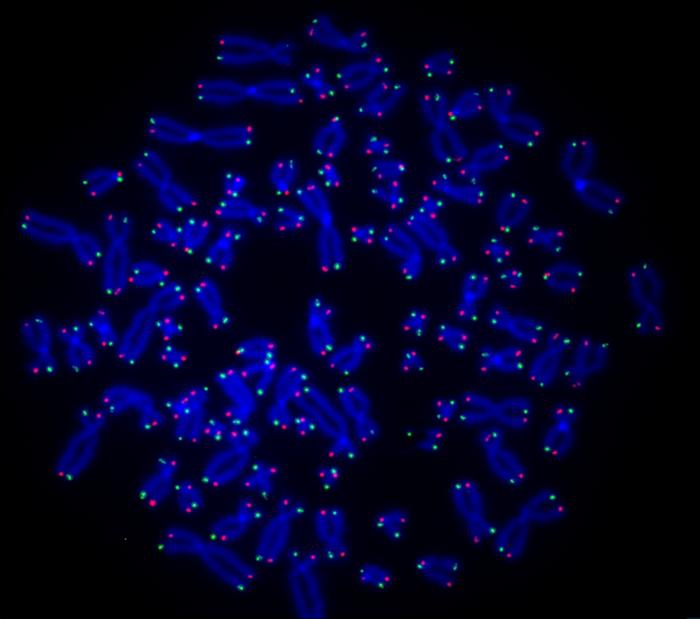
In the intricate dance of cellular replication, chromosomes are crowned with specialized structures known as telomeres—protective caps that guard the genetic material’s integrity. With every round of cell division, these telomeric ends progressively shorten, a natural consequence of DNA replication mechanics. Cells predominantly counteract this shortening through the enzyme telomerase, which replenishes the telomeric repeats. However, a subset of cancers, approximately 10 to 15 percent, utilize a mysterious alternative mechanism termed the Alternative Lengthening of Telomeres (ALT) pathway, circumventing the need for telomerase.
The ALT pathway is often implicated in some of the most lethal malignancies, including pancreatic neuroendocrine tumors, osteosarcomas, and specific glioma subsets. Despite its clinical significance, the molecular intricacies governing ALT have remained largely elusive, a “black box” in cancer biology. Roderick O’Sullivan, Ph.D., a professor at the University of Pittsburgh’s Department of Pharmacology and Chemical Biology, alongside colleagues at UPMC Hillman Cancer Center, has spearheaded groundbreaking research to unmask the complexities of this pathway.
A newly published study in the journal Molecular Cell introduces an innovative molecular tool named BLOCK-ID, representing a leap forward in exploring the ALT pathway’s underlying mechanics. The research team, including senior author Kyle Miller, Ph.D. from Emory University’s Department of Radiation Oncology, utilized BLOCK-ID to illuminate the cellular events that occur during replicative stress—a critical feature influencing telomere maintenance via the ALT mechanism.
DNA replication, a fundamental biological process, involves the unwinding of the double helix to form replication forks where synthesis machinery operates. Occasionally, replication encounters obstacles in the form of protein-bound DNA segments that stall the replication fork, creating so-called protein barriers. These stalls jeopardize genomic stability as the replication machinery, akin to a train encountering a sudden blockade, risks collision and damage.
BLOCK-ID cleverly simulates an artificial protein barrier, enabling researchers to capture a molecular “snapshot” of collision events at precise genomic locales. The system employs an enzyme-mediated addition of biotin molecules to proteins directly involved at these collision points. This biotin tagging uniquely marks proteins that have interacted with the stalling barrier, sustaining a permanent record despite their possible subsequent relocation within the cell.
Application of BLOCK-ID has yielded remarkable insights into the protein landscape orchestrating the ALT pathway. Among the newly identified actors is TRIM24, a protein shown to be vital for the ALT mechanism’s functionality. The study reveals that while normal cells tolerate the absence of TRIM24, ALT-positive cancer cells depend heavily on this protein. Without TRIM24, ALT cells experience telomeric chaos—telomeres shorten dramatically, lose stability, and fail to function properly.
Previously, promyelocytic leukemia protein (PML) was considered indispensable in the ALT pathway, forming a shell around telomeres to create specialized nuclear bodies that recruit repair proteins. Intriguingly, the team engineered cancer cells lacking PML, artificially tethering TRIM24 to their telomeres. The resultant reformation of telomeric repair structures underscored TRIM24’s paramount role and suggested that the ALT machinery possesses inherent redundancies, a crucial consideration for therapeutic targeting.
Understanding these redundancies is essential because any future attempts to thwart ALT-dependent tumor growth must account for the pathway’s adaptive flexibility. The research therefore marks a foundational step toward molecular interventions that could selectively disrupt ALT-driven telomere maintenance, potentially crippling the proliferative immortality of a subset of aggressive cancers.
This study’s revelation of TRIM24’s pivotal role not only redefines previous assumptions but also offers a promising therapeutic target. If drugs can be developed to inhibit TRIM24’s function specifically in ALT-positive cells, there may be a pathway to treatments that selectively undermine the survival of difficult-to-treat cancers, sparing normal cells.
The methodology underpinning BLOCK-ID represents a significant advancement in cellular and molecular biology toolkits, providing unprecedented access to transient protein-DNA interactions that were previously unreachable. This technological innovation promises to catalyze further discoveries beyond telomere biology, potentially transforming our understanding of replicative stress and genome stability.
Collectively, these findings paint a more detailed and mechanistically rich picture of telomere maintenance in ALT cancers, bridging a critical knowledge gap that has stymied the development of targeted therapies. The integration of advanced biochemical tagging, molecular biology, and genetic engineering embodied in this study exemplifies the multidisciplinary approach necessary for decoding cancer’s most recalcitrant secrets.
The ongoing pursuit of decoding the ALT pathway through tools like BLOCK-ID is emblematic of the broader quest in oncology: to transform fundamental molecular insights into targeted, precision therapies that confer real-world benefits for cancer patients facing grim prognoses.
Subject of Research: Telomere maintenance mechanisms in ALT (Alternative Lengthening of Telomeres) cancer cells and the role of TRIM24 in replicative stress responses.
Article Title: TRIM24 directs replicative stress responses to maintain ALT telomeres via chromatin signaling
News Publication Date: 3-Jul-2025
Web References:
DOI link
Image Credits: O’Sullivan Lab
Keywords: Health and medicine; Telomeres; Telomere sequences; Cancer; Cancer research


