

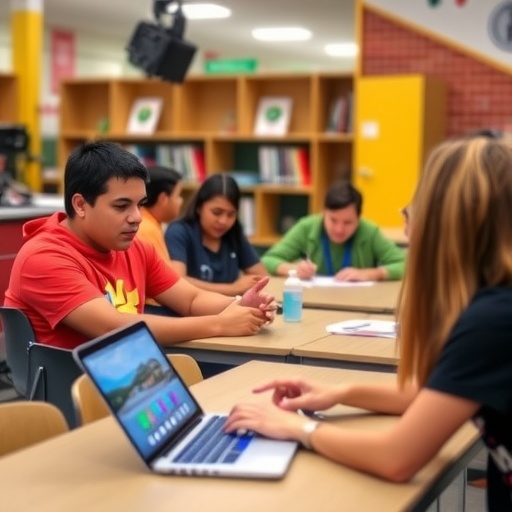
In recent years, the landscape of education has undergone a significant transformation, primarily influenced by the integration of technology in the classroom. This evolution has sparked a multitude of discussions surrounding the effectiveness and utility of various educational technologies that support student-centered teaching—a pedagogical approach emphasizing active learning, collaboration, and critical thinking among students. In this context, the systematic review conducted by C.T. Swai, published in 2025, provides a comprehensive analysis of the classroom technologies that foster such learning environments.
The review meticulously explores how different technological tools not only enhance student engagement but also facilitate personalized learning experiences. The author’s examination of contemporary classroom technologies sheds light on how they can be strategically implemented to align with the objectives of student-centered teaching, thereby reshaping students’ educational journeys. By harnessing these technologies, educators can better cater to the diverse learning needs of their students, allowing for a more inclusive and effective educational experience.
Central to this discussion is the variety of classroom technologies that have emerged in recent years. From interactive whiteboards to tablets and educational applications, each tool offers unique capabilities that can significantly impact teaching methods and learning outcomes. For instance, interactive whiteboards enable dynamic presentations and foster interactivity during lessons, while tablets can facilitate access to a wealth of information and resources at the students’ fingertips. The review highlights how these tools serve as catalysts for promoting collaborative projects, student-led initiatives, and peer-to-peer learning, ultimately elevating the learning atmosphere.
Moreover, the integration of cloud-based platforms is another critical aspect examined in the systematic review. These platforms allow for seamless communication and resource sharing among students and teachers, breaking down traditional boundaries of learning. By utilizing these digital spaces, students can engage in collaborative assignments, receive immediate feedback, and develop essential skills for the modern workforce. This interconnectedness supports a more holistic approach to education, enriching the learning experience.
However, Swai does not shy away from addressing the challenges that come with the adoption of technology in the classroom. The review underscores the importance of adequate training for educators to harness these tools effectively. Without proper education and support, even the most sophisticated technologies can fall short of their potential. Teachers must understand how to effectively integrate these tools into their pedagogy to ensure that they enhance rather than detract from the learning experience. This underscores the need for comprehensive professional development programs aimed at equipping educators with the skills required to leverage technology in meaningful ways.
Additionally, the review discusses the role of student feedback in shaping the implementation of classroom technologies. Understanding students’ perspectives on technology use can provide valuable insights into how these tools can be optimized. Engaging students in discussions about their experiences with various educational software and hardware not only empowers them but also fosters a sense of ownership over their learning. This feedback loop can ultimately lead to more thoughtful and tailored technology integration strategies within the classroom.
A particularly striking feature of Swai’s review is the analysis of the impact of gamification on student engagement and learning outcomes. Gamification incorporates elements of game design into educational contexts, transforming conventional learning experiences into interactive and stimulating ones. This approach has been shown to motivate students, encouraging them to participate actively in their learning processes. By tapping into students’ intrinsic motivations and competitive spirits, gaming elements can lead to improved retention and understanding of complex concepts.
The review also touches on the significance of accessibility in technology adoption. Ensuring that all students, regardless of background or ability, have access to these educational technologies is crucial for equitable learning opportunities. This inclusion can reduce educational disparities and create a more balanced learning environment. The examination of accessible technologies highlights innovations designed to support learners with disabilities, illustrating the potential of technology to foster inclusivity in educational settings.
Further, Swai’s systematic review examines the latest evidence on the efficacy of specific educational technologies. Through rigorous analysis, the author presents case studies and quantitative data that demonstrate how particular tools have transformed classrooms around the world. These real-world examples provide compelling proof of the potential inherent in educational technologies to enhance student-centered teaching. This empirical evidence reinforces the call for educators and administrators to embrace and integrate these technologies into their instructional strategies.
Another essential consideration raised in the review is the sustainability of technology use in education. As classrooms increasingly rely on digital tools, the environmental impact of hardware production and energy consumption comes into focus. Swai emphasizes the need for schools to consider the longevity and sustainability of the technologies they adopt. Investing in durable, ethically produced, and energy-efficient technologies will not only benefit educational outcomes but also contribute to a more sustainable future.
The findings of this review are crucial not just for educators but also for policymakers, technologists, and institutions involved in curriculum development. The exploration of classroom technologies and their implications for student-centered teaching highlights the need for a collaborative effort among all stakeholders to create educational ecosystems that support innovative teaching practices. Policymakers must recognize the importance of funding and resources to facilitate the integration of effective technologies, ensuring that all schools can benefit from these advancements.
In light of rapid technological advancements, it is pivotal for educational institutions to remain adaptable and proactive. As new tools emerge, continuous evaluation and integration are necessary to keep pace with changing educational needs and student preferences. The dynamic nature of technology requires educators to be lifelong learners themselves, willing to explore and experiment with novel tools to enrich their teaching methodologies.
The implications of this review extend far beyond individual classrooms; they resonate on a global scale. As educational systems worldwide grapple with the challenges of modernization, the insights provided by Swai’s systematic review serve as a guiding framework for harnessing technology in a way that prioritizes student engagement and learning outcomes. This review encapsulates a pivotal moment in education, underscoring the transformative power of technology when effectively aligned with pedagogical goals.
In conclusion, Swai’s review is a significant contribution to the ongoing discourse around classroom technologies and their role in student-centered teaching. As educators navigate the complexities of integrating technology into their pedagogical frameworks, this systematic analysis provides a roadmap for making informed decisions that prioritize student needs and learning processes. By embracing innovative technologies and fostering a culture of feedback and inclusivity, educators can create enriching educational experiences that prepare students for success in an increasingly digital world.
Subject of Research: Classroom technologies supporting student-centered teaching.
Article Title: A systematic review of classroom technologies supporting student centered teaching.
Article References:
Swai, C.T. A systematic review of classroom technologies supporting student centered teaching.
Discov Educ 4, 564 (2025). https://doi.org/10.1007/s44217-025-00932-6
Image Credits: AI Generated
DOI: https://doi.org/10.1007/s44217-025-00932-6
Keywords: Educational technology, student-centered learning, classroom innovation, technology integration, gamification, accessibility in education.


