

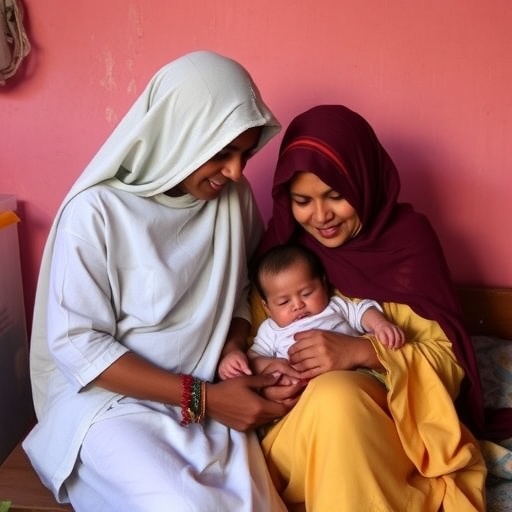
In a groundbreaking new study published in the International Journal for Equity in Health, researchers shed light on the deeply entrenched disparities plaguing maternal healthcare access among Rohingya women residing in the refugee camps of Cox’s Bazar, Bangladesh. This ambitious inquiry unravels the complex web of social, economic, and structural factors that contribute to unequal healthcare access and maternal outcomes within one of the world’s most vulnerable populations. Beyond mere statistics, this investigation offers a critical lens on how displacement and marginalization intersect to perpetuate health inequities, sparking urgent debates within global health and humanitarian circles.
The Rohingya refugee crisis has long been characterized by staggering humanitarian needs since the mass exodus triggered by violence in Myanmar. Cox’s Bazar now hosts over a million Rohingya refugees in densely populated camps, where access to basic healthcare remains profoundly constrained. This recent analysis meticulously documents how, within these overcrowded settlements, disparities in maternal healthcare uptake mirror broader systemic challenges, including poverty, cultural barriers, and limited health infrastructure. The study stands out by combining robust quantitative data with qualitative insight, providing an unparalleled narrative on maternal health inequalities.
Central to the investigation is the assessment of antenatal care utilization, skilled birth attendance, and postnatal services—key components of maternal health critical to reducing mortality and morbidity. The data reveal a disturbing trend: while some Rohingya women manage to access essential maternal services, a significant proportion remains excluded, suffering from preventable complications. This gap is not merely a product of resource scarcity but also reflects embedded sociocultural dynamics, including gender norms and discrimination that shape healthcare-seeking behaviors and decision-making autonomy.
Moreover, the researchers highlight the pivotal role of education and socioeconomic status in mediating healthcare inequality. Women with higher literacy levels and those living in relatively better economic conditions exhibit markedly improved maternal health care access. This correlation underscores the multidimensional nature of disparity: improving health outcomes demands integrated strategies that address education, income generation, and empowerment alongside medical provision.
Intricately woven into these findings is the critical influence of camp infrastructure and service delivery models. The study contends that uneven distribution of healthcare facilities, coupled with fluctuating quality and inconsistent availability of services, exacerbates maternal care gaps. Facilities located far from certain camp zones are less frequented, and transportation barriers further dissuade women from seeking timely care. Addressing logistical and infrastructural challenges emerges as a non-negotiable imperative for health equity within refugee settings.
Cultural perceptions and traditional beliefs also surface as formidable obstacles. The researchers document instances where entrenched cultural views on childbirth and medical intervention act as deterrents for some women to embrace formal health services. In addition, mistrust towards healthcare providers, often stemming from language barriers and past traumatic experiences, compounds reluctance to engage with institutional care. Tailoring health communication and service delivery to culturally resonate with the Rohingya community is therefore paramount.
Compounding these barriers is the persistent gender disparity pervasive in Rohingya society, where women’s autonomy is severely restricted. Limited decision-making power over reproductive health often relegates maternal care to the margins of priority, further disenfranchising women during a critical period. The study advocates for nuanced gender-sensitive interventions that empower women within their cultural contexts to claim agency over their health choices.
The study’s rigorous methodology involved surveys conducted across multiple camps, capturing a diverse representative sample of Rohingya women. A mix of structured interviews and in-depth discussions provided granular insight into the lived realities behind stark statistics. Importantly, this mixed-method approach enabled the identification of causal pathways linking social determinants to maternal healthcare outcomes, moving beyond correlative analysis to actionable knowledge.
One of the pivotal contributions of the research lies in spotlighting the interaction between displacement-related trauma and healthcare access. Many women carry psychological scars of violence and loss, which influence both their physical health status and engagement with healthcare systems. Psychological distress, often overlooked in maternal health programs, is therefore a critical factor in understanding utilization patterns.
The implications of this study extend well beyond the confines of Cox’s Bazar. As global displacement reaches unprecedented levels, the challenges faced by Rohingya women resonate in other refugee contexts where structural inequities intersect with cultural complexities. This research sets a new benchmark, demonstrating the necessity of tailoring maternal health interventions to the unique socio-political milieus of displaced populations, rather than relying on one-size-fits-all humanitarian models.
Importantly, the study calls for multisectoral collaboration: health agencies, local authorities, NGOs, and the refugee communities themselves must coalesce to design integrated, culturally sensitive, and sustainable maternal health solutions. Without this pluralistic approach, gains in maternal health equity will remain fragile and ephemeral at best.
Technological innovation also features as a promising avenue. The authors suggest that mobile health platforms and telemedicine can overcome geographic and informational barriers, providing Rohingya women with real-time health guidance in their own language. However, they caution that technology must complement rather than replace human-centered care, emphasizing trust-building and community partnership.
In addition to policy recommendations, the study offers a sobering reminder about the intersection of humanitarian aid and health equity. Emergency response often prioritizes immediate survival, sometimes sidelining long-term health system development and equity considerations. This research underscores how neglecting such foundational investments fuels cyclical inequities that disproportionately harm marginalized groups like the Rohingya women.
The publication’s call for urgent action echoes loudly amid ongoing global efforts to attain Sustainable Development Goal 3: ensuring healthy lives and promoting well-being for all, particularly maternal health. Ensuring equitable access for displaced populations is not merely a humanitarian imperative but a moral obligation that reflects our collective commitment to justice and human dignity.
Envisioning the path forward, the authors advocate for sustained longitudinal studies to monitor intervention impacts and evolving barriers within refugee camps. Dynamic, evidence-based policies grounded in empathy and cultural competency are paramount to transform the current landscape. Only through this multi-dimensional, inclusive lens can we hope to dismantle maternal health inequities in crisis settings.
The study by Zakaria and colleagues offers a profound and urgent reckoning with the realities faced by Rohingya women’s maternal health care. Their findings serve not just as a scientific critique but as a rallying cry for innovative, inclusive, and justice-driven global health strategies to reach the most vulnerable mothers on the margins of humanity.
Subject of Research: Inequality in receiving maternal health care among Rohingya women living in Cox’s Bazar refugee camps and its associated factors
Article Title: Inequality in receiving maternal health care among Rohingya women living in Cox’s Bazar refugee camps and its associated factors
Article References:
Zakaria, M., Mostafa, M.R., Azad, M.A.K. et al. Inequality in receiving maternal health care among Rohingya women living in Cox’s Bazar refugee camps and its associated factors. Int J Equity Health 24, 309 (2025). https://doi.org/10.1186/s12939-025-02673-2
Image Credits: AI Generated


