

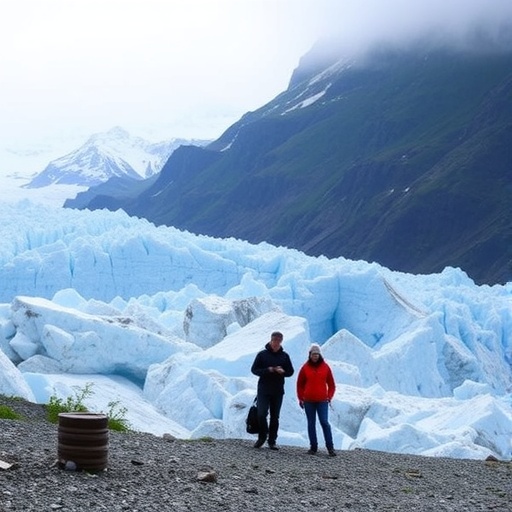
Vanishing Giants: The Paradox of Melting Glaciers as Tourism Magnets and Climate Crisis Symbols
Across the globe, glaciers—majestic, ancient ice formations that have sculpted landscapes for millennia—are receding at an unprecedented pace, their mass shrinking under the relentless impact of rising temperatures. Paradoxically, just as these icy giants wane, they are captivating the world’s attention more than ever before, drawing in an increasing number of tourists eager to witness their grandeur before it is lost forever. This phenomenon underscores the intricate and often conflicting dynamics between environmental preservation, economic development, and cultural significance in the context of climate change.
A recent interdisciplinary study led by anthropologist Cymene Howe of Rice University delves into this emerging form of tourism, termed “last-chance tourism,” revealing how melting glaciers have transcended their roles as purely natural attractions. Instead, they have transformed into potent symbols embodying ecological grief, political urgency, and cultural identity simultaneously. The research, published in Nature Climate Change, draws on a global spectrum of case studies and underscores the urgent need for systemic insight and response to this multifaceted issue.
Tourism has long been an integral part of glacier regions, but climate change has imbued these sites with newfound significance that extends beyond their aesthetic appeal or recreational potential. Presently, glaciers serve as living monuments to the climate crisis, physically manifesting the consequences of anthropogenic emissions and prompting profound emotional responses among visitors and local inhabitants alike. However, this surge in visitors presents a dual challenge: while it raises awareness and generates economic opportunities, it also exacerbates environmental degradation and social inequities.
The study’s authors estimate that more than 14 million tourists annually visit some of the world’s most prominent glaciers, illustrating a robust demand fueled by both curiosity and a sense of urgency. These visitors often confront stark visual evidence of retreating ice, altered ecosystems, and shifting cultural landscapes, experiences that stimulate a deep sense of ecological grief—a form of mourning for the natural world as it transforms and diminishes. This emotional dimension imbues glacier tourism with a complexity that pushes it beyond mere leisure, positioning it as a ritualistic encounter with an imperiled environment.
For residents in glacier-dependent regions, the ramifications extend beyond environmental loss to encompass cultural dislocation and economic vulnerability. These icy masses have been foundational to local ways of life, acting as freshwater reservoirs and shaping cultural narratives over millennia. Their disappearance portends significant disruptions in water availability, agricultural patterns, and cultural heritage, further intensifying the stakes for these communities amid shifting climate realities.
In response, the study highlights a plethora of evolving social and cultural practices arising in glacier regions. Visitor centers now increasingly serve dual roles as educational hubs and spaces of communal reflection, where interactive exhibits contextualize glacier loss within broader climate systems. Public memorials and ceremonies, once inconceivable for inanimate natural features, have surfaced as collective acts to honor disappearing glaciers, fostering solidarity in the face of ecological tragedy and amplifying calls for political action.
Yet, the study cautions against superficial or technocratic solutions that prioritize short-term tourism access over sustainable stewardship. Initiatives such as insulating ice surfaces with protective coverings, expanding infrastructure, or increasing helicopter tours, though seemingly beneficial, risk reinforcing carbon-intensive practices and exacerbating environmental harms. Such measures may provide temporary reprieve, but they often contribute to the very fossil-fueled economy that accelerates glacial retreat, illustrating the paradox that defines much of contemporary environmental management.
The paper underscores that addressing glacier tourism’s challenges demands comprehensive, systemic reforms rather than quick fixes. Integrating climate science, local knowledge, and political will is essential to devise policies that balance ecological integrity with economic viability and social justice. Moreover, governance frameworks must emphasize environmental justice, ensuring that economic benefits accrue fairly to local communities often marginalized in tourism-driven economies and exposed to heightened climate risks such as water scarcity and natural disasters.
Central to this research is the recognition that glacier tourism, if managed thoughtfully, can be a powerful catalyst for climate awareness and activism. Glaciers serve as irrefutable, tangible indicators of global warming—visible, measurable, and deeply moving. By connecting visitors emotionally and intellectually to the realities of climate change, glacier tourism has the potential to stimulate broader public engagement and inspire policy reforms. However, realizing this potential requires reimagining tourism paradigms to decouple economic gains from environmental degradation.
Howe reflects on cultural milestones that symbolize this evolving relationship with glaciers, citing the 2019 funeral held for a glacier—the first of its kind—as a poignant emblem of ecological loss. The establishment of the Global Glacier Casualty List further institutionalizes awareness, cataloging glaciers endangered worldwide and fostering a global network of memorialization and activism. These symbolic acts amplify the narratives glaciers carry, emphasizing their roles as essential freshwater sources and unique ecosystems, as well as vital components in the Earth’s climate regulation.
The study drives home an urgent message: the global community must shift from witnessing glacier loss as a passive spectacle to embracing active stewardship that mitigates further damage. Ecological grief, while painful, can be channeled into constructive engagement that promotes sustainable tourism, robust climate policy, and resilient communities. The challenge lies in aligning personal emotions, scientific understanding, and political frameworks to halt—and reverse—the forces leading to glacier disappearance.
In sum, melting glaciers epitomize the paradoxes of modern environmental crises. They are breathtaking wonders drawing throngs of tourists eager to experience their ephemeral beauty, even as their demise signifies a profound planetary imbalance. Navigating this paradox requires acknowledging glaciers as complex socio-ecological systems intertwined with cultural meaning, economic opportunity, and environmental vulnerability. Only through integrated, equitable, and science-informed approaches can the world hope to preserve these icy monuments and the livelihoods intertwined with them for generations to come.
Subject of Research: Not applicable
Article Title: Melting glaciers as symbols of tourism paradoxes
News Publication Date: 9-Feb-2026
Web References:
- Nature Climate Change Article
- Rice University Profile – Cymene Howe
- Global Glacier Casualty List
- First Funeral for a Glacier (Rice News)
References:
Howe, C., et al. (2026). Melting glaciers as symbols of tourism paradoxes. Nature Climate Change. DOI: 10.1038/s41558-025-02544-2.
Keywords:
Climate change adaptation, environmental issues, Earth climate, global temperature, climate change


