

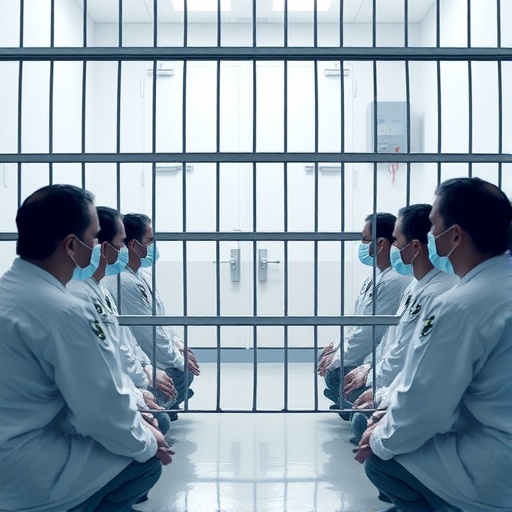
Incarceration presents a multitude of health challenges that seldom come into public discourse, yet a recent study has shone a glaring light on one particularly overt medical issue: inadequate bowel preparation in incarcerated patients undergoing colonoscopy. Published in the esteemed Journal of General Internal Medicine, the research conducted by Schell et al. uncovers the startling reality that these patients face elevated risks when it comes to the effectiveness of bowel preparation. With such preparation being a precursor to a successful colonoscopy, it raises significant questions regarding overall patient health and medical management within penal facilities.
Colonoscopy is a critical procedure that allows physicians to examine the inner lining of the colon and rectum, primarily to screen for cancer and other gastrointestinal disorders. The effectiveness of this procedure, however, is highly reliant on proper bowel preparation, which involves cleansing the intestinal tract. If bowel preparation is inadequate, it could lead to suboptimal visualization of the colon, rendering the colonoscopy less effective or, in some cases, necessitating a repeat procedure. The findings of this research indicate that incarcerated patients are experiencing higher rates of inadequate preparation compared to their non-incarcerated peers.
The backdrop of this investigation was prompted by ongoing discussions about health inequities in marginalized populations. Incarcerated individuals often face not only a lack of healthcare access but also systemic barriers that contribute to worse health outcomes. The study’s researchers aimed to delve into the specific risks associated with bowel preparation in a correctional setting, bringing to light the complexities that come with providing healthcare to individuals who are imprisoned.
To assess the bowel preparation quality among incarcerated patients, the researchers analyzed data from multiple correctional facilities. Their findings revealed that many of these patients lacked adequate resources and knowledge for proper bowel cleansing prior to undergoing colonoscopy. A significant portion of the patient population also faced challenges such as limited dietary options and inadequate information provided by healthcare staff. The study highlighted that correctional institutions often do not have the proper infrastructure to assist patients in preparing for such vital medical procedures.
Moreover, the restrictive environment of incarceration complicates patients’ ability to adhere to the prescribed preparatory protocols. Available literature has long pointed to the fact that effective bowel preparation requires not only compliance with dietary restrictions but also access to sufficient hydration—a resource that may be in short supply in prisons. The research findings suggest that the disconnection between proper bowel preparation guidelines and what is realistically achievable in correctional facilities culminates in a greater risk of inadequate colonoscopy preparation.
To compound this issue, anxiety and stress associated with the prison environment can negatively affect an inmate’s physiological responses. Stress has been shown to interfere with the digestive processes, and prisoners may find it particularly challenging to adhere to the pre-colonoscopy instructions amid their complex emotional states. This interplay between psychological well-being and physical health necessitates a more comprehensive approach to healthcare for the incarcerated population.
The study also encourages the medical community to consider implementing tailored educational initiatives aimed at improving bowel preparation strategies within prison settings. Researchers suggest that healthcare providers operating in these facilities should take a more proactive role in educating patients about the importance of bowel preparation and elucidate the steps needed to ensure optimal outcomes. Such initiatives could bridge the substantial gap that currently exists between healthcare services and patient understanding.
Future investigations are warranted to further explore the multi-faceted nature of this issue. The findings invoked a call to action for correctional facilities to reevaluate their healthcare protocols and prioritize the provision of adequate educational resources and practical support for their patients. Innovations in care delivery models could help mitigate some of the systemic health disparities prevalent among incarcerated individuals.
Addressing inadequate bowel preparation not only has implications for individual patient health but also serves as a broader commentary on the quality of healthcare available within correctional systems. From dietary provisions to the level of education provided by medical staff, every facet of care must undergo scrutiny. A paradigm shift in how the healthcare system approaches the incarcerated population may yield improved medical outcomes and ultimately drive down the need for repeat procedures that create additional healthcare burdens.
Finally, the researchers concluded their study by emphasizing that healthcare inequalities in the prison system cannot be overlooked. Ensuring that incarcerated patients receive adequate preparation for colonoscopy is a vital step towards improving their overall health outcomes. This research serves as an essential reminder of the responsibility that healthcare professionals have in advocating for equitable care, regardless of a patient’s circumstances.
As the healthcare community pushes forward, it becomes paramount to ensure that every patient—regardless of their background or current situation—has equal access to comprehensive healthcare services. The work of Schell et al. catalyzes necessary discussions surrounding the treatment of incarcerated individuals, advocating for a more conscientious approach to health in the face of systemic inequities.
Subject of Research: Inadequate bowel preparation in incarcerated patients undergoing colonoscopy.
Article Title: Incarcerated Patients Undergoing Colonoscopy are at Increased Risk of Inadequate Bowel Preparation.
Article References:
Schell, T.L., Chahal, B.S., Jones, J.D. et al. Incarcerated Patients Undergoing Colonoscopy are at Increased Risk of Inadequate Bowel Preparation.
J GEN INTERN MED (2025). https://doi.org/10.1007/s11606-025-10100-z
Image Credits: AI Generated
DOI: https://doi.org/10.1007/s11606-025-10100-z
Keywords: Incarceration, healthcare inequalities, bowel preparation, colonoscopy, patient education, correctional facilities.


