

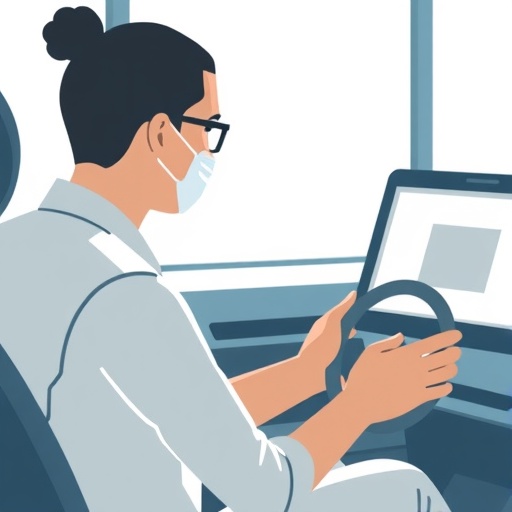
In a remarkable exploration into the efficacy of intervention methodologies for impaired drivers, researchers have unveiled intriguing insights into the divergent perceptions of facilitators regarding in-person and videoconference delivery methods. This qualitative study conducted by Docherty, Rup, and Stoduto serves as a critical examination of the modalities employed in remedial interventions, particularly in an era where remote communication has become ubiquitous. The findings will not only impact current practices in the field but could also significantly influence future research directions and intervention strategies.
As society grapples with the consequences of impaired driving — a leading factor in road-related incidents — the need for effective remedial programs has never been more paramount. The ongoing pandemic has accelerated the shift towards remote delivery of interventions, prompting questions about the effectiveness and engagement levels of such formats. The study fires crucial questions into the air, addressing whether facilitators perceive videoconferencing as an adequate substitute for face-to-face interaction.
Facilitators, comprising professionals trained to guide these programs, play an integral role in shaping the participant experience. Their insights reveal nuances about the dynamics of engagement and the relational aspects of teaching and learning in both settings. Through comprehensive interviews, Docherty and her team captured the rich and varied perspectives of these facilitators, leading to a deeper understanding of how delivery methods impact the effectiveness of remedial interventions.
One of the primary themes that surfaced from the interviews was the degree of connection facilitators felt they could forge with participants through videoconferencing. Some expressed concern that the lack of physical proximity might inhibit their ability to connect empathetically with the individuals undergoing intervention. Emotional nuances can often get lost in translation through a screen, they argued, making it more challenging to gauge participants’ reactions and cater to their individual needs effectively.
Conversely, many facilitators noted the advantages that videoconferencing offers, particularly in terms of accessibility. Participants living in remote or rural areas, who might otherwise struggle to attend in-person sessions, could now engage in these interventions without the barriers of travel. This essential adaptability could pave the way for a more inclusive approach to participant recruitment, significantly broadening the reach of these crucial programs.
The study further highlighted the variations in convenience and flexibility offered by videoconference sessions. Facilitators found that the ability to schedule sessions around participants’ lifestyles led to increased attendance and participation rates. This adaptability is vital, as consistent attendance is critical for the success of any remedial intervention. With the complexities of everyday life, having the option of remote participation could mean the difference between a successful program and one that fails to engage its audience.
Yet, despite this flexibility, some facilitators identified logistical challenges associated with virtual meetings. Technical difficulties, including connectivity issues and unfamiliarity with the virtual platforms, could detract from the session’s intended atmosphere, leading to disruptions and disengagement. In an ideal world, technology would function flawlessly, but real life often presents roadblocks that complicate the delivery of such interventions.
In exploring the blended model, where both in-person and online sessions could be utilized, facilitators expressed a belief that hybrid approaches might yield the best results. The flexibility of combining these formats could cater to participants’ unique needs while retaining the interpersonal benefits of face-to-face interaction. Such an approach could balance the emotional connection required for effective learning with the logistical convenience that modern life demands.
Importantly, this research underscores the significance of facilitator training in both delivery methods. As the landscape of intervention delivery evolves, equipping facilitators with the skills to engage in a virtual environment becomes imperative. The study reinforces the notion that regardless of the platform, successful facilitation hinges on the ability to connect authentically with participants while navigating the nuances of instructional delivery.
An essential takeaway from the findings is the necessity of collecting and integrating feedback from both facilitators and participants moving forward. A continuous feedback loop will aid in understanding the effectiveness of these delivery methods and enable adjustments that meet the emerging needs of various participant demographics. It opens the door not just to improve current practices, but to innovate future research and development in this field.
What emerges is a clear call to action for further research into the comparative effectiveness of these two delivery methods. The insights provided by Docherty and her colleagues can guide subsequent studies exploring participant perspectives as well. Understanding how individuals perceive both delivery methods, and how these perceptions influence their engagement, will be invaluable for ongoing program development.
By enhancing our comprehension of how facilitators view the efficacy of in-person versus videoconference interventions, stakeholders in the field will be better equipped to design adaptable, responsive programs that meet the needs of impaired drivers. The implications of this research extend beyond the current findings, serving as both a foundation for additional inquiry and a roadmap for future innovations in the delivery of remedial interventions.
In conclusion, the study by Docherty et al. highlights the complex interplay between technology and human interaction in the realm of remedial interventions for impaired drivers. While videoconferencing holds undeniable advantages, facilitators recognize the importance of personal connection in these crucial programs. The future of effective intervention delivery hinges on the ability to adaptively blend these modalities, ensuring that the needs of all participants are met, regardless of their circumstances.
Subject of Research: Facilitator perspectives on in-person versus videoconference delivery of a remedial intervention for impaired drivers.
Article Title: Facilitator perspectives on in-person versus videoconference delivery of a remedial intervention for impaired drivers: a qualitative study.
Article References: Docherty, C., Rup, J., Stoduto, G. et al. Facilitator perspectives on in-person versus videoconference delivery of a remedial intervention for impaired drivers: a qualitative study. Addict Sci Clin Pract 21, 5 (2026). https://doi.org/10.1186/s13722-025-00626-2
Image Credits: AI Generated
DOI: https://doi.org/10.1186/s13722-025-00626-2
Keywords: Remedial interventions, impaired drivers, videoconference delivery, facilitator perspectives, qualitative study, intervention efficacy, accessibility, hybrid models, participant engagement, technological challenges.


