

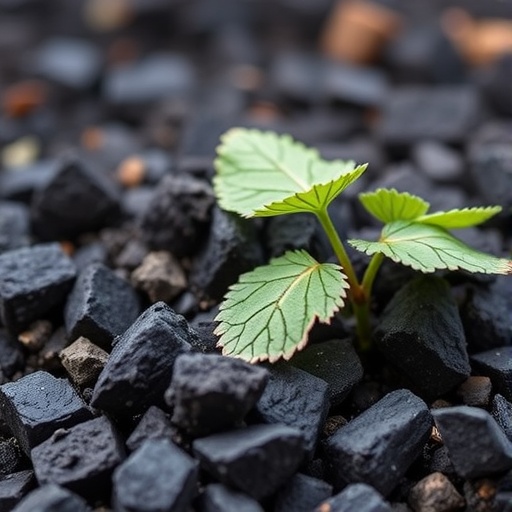
In the evolving field of environmental science, significant attention has been drawn to the interplay between various organic materials and their impact on composting processes. Recent research conducted by Liu, Li, and Yuan delves deep into this subject matter by examining the role of weathered coal and its effects on the spectral changes of dissolved organic matter (DOM) during the composting of sheep manure. This intricate study provides valuable insights into how different organic substrates can influence the quality of compost produced, a matter of growing importance for sustainable agricultural practices.
Composting, a natural decomposition process, has gained recognition for its power to convert organic waste into nutrient-rich soil amendments. As agricultural practices evolve to become more sustainable, researchers are now investigating how the introduction of various additives, such as weathered coal, can enhance the composting process. Weathered coal, the remnants of coal that has undergone extensive weathering, possesses unique chemical and physical properties that may affect the microbial dynamics during the degradation of manure.
One of the vital components of composting is dissolved organic matter. DOM is a complex mixture of organic compounds that play a critical role in soil fertility and the overall health of ecosystems. Understanding how the addition of weathered coal alters the spectral characteristics of DOM during composting provides essential information about the transformation and stabilization of organic matter. The research conducted by Liu and his colleagues is a pioneering step in this direction, revealing the complexities associated with composting dynamics.
The experiment utilized different proportions of weathered coal alongside sheep manure to create various composting mixtures. By analyzing the spectral changes in DOM, the researchers aimed to identify how the chemical makeup of the added coal influenced the breakdown of organic materials. This analysis highlights the linear relationship between the types of organic materials present in the compost and the subsequent changes in DOM spectra.
In exploring the results, their findings indicated a marked change in the spectral characteristics of DOM as the composting process advanced. This shift is attributed to both microbial activity and the chemical interactions between the compost ingredients. With the addition of weathered coal, the DOM underwent transformations that suggested an enhanced degradation of organic matter, which is crucial for improving the quality of the resulting compost.
Intriguingly, the study found that specific functional groups within the DOM spectra were more pronounced when weathered coal was present. These functional groups are indicative of the complex interactions that occur during composting. When coal is introduced into the sheep manure mixture, it not only alters the microbial community dynamics but also promotes the production of certain organic compounds. This, in turn, leads to a more stable and nutrient-dense compost product that can significantly benefit soil health.
Furthermore, the researchers employed advanced spectroscopic techniques to monitor the changes in DOM quality throughout the composting period. These spectroscopic analyses provided detailed information about the molecular structures of DOM, enabling the researchers to discern the biodegradability of organic components. The results indicated that the presence of weathered coal could enhance the stability of the produced DOM, extending its benefits to the soil ecosystem over a longer duration.
The implications of this research extend beyond academic interest; they hold practical significance for agricultural communities striving to improve soil health and productivity. By incorporating weathered coal into composting practices, farmers can potentially enhance nutrient content, boost soil organic matter, and improve water retention capabilities. This has significant ramifications for crop yields and sustainable farming methods that are increasingly vital in the face of global food security challenges.
Moreover, this research opens avenues for future studies concerning the use of other organic amendments in composting. Understanding how various types of organic and inorganic materials interact during the composting process can lead to optimized methods for compost production. Researchers can further explore how the timing and ratio of these additives might change depending on the type of waste being treated or the desired qualities of the final compost product.
As environmental policies increasingly emphasize sustainability, the importance of innovative composting techniques cannot be overstated. Liu et al.’s research underscores the necessity of integrating different organic inputs to combat waste while simultaneously enhancing agricultural productivity. It encourages further exploration into the powerful role that natural materials, like weathered coal, can play in enriching the composting process.
In conclusion, the impact of weathered coal on the spectral changes of dissolved organic matter during sheep manure composting adds a critical layer to our understanding of compost dynamics. This study offers a rich area for exploration, potentially leading to advances in agricultural sustainability and soil health. The findings serve as a reminder of the intricate connections that exist within ecosystems and how mindful interventions can transform waste into valuable resources.
This groundbreaking research not only advances our comprehension of organic matter transformations but also paves the way for future innovations in composting practices. By harnessing the benefits of materials such as weathered coal, we can optimize waste management and contribute positively to the health of the planet.
Subject of Research: The effects of weathered coal on spectral changes of dissolved organic matter during sheep manure composting.
Article Title: Effect of Weathered Coal on Spectral Changes of Dissolved Organic Matter During Sheep Manure Composting.
Article References: Liu, Y., Li, J., Yuan, L. et al. Effect of Weathered Coal on Spectral Changes of Dissolved Organic Matter During Sheep Manure Composting. Waste Biomass Valor (2025). https://doi.org/10.1007/s12649-025-03452-4
Image Credits: AI Generated
DOI: https://doi.org/10.1007/s12649-025-03452-4
Keywords: Composting, weathered coal, dissolved organic matter, sheep manure, organic waste, soil health, environmental sustainability.


