

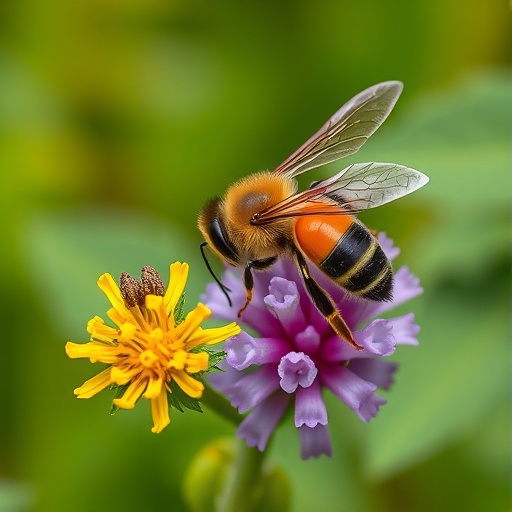
Urban environments are rapidly expanding, and with this growth comes significant changes to the ecological landscape. A recent study by Banaszak-Cibicka, Dylewski, and Bajon has delved into the intricate relationship between urbanization, landscape characteristics, and the biodiversity of wild bees in both small towns and rural areas. Their findings indicate that this interplay is crucial for understanding the functional roles bees play in ecosystems and the impacts of human activity on these important pollinators.
The urbanization process can create fragmented habitats that disrupt traditional ecosystems, impacting the rich diversity of plant and animal life. Bees, being essential pollinators, are particularly sensitive to these environmental shifts. Areas with increased human activity often see a decline in bee populations, which can have cascading effects on plant reproduction and overall biodiversity. The study highlights that the spatial arrangement of green spaces, gardens, and urban parks can either mitigate or exacerbate these declines.
In examining small towns compared to more rural landscapes, the researchers identified notable differences in both taxonomic and functional diversity among wild bee populations. Small towns often present unique ecological niches due to their blend of urban and rural characteristics. This duality can foster unique pollinator communities that differ significantly from those found in more intensely urbanized environments or pristine rural landscapes. Understanding these community dynamics can inform conservation strategies aimed at preserving bee biodiversity.
The research emphasizes the importance of green infrastructure in urban planning. The structural complexity of urban landscapes—comprising parks, green corridors, and gardens—can significantly enhance wild bee habitats. Notably, the study illustrates that simply increasing the area designated for green space is not enough; the configuration and connectivity of these spaces determine their effectiveness as habitats for bees. Urban planners are urged to consider these factors in their designs to maximize biodiversity benefits.
Bee diversity is not just a measure of species richness but also includes functional diversity, which reflects the variety of roles bees play in pollination services. Different bee species have distinct foraging behaviors, habitat preferences, and relationships with specific plants. The study underscores how urbanization can lead to a homogenization of bee communities, where fewer species dominate due to their adaptability to urban environments. This loss of functional diversity can undermine the ecological resilience of urban areas, diminishing the ability of ecosystems to respond to changes and stressors.
Moreover, the study raises awareness about the importance of citizen engagement in conservation efforts. Community involvement in creating and maintaining pollinator-friendly spaces can enhance bee populations in urban settings. Educational initiatives that inform the public about the ecological roles of bees can foster a culture of stewardship. The researchers encourage local governments and organizations to provide resources and support for community-led biodiversity projects, showing that collective action can effectively address ecological challenges.
As the study reveals, the impacts of urbanization on bee diversity are complex and multifaceted. Areas with high levels of impervious surfaces tend to have lower populations of native bee species. Conversely, those with a variety of flowering plants and habitats tend to support a more diverse array of bees. The findings encourage contemplation of how urbanization shapes not only the environment but also the species that inhabit it. It advocates for a shift in how urban landscapes are perceived and designed, promoting more sustainable and bee-friendly practices.
The implications of the research extend beyond local communities; they highlight a growing global concern regarding biodiversity loss. As cities continue to expand, the fragmentation and degradation of habitats put immense pressure on wild bee populations. The study serves as a clarion call for policymakers, researchers, and citizens alike to prioritize conservation efforts within urban contexts. By integrating ecological principles into urban design, we can foster resilient ecosystems that support both human needs and wildlife.
The researchers utilized a combination of field surveys and ecological modeling to assess bee diversity in the studied regions. This methodology allowed for a comprehensive analysis of the ecological impacts of urbanization. Through rigorous data collection, they were able to illustrate clear patterns linking landscape characteristics to bee community structures. Their work sets a robust foundation for future research exploring the dynamics between urban development and biodiversity, paving the way for innovative conservation strategies.
An important takeaway from this study is the resilience of nature; many bee species can adapt to urban environments if suitable habitats are available. This adaptability is critical for maintaining pollinator services despite urban pressures. The research emphasizes the role of local biodiversity in fostering ecological resilience, suggesting that urban spaces rich in flora can still serve as viable habitats for bees. This resilience presents an opportunity for urban areas to become sanctuaries for biodiversity rather than mere expanses of concrete and steel.
The study’s insights contribute to the broader discourse on urban ecology, offering essential perspectives that challenge conventional notions about urbanization and its effects on biodiversity. By understanding how urban settings can simultaneously hinder and promote bee diversity, stakeholders can work together to create environments that nurture both human and ecological well-being. The integration of ecological considerations into urban planning is no longer optional but a necessary step towards sustainable urban futures.
As discussions around climate change, biodiversity loss, and urban development grow more urgent, studies like this serve as vital resources for developing strategies that enhance both ecological health and community resilience. The research not only advocates for preserving bee populations but also reflects on the deeper interconnectedness of all living systems. It underscores the responsibility of urban dwellers to coexist harmoniously with nature, promoting practices that respect and preserve the delicate balances of our ecosystems.
In conclusion, the investigation into urbanization and wild bee diversity conducted by Banaszak-Cibicka, Dylewski, and Bajon offers essential insights into the ongoing challenges of maintaining biodiversity in rapidly changing landscapes. It reinforces the pivotal role that urban design plays in shaping ecological outcomes and challenges us to rethink how we interact with the natural world. By fostering environments that support wild bee populations, we can ensure the health and sustainability of our ecosystems and, ultimately, our communities.
Subject of Research: The effects of urbanization on wild bee diversity in small towns and rural areas.
Article Title: Urbanization and landscape effects on taxonomic and functional wild bee diversity in small towns and rural areas.
Article References:
Banaszak-Cibicka, W., Dylewski, Ł., Bajon, J. et al. Urbanization and landscape effects on taxonomic and functional wild bee diversity in small towns and rural areas.
Front Zool (2025). https://doi.org/10.1186/s12983-025-00594-y
Image Credits: AI Generated
DOI: 10.1186/s12983-025-00594-y
Keywords: urbanization, wild bee diversity, biodiversity, ecological resilience, urban ecology, pollination, conservation, community engagement.


