

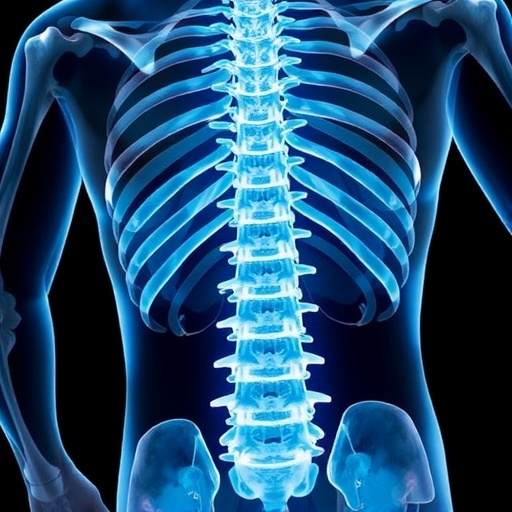
In a groundbreaking study published in the esteemed journal Archives of Osteoporosis, researchers have unveiled compelling findings regarding the effects of spaceflight countermeasures on trabecular bone score (TBS) in the lumbar spine. This research not only enhances our understanding of how microgravity affects skeletal health but also underscores the importance of effective countermeasures to maintain bone integrity during prolonged space missions, such as those planned for Mars.
As humanity sets its sights on longer space explorations beyond low Earth orbit, the need to safeguard astronaut health becomes paramount. One of the most significant challenges faced in microgravity is the detrimental impact on bone density and structure due to the lack of mechanical loading. The study authored by Anderson, K.D., Spector, E.R., and Ploutz-Snyder, R. et al. investigates the relationship between countermeasures employed during spaceflight and their effectiveness in mitigating bone loss.
Trabecular bone, also known as cancellous or spongy bone, is crucial for maintaining overall skeletal strength and health. Its architecture is intricately designed to withstand mechanical forces, yet it is particularly vulnerable during space missions. The findings in this study suggest that targeted countermeasures could play a vital role in preserving trabecular bone score, a vital indicator of bone quality.
Utilizing advanced imaging techniques, the researchers measured TBS in astronauts who had experienced extended missions aboard the International Space Station (ISS). By comparing TBS values before and after the implementation of countermeasures, they aimed to assess the efficacy of these interventions in preserving bone health. The countermeasures included resistance exercise, nutritional modifications, and pharmaceutical therapies designed to stimulate bone formation and reduce resorption.
Initial results from the study indicated that astronauts who adhered to structured exercise regimens showcased significantly less decline in trabecular bone score compared to those who did not engage in such preventive measures. This underscores the importance of maintaining physical activity as a critical component of health during long-duration space travel.
Moreover, the research highlighted the complexities of bone metabolism in a microgravity environment. Factors such as increased bone resorption and alterations in calcium homeostasis contribute to the swift decline in bone density experienced by astronauts. The application of countermeasures aims to counteract these adverse effects, providing insights into the biochemical processes involved in bone adaptation in space.
The study not only emphasizes the physiological implications of spaceflight but also poses critical questions regarding long-term repercussions on skeletal health following extended missions. Potential impacts on astronauts’ quality of life and post-mission health outcomes necessitate proactive measures to secure their well-being during and after space travel.
Additionally, as this research sheds light on the effects of spaceflight, it holds broader implications for understanding osteoporosis and related bone disorders here on Earth. The principles learned from astronauts could inform therapies for individuals at risk of bone loss, particularly the elderly population and those with limited mobility.
The researchers advocate for a multi-faceted approach to countermeasures that integrates physical conditioning, nutritional strategies, and emerging pharmacological options. Future experiments will need to explore the optimal combination of these interventions to maximize bone preservation during spaceflight.
As we prepare for the next era of space exploration, securing astronaut health will be of utmost importance. The study by Anderson et al. serves as a pivotal step towards understanding how countermeasures can effectively safeguard bone integrity, not just for astronauts, but potentially for anyone facing prolonged periods of immobilization.
This research represents a union of basic science and applied medicine, bridging the gap between celestial exploration and terrestrial health challenges. The integration of innovative thought and technological advancements is crucial as we continue to push the boundaries of human capability in space.
In conclusion, the advancements presented in this study open up a new frontier in space medicine. By meticulously examining the effects of microgravity on our skeletal system, we are one step closer to ensuring that future missions are not only successful but also sustainable for the health of the astronauts who embark on them. As the journey to explore Mars and beyond unfolds, the lessons learned from the ISS will be invaluable in shaping the future of human spaceflight.
As we delve deeper into understanding the human body’s response to the inhospitable environment of space, it becomes clear that our commitment to research and innovation will ultimately dictate the safety and success of our cosmic ventures.
Subject of Research: Effects of spaceflight countermeasures on trabecular bone score (TBS) of the lumbar spine.
Article Title: The effects of spaceflight countermeasures on trabecular bone score (TBS) of the lumbar spine.
Article References: Anderson, K.D., Spector, E.R., Ploutz-Snyder, R. et al. The effects of spaceflight countermeasures on trabecular bone score (TBS) of the lumbar spine. Arch Osteoporos 21, 24 (2026). https://doi.org/10.1007/s11657-025-01624-2
Image Credits: AI Generated
DOI: https://doi.org/10.1007/s11657-025-01624-2
Keywords: spaceflight, trabecular bone, countermeasures, microgravity, health, astronauts, osteoporosis, resistance exercise, bone density, skeletal health.


