

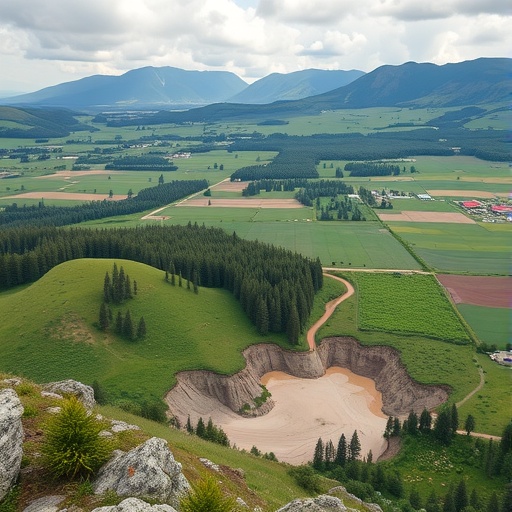
In a compelling development that raises urgent concerns within the scientific community, a retraction note has been issued regarding a key study examining the ecological consequences of exploration activities related to a potential lithium mine in Western Serbia. The original publication, which garnered significant attention upon its release, has now been called into question due to emerging evidence that disputes the findings and methodologies employed by the authors. This notable instance of retraction highlights the complex interplay between environmental sustainability and the burgeoning demand for lithium – an essential component in the production of batteries for electric vehicles and renewable energy storage.
Lithium mining has become a focal point in discussions about sustainable energy and environmental preservation. As nations and corporations ramp up efforts to transition away from fossil fuels, the need for lithium is more pressing than ever. However, the environmental implications of lithium extraction, particularly in sensitive regions like Western Serbia, cannot be overlooked. The initial study sought to elucidate the potential impacts of mining activities on local ecosystems, yet findings that prompted the recent retraction call into question the validity of its conclusions.
The authors of the retracted study, Đorđević et al., posited that exploration activities would result in minimal disruption to the environment, based on their analysis of various ecological parameters. They argued that with correct management practices, the potential benefits of lithium mining could outweigh the environmental risks. However, subsequent reviews uncovered inconsistencies in data interpretation and methodology that suggested a much more detrimental impact on the regional ecosystem than originally portrayed.
One critical aspect of this controversy pertains to the methods utilized in the study. The reliance on inadequate sampling techniques and a limited temporal range for data collection appeared to undermine the robustness of their conclusions. Furthermore, researchers pointed to significant gaps in the data analysis, particularly regarding the long-term effects of mining activities on local flora and fauna. Such revelations underscore the necessity for comprehensive and rigorous research protocols, especially when dealing with subjects that bear profound implications for environmental sustainability.
The potential consequences of lithium mining extend beyond mere habitat disruption. The exploration phase itself can lead to the alteration of landscapes, soil degradation, and water resource depletion, which can in turn threaten livelihoods, food security, and biodiversity in the region. The retraction highlights a critical learning point for scientists in the field; the integrity of research affects not only academic credibility but also the policymaking process that governs natural resource management.
Moreover, the ramifications of this retraction are significant in the context of a global shift towards electric mobility and renewable energy solutions. Policymakers need reliable, evidence-based information to make informed decisions and set regulations that protect local communities and the environment. Misleading studies that oversell the potential benefits of lithium mining may propel unsustainable practices that further endanger fragile ecosystems. This incident serves as a stark reminder that scientific integrity must be upheld to foster trust and accountability in environmental research.
As the discourse around sustainable resource extraction continues to evolve, the retraction of Đorđević et al.’s study could pave the way for more rigorous scrutiny and enhanced methodologies in future research. It emphasizes the importance of peer review and validation processes within academia and calls for a more collective approach to addressing the challenges posed by mineral extraction. Stakeholders across various sectors must engage in extensive dialogue and collaboration to ensure that economic goals align with ecological stewardship.
In light of the retraction, it is crucial for further research to be undertaken to investigate the true ecological ramifications of lithium mining in Western Serbia. A collaborative effort involving ecologists, geologists, and local communities will be essential to create a holistic understanding of the region’s environmental dynamics. This approach would enable the development of sustainable practices that not only harness the benefits of lithium but also safeguard the ecological integrity of the area.
Community engagement also plays a vital role in the discourse surrounding resource extraction. Local populations are often the first to experience the adverse effects of mining activities, making their voices paramount in discussions of sustainability. Initiatives that empower communities to participate in decision-making processes can lead to more transparent, equitable outcomes that reflect the best interests of both the people and the environment.
This ongoing saga serves as a critical juncture in the academic study of environmental impacts associated with resource extraction. As researchers endeavor to navigate the complex interplay of industry demands and ecological stewardship, ensuring rigorous scientific methodology and ethical considerations will take center stage. Moving forward, the scientific community must advocate for accountable research practices that prioritize societal well-being alongside economic interests.
The issue of ethical responsibility in scientific research is underscored by instances such as this retraction. Researchers bear the obligation not just to advance knowledge but to do so in a manner that does not misinform or mislead stakeholders involved in environmental management. As the world looks toward increasingly green technology, the ramifications of once-cited studies have the potential to shape the trajectory of ecological policies for years to come.
In conclusion, the retraction of “The influence of exploration activities of a potential lithium mine to the environment in Western Serbia” serves as a powerful reminder of the complexities and responsibilities entwined in scientific research. It emphasizes the importance of robust methodologies, ethical considerations, and the role of accurate data in guiding policy and practice. With the stakes so high in the quest for sustainable energy solutions, the implications of this story resonate far beyond the academic arena, challenging all stakeholders to prioritize both progress and preservation in their endeavors.
Subject of Research: Environmental impacts of lithium mining in Western Serbia.
Article Title: Retraction Note: The influence of exploration activities of a potential lithium mine to the environment in Western Serbia.
Article References:
Đorđević, D., Tadić, J.M., Grgur, B. et al. Retraction Note: The influence of exploration activities of a potential lithium mine to the environment in Western Serbia.
Sci Rep 16, 639 (2026). https://doi.org/10.1038/s41598-025-33959-8
Image Credits: AI Generated
DOI: 10.1038/s41598-025-33959-8
Keywords: lithium mining, environmental impact, ecological research, sustainable development, retraction.


