

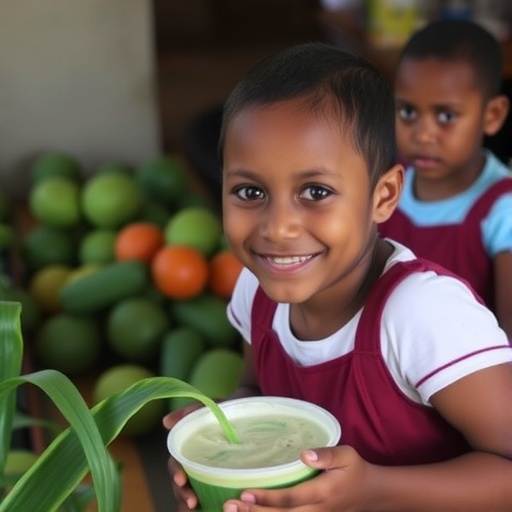
In a groundbreaking study, researchers have investigated the socioeconomic effects of direct procurement from family farming within the context of the Brazilian School Feeding Program (PNAE). This initiative, which aims to provide nutritious meals to children in schools, has grown significantly in recent years, and its collaboration with local family farms represents a crucial pivot toward sustainable agricultural practices. The paper, authored by Diniz Oliveira and colleagues, underscores the importance of integrating local agricultural stakeholders in school feeding projects, highlighting potential outcomes that extend beyond mere nutrition.
The Brazilian School Feeding Program is one of the largest of its kind globally, serving over 40 million students from a diverse array of socioeconomic backgrounds. Researchers emphasize that the diversification of procurement sources within this framework can potentially harness economic growth in impoverished regions, empowering small-scale family farmers. By purchasing locally produced food, schools can not only provide fresh and healthy meals but also stimulate the local economy, thereby creating a ripple effect of positive socioeconomic change.
One of the focal points of the study is the direct relationship established between schools and family farmers. This relationship is not merely transactional; it builds a collaborative network that fosters mutual benefits. For farmers, selling directly to schools guarantees a consistent market for their produce, which can significantly stabilize their income and promote food security for their families. This reduced reliance on intermediaries is vital in creating a robust agricultural economy that can withstand market fluctuations.
Moreover, the adoption of direct procurement practices promotes sustainable agricultural methods. Farmers engaged in this program have reported a shift toward organic and sustainable farming techniques, driven by the community’s demand for healthier options. As schools prioritize sourcing from environmentally friendly sources, farmers are encouraged to adopt practices that reduce pesticide use and promote biodiversity, contributing positively to the local ecosystem. This transition not only benefits the farmers themselves but also resonates with broader societal goals of sustainability.
The study also delves into the nutritional impacts of sourcing food from local family farms. Children benefit from higher quality meals rich in vitamins and minerals, ensuring they receive the nourishment essential for their cognitive and physical development. This is particularly significant in regions where malnutrition remains a pressing challenge. The fresh produce provided by local farmers invariably surpasses the quality of processed alternatives, thereby enhancing the overall health and well-being of students.
Economic benefits extend to the families of students as well. When schools support local farmers, this investment circulates within the community, fostering job creation and economic empowerment. Households involved in farming cohorts report improved financial stability and increased expenditures in their local economies. The interconnectedness of local food systems is emphasized, showcasing a thriving local economy that uplifts not just farmers, but all members of the community.
Interestingly, the research results point to a growing awareness among consumers, particularly parents and guardians, of the origins of their food. With parents becoming more conscious of healthy eating and local sourcing, there is a broader cultural shift towards valuing sustainability. Families start to advocate for policies that favor local food procurement, putting additional pressure on schools and local governments to prioritize similar programs.
Additionally, the study highlights the role of education within this framework. By involving students in lessons about where their food comes from and the importance of supporting local farmers, schools can instill values of sustainability and responsibility in the next generation. Educational initiatives can include field trips to local farms and hands-on activities related to gardening and food preparation, thereby engaging students directly with these concepts.
However, the research also acknowledges challenges in implementing direct procurement systems. Logistics, including transport costs and the perishability of products, are significant factors that can complicate the relationship between schools and farmers. Addressing these barriers requires innovative solutions that might include creating community-supported agriculture programs or cooperative purchasing arrangements. By streamlining these processes, schools can ensure a reliable supply of fresh produce while supporting local farmers.
Another aspect examined in the study is the potential for policy advocacy arising from these findings. As data emerges that underscores the socioeconomic benefits of local procurement, stakeholders can leverage this information to influence policy at various levels. Advocates might push for legislation that provides incentives for schools to source from local farms, thereby embedding such practices into the fabric of national policy.
Community engagement is depicted as crucial for the success of direct procurement initiatives. Local stakeholders—school officials, farmers, and community members—must work collaboratively to address concerns and troubleshoot challenges. This cooperation is instrumental in fostering a sense of ownership among all parties involved. A system that values collaboration over competition can lead to more sustainable outcomes that align with the goals of the Brazilian School Feeding Program.
The researchers conclude that the implications of this study are vast, extending beyond the Brazilian context. As other countries grapple with similar issues of nutrition, sustainability, and community development, the lessons gleaned from Brazil’s experience can provide valuable insights. Global trends toward sustainability in food systems highlight the importance of localizing food production and consumption practices—a shift that Brazil’s initiatives epitomize.
Ultimately, this study reinforces the notion that food systems are interconnected with broader socioeconomic realities. When schools choose to source food from local family farms, they contribute to the economic empowerment of their communities while promoting healthier eating habits among children. Ensuring that these practices are scalable and sustainable is paramount to their success in the long term. The researchers call for ongoing studies to assess the evolving dynamics of these models as they adapt to changing societal needs and environmental challenges.
In summary, the socio-economic ripple effects of the Brazilian School Feeding Program and its emphasis on direct procurement from family farms represent a model for innovation in public health and agriculture. As the global community gravitates toward sustainable food practices, initiatives like this serve as a testament to what can be achieved when local producers are at the heart of educational and nutritional programs.
Subject of Research: Socioeconomic effects of direct procurement from family farming in the Brazilian school feeding program.
Article Title: Socioeconomic effects of direct procurement from family farming in the Brazilian school feeding program.
Article References:
Diniz Oliveira, T., Pereda, P.C., Elias, L. et al. Socioeconomic effects of direct procurement from family farming in the Brazilian school feeding program.
Discov Sustain (2025). https://doi.org/10.1007/s43621-025-02396-y
Image Credits: AI Generated
DOI:
Keywords: Direct procurement, family farming, Brazilian School Feeding Program, socioeconomic effects, sustainability, local sourcing, nutrition.


