

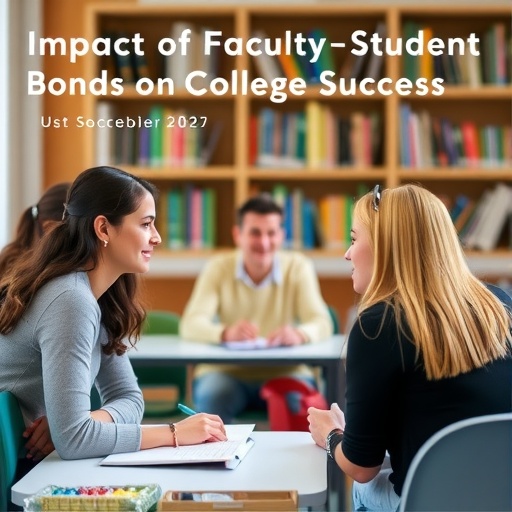
In the realm of education, the dynamics between faculty members and students are crucial to fostering an environment conducive to learning and development. A groundbreaking meta-analysis conducted by Fathi, Zarei, and Fong brings forth new insights into the associations between faculty-student relationships and postsecondary student success. Slated for publication in the Educational Psychology Review, this study aims to reshape how educators approach interpersonal relationships within the academic landscape.
The inquiry delves into the profound impact that caring relationships with professors can exert on students’ academic trajectories. It systematically examines existing research to construct a comprehensive picture of how these relationships influence various facets of student success. As institutions adjust to ever-evolving educational paradigms, understanding the significance of a nurturing professorate becomes vital in driving academic achievements, retention rates, and overall student satisfaction.
At the core of the analysis lies the assertion that students who perceive their professors as caring and supportive are more likely to engage actively in their educational experiences. This engagement manifests itself in numerous ways, including higher participation rates in class discussions, increased willingness to seek help when needed, and improved overall academic performance. The meta-analysis highlights that the emotional bond between faculty and students plays a pivotal role in cultivating an environment where students feel valued and empowered.
Fathi and colleagues meticulously reviewed a slew of studies spanning across multiple disciplines and educational contexts. By aggregating data from diverse sources, the researchers sought to identify common trends and outcomes associated with nurturing faculty-student relationships. Their findings reveal a consistent pattern: students who enjoy strong rapport with their professors tend to display enhanced motivation, greater resilience in overcoming academic challenges, and improved emotional well-being.
However, the relationship dynamics are not merely one-sided. The study emphasizes that professors also benefit from positive relationships with their students. When educators invest emotionally and intellectually in their students’ success, they are often met with increased job satisfaction and professional fulfillment. The reciprocal nature of these relationships underscores the importance of creating atmospheres where both students and faculty feel interconnected and engaged.
Moreover, the implications of the findings extend far beyond individual classrooms. Educational leaders and policymakers are urged to prioritize faculty training that emphasizes empathetic engagement with students. By integrating emotional intelligence into pedagogical practices, institutions can cultivate a positive academic culture that honors the individual learner’s journey. This holistic approach to education not only enhances academic outcomes but also nurtures the emotional and social development of students.
The meta-analysis also addresses potential challenges in fostering these relationships. In a fast-paced academic environment, stress levels can be high for both students and faculty. The pressure to meet deadlines, achieve high grades, and conduct research can strain relationships and impede genuine connections. Recognizing these challenges is the first step toward creating proactive strategies that promote empathy, understanding, and communication between faculty and students.
Furthermore, the contemporary landscape of online learning complicates traditional faculty-student dynamics. As educational institutions increasingly adopt digital platforms, establishing the same level of care and connection poses unique challenges. The study highlights the necessity for educators to adapt their relational approaches in virtual settings, ensuring that students still perceive their professors as approachable and empathetic, regardless of the medium of instruction. Building rapport online requires intentional efforts to engage with students, offer support, and create interactive environments that mimic face-to-face engagements.
As colleges and universities continue to navigate the complexities of modern education, the findings from this meta-analysis serve as a timely reminder of the enduring value of caring faculty-student relationships. These relationships not only shape academic performance but also influence students’ emotional and psychological well-being. Institutions looking to improve their educational outcomes would do well to invest in training their faculty to become mentors and advocates for their students.*
In light of this research, educational institutions worldwide must reassess their approach to faculty-student interactions, placing an emphasis on care, empathy, and emotional intelligence. By doing so, they can create an educational ecosystem that prioritizes students’ holistic development and positions them for success beyond the classroom. The meta-analysis by Fathi, Zarei, and Fong serves as a pivotal piece in the ongoing discourse surrounding educational reform and the necessity of nurturing environments where students thrive academically and personally.
As we look to the future, it becomes increasingly clear that the relationships we build in academic settings hold the potential to influence generations of learners. By cultivating caring relationships between faculty and students, we can foster thriving educational communities that not only aim for academic excellence but also prioritize the overall well-being of each student. The time has come to honor the educator’s role not just as a teacher but as a nurturer, supporter, and advocate for every individual learner’s success story.
The findings of this study will undoubtedly resonate within academic circles and ignite conversations about the future of pedagogical practices. As this meta-analysis reaches a wide audience through its publication, it is anticipated to stimulate critical dialogue regarding faculty training, student engagement, and curricular development. The urgency to evolve the educational landscape through authentic, caring connections between faculty and students has never been more pressing, paving the way for a brighter future in education.
As educational establishments collectively embrace this paradigm shift, it is heartening to envision a world where every student, regardless of their background or learning environment, experiences the positive impact of a caring professor. The academic community is urged to embark on this transformative journey, leading the way toward a more compassionate, connected, and successful generation of learners.
Subject of Research: Faculty-Student Relationships in Education
Article Title: The Caring Professor: A Meta-Analysis of Associations between Faculty-Student Relationships and Postsecondary Student Success
Article References: Fathi, Z., Zarei, P., Fong, C.J. et al. The Caring Professor: A Meta-Analysis of Associations between Faculty-Student Relationships and Postsecondary Student Success. Educ Psychol Rev 38, 8 (2026). https://doi.org/10.1007/s10648-025-10100-9
Image Credits: AI Generated
DOI: https://doi.org/10.1007/s10648-025-10100-9
Keywords: Faculty-student relationships, academic success, educational psychology, emotional intelligence, student engagement, postsecondary education, educational reform, mentoring, online learning, teaching practices.


