

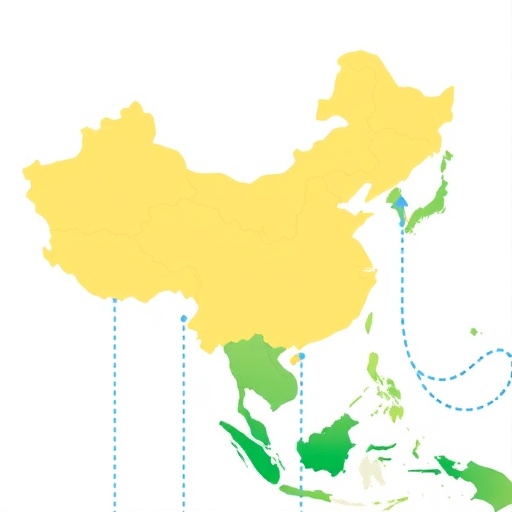
In the face of escalating environmental concerns, comprehensive policy measures have emerged as indispensable tools in the quest for sustainable development. Among these, carbon emissions trading has gained prominence as a viable strategy for mitigating climate change impacts while promoting economic efficiency. A recent study conducted by Cheng et al. delves into the intricate relationship between carbon emission trading policies and residents’ green welfare in China. This research is set against the backdrop of China’s rapid industrial growth and urbanization, which have invariably escalated carbon emissions and environmental degradation. The investigation highlights critical dimensions of carbon trading mechanisms and their direct and indirect effects on the livelihoods of Chinese citizens.
The research began with the assertion that environmental policies have far-reaching implications on social well-being. A key aspect addressed was how carbon trading policies can transcend mere economic benefits and evolve into frameworks that enhance the overall welfare of local populations. This perspective is essential as it bridges the gap between environmental sustainability and social equity. Analyzing how such policies influence residents’ attitudes and behaviors toward green initiatives presents an opportunity to reinforce collective responsibility in combating climate change.
In evaluating the effectiveness of carbon emission trading in China, the authors outline the current state of carbon trading markets, which have been established in various provinces. These markets are designed to cap emissions from large polluting entities and incentivize reductions through tradeable permits. By assessing these systems within the context of residents’ well-being, the research adeptly illuminates the broader implications of environmental policies on society, thus fostering a narrative that resonates with a global audience concerned about climate justice and sustainable living.
The findings highlight a crucial intersection where economic incentives align with environmental consciousness. It was identified that when residents perceive tangible benefits from carbon trading policies—such as improved air quality and enhanced public services—they are more likely to engage in initiatives that promote sustainability. This relationship underscores the potential of well-structured carbon pricing mechanisms to nurture an eco-friendly ethos among citizens. The researchers emphasize that such engagement could serve as a foundation for grassroots movements advocating for further environmental reforms and policies.
According to the study, public awareness and education about carbon trading schemes are necessary for eliciting positive outcomes. The authors argue that while these policies may initially appear complex, simplifying the rationale and benefits to residents could foster greater participation. This awareness is paramount, especially in urban settings where the effects of pollution are acutely felt. As individuals begin to connect their personal health and well-being with environmental policies, collective action can burgeon, resulting in a more robust demand for changes that protect ecological integrity.
Moreover, the research unveils the potential pitfalls of poorly implemented carbon trading systems. For instance, if carbon credits are allocated inequitably or if markets are subjected to vulnerabilities such as corruption and misinformation, the intended benefits can be undermined. Residents may find themselves skeptical of the policies, leading to disengagement. This insight is consequential, as it prompts policymakers to consider not just the mechanics of trading systems, but also the social fabric and trust of the communities they serve.
The researchers enhance their analysis by introducing a comparative layer, where similar policies across different nations are examined. This global perspective allows for a rich discussion of best practices and lessons learned from international experiences. By juxtaposing success stories with challenges faced by other countries, the study demands a nuanced understanding of carbon trading as a dynamic instrument of environmental governance. Such insights can inform future directions for policy interventions, particularly in developing nations that harbor rapidly growing populations.
In addressing the socio-economic dimensions of carbon trading, Cheng et al. underscore the importance of integrating equity considerations into policy design. It is posited that without an explicit focus on equity, carbon trading could inadvertently deepen existing disparities. The study asks critical questions about who bears the burdens of emissions reductions and whether benefits are equitably accrued across socioeconomic groups. These inquiries are vital as they steer the dialogue toward inclusivity in environmental policymaking, ensuring that marginalized communities do not bear disproportionate costs of compliance.
The authors also provide a forward-looking perspective by suggesting ways to enhance the efficacy and reach of carbon trading policies. For instance, incorporating local communities into decision-making processes regarding the trading schemes could lead to more tailored approaches that meet the specific needs of residents. This engagement not only builds trust but also ensures that the policies are reflective of the socio-cultural contexts they aim to serve. Furthermore, integrating technology and data analytics could optimize emissions tracking and compliance effectiveness, providing insights that promote transparency.
As global stakeholders navigate the complexities of climate change, the study reveals that residents’ green welfare is not merely an ancillary consideration; it is a central pillar of sustainable policy frameworks. By foregrounding citizen engagement and welfare in discussions surrounding carbon trading, Cheng et al. contribute to a paradigm shift in environmental governance, one that privileges human well-being alongside ecological resilience.
The dialogue initiated by this research is timely and critical, as countries worldwide embark on transition paths toward net-zero emissions. The study’s resolution that climate policy must be intertwined with provisions for enhancing life quality brings a refreshing perspective to environmental discourse. It advocates for policies that promote not only the physical health of the planet but also the mental and emotional well-being of its inhabitants.
In conclusion, the implications of Cheng et al.’s research extend well beyond the confines of academia; they resonate in the hearts and minds of everyday citizens. As local communities grapple with the implications of climate policy on their lives, understanding the delicate balance between environmental sustainability and human welfare is paramount. The study invites readers to contemplate how collective responsibility can be harnessed through enlightened policy-making that champions green welfare—ultimately leading to a healthier planet and a vibrant, engaged populace ready to tackle the climate crisis head-on.
In summary, carbon emission trading policies have the potential not only to combat climate change but also to enhance residents’ green welfare in China. This study by Cheng et al. paves the way for future research, highlighting the need for policies that are equitable, transparent, and participatory. As the world collectively navigates the perilous waters of environmental change, the dialogue initiated by this research becomes a compass guiding us toward a sustainable future.
Subject of Research: The impact of carbon emission trading policy on residents’ green welfare in China.
Article Title: Exploring the role of carbon emission trading policy on residents’ green welfare in China.
Article References:
Cheng, P., Fan, Y., Liu, K. et al. Exploring the role of carbon emission trading policy on residents’ green welfare in China.
Discov Sustain (2026). https://doi.org/10.1007/s43621-025-02457-2
Image Credits: AI Generated
DOI: 10.1007/s43621-025-02457-2
Keywords: Carbon trading, green welfare, policy effectiveness, environmental justice, China, sustainable development, carbon emissions, public awareness, equity considerations, climate governance.


