

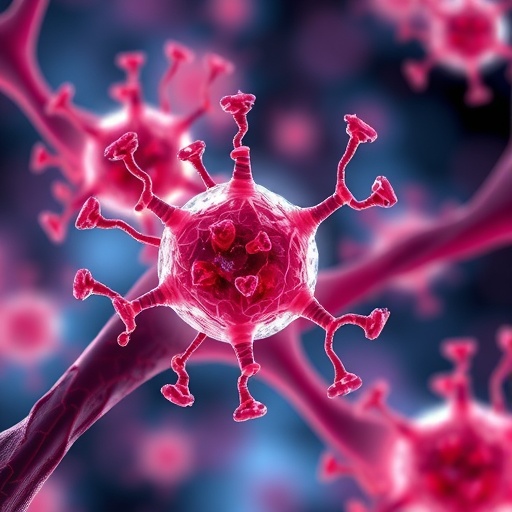
In a groundbreaking review published on March 17, 2026, in the open-access journal Immunity & Inflammation, researchers have illuminated a previously underappreciated dimension of immunology: the production and functional roles of neurotransmitters by immune cells themselves. This seminal work presents a thorough exposition on how both innate and adaptive immune cells—including macrophages, dendritic cells, natural killer cells, T cells, and B cells—synthesize and respond to classic neurotransmitters, thereby forging a direct communication channel bridging the nervous and immune systems. Such insights herald transformative implications for our understanding of health and disease, establishing immune cell-derived neurotransmitters as pivotal modulators in diverse physiological and pathological contexts.
Neurotransmitter synthesis was once thought to be the exclusive domain of neurons, the specialized cells of the nervous system. However, this comprehensive review challenges that entrenched paradigm by demonstrating that immune cells under both homeostatic and pathological conditions can produce and secrete multiple neurotransmitters. These molecules act through autocrine and paracrine signaling mechanisms, modulating immune responses with remarkable precision. They engage canonical intracellular pathways familiar to immunologists, including the cyclic AMP-protein kinase A (cAMP–PKA), mitogen-activated protein kinase (MAPK), Janus kinase-signal transducer and activator of transcription (JAK–STAT), and phosphoinositide 3-kinase (PI3K)–protein kinase B (AKT) cascades, to influence critical immunological functions such as cytokine production, cellular migration, differentiation, and effector activity.
Delving deeper, the authors catalog the neurotransmitters produced by immune cells, citing acetylcholine, norepinephrine, dopamine, gamma-aminobutyric acid (GABA), serotonin, and histamine as principal players. Intriguingly, the review highlights the context-dependent nature of neurotransmitter effects, revealing that identical neurotransmitters can exert paradoxical influences based on cellular origin and tissue microenvironment. For example, acetylcholine released by lymphoid and myeloid lineage cells participates in the regulation of inflammatory processes and in the maintenance of tissue homeostasis, yet the same molecule may either confer protective effects or promote immune dysfunction depending on the specific disease milieu.
This nuanced role of neurotransmitters within immune compartments suggests a sophisticated neuroimmune regulatory network operates in parallel with classical neuronal inputs. In particular, immune cells appear to have evolved an intrinsic capacity to utilize these neural messengers not only as simple effector molecules but also as agents of intercellular communication that blur the historical boundaries defining nervous and immune system interactions. Thus, the traditional view of immune regulation must be expanded to incorporate this autonomous yet integrated neuroimmune axis.
The review devotes significant attention to dissecting how immune cell-derived neurotransmitters modulate disease pathogenesis. In autoimmune diseases, such as experimental autoimmune encephalomyelitis (EAE) and rheumatoid arthritis (RA), immune-derived neurotransmitters impact immune cell activation and cytokine environments that exacerbate or ameliorate disease severity. Similarly, within the tumor microenvironment, neurotransmitters orchestrate crosstalk between cancer cells and infiltrating immune populations, influencing tumor progression and responses to immune checkpoint inhibitors. Infectious diseases and chronic inflammatory conditions also exhibit modulation by these neuroimmune pathways, suggesting broad relevance across multiple pathological states.
Possibly the most exciting translational implication emerging from this review is the potential to leverage immune cell-derived neurotransmitter signaling as therapeutic targets. Modulation of these pathways could provide novel strategies for fine-tuning immune responses, especially in scenarios where neuroimmune crosstalk is disrupted. By integrating neurotransmitter signaling molecules into the repertoire of immunomodulatory agents, future therapies may achieve greater specificity and efficacy, transcending the limitations of current immunotherapies.
Nonetheless, the authors caution that despite rapid advancements, fundamental questions persist. The regulatory mechanisms governing neurotransmitter biosynthesis in distinct immune subsets remain poorly understood. The functional specificity of these molecules across the complex landscapes of differing tissue microenvironments, and among varied disease contexts, necessitates further elucidation. Moreover, translating these basic scientific discoveries into clinically applicable interventions presents formidable challenges, demanding multidisciplinary efforts bridging immunology, neuroscience, pharmacology, and clinical medicine.
This comprehensive analysis synthesizes a burgeoning body of literature to propose a novel conceptual framework in which immune cells are active producers and interpreters of neural signals. Such a framework redefines our understanding of the immune system as one that not only responds to nervous system inputs but also communicates internally through neural languages. This shift in paradigm invites a reevaluation of fundamental immunological principles and encourages innovative approaches to research and therapy.
The implications of this review extend beyond academic interest; they promise to reshape the landscape of therapeutic development for diverse conditions ranging from autoimmune disorders and cancer to chronic inflammatory and infectious diseases. The immune system’s intrinsic neural language, once decoded and harnessed, could offer unprecedented avenues to restore tissue homeostasis and achieve durable therapeutic success.
As research in this arena continues to accelerate, this review stands as a vital roadmap, identifying key knowledge gaps and spotlighting promising avenues of inquiry. It underscores the urgent need for cutting-edge technologies and interdisciplinary collaborations to fully unravel the complexities of neuroimmune interactions mediated by immune-derived neurotransmitters.
The study’s findings emphasize the sophisticated and dynamic interface between neurological and immunological systems, challenging us to rethink how physiological regulation and disease pathogenesis are orchestrated. This deepened understanding may ultimately lead to a new class of therapies — neuroimmune modulators — that fine-tune immune function with an unprecedented level of precision and adaptability.
In conclusion, this landmark review not only confirms the immunomodulatory roles of immune cell-derived neurotransmitters but also positions them at the frontier of immunological research and clinical innovation. By harnessing this intrinsic ‘neural language’ of the immune system, future interventions may profoundly alter our ability to combat disease and maintain health, signaling a transformative shift in biomedicine.
Subject of Research: Not applicable
Article Title: Emerging roles of immune cell‑derived neurotransmitters in immunity and disease
News Publication Date: 17-Mar-2026
References: DOI: 10.1007/s44466-026-00028-2
Image Credits: Professor Liwei Lu from the University of Hong Kong, Hong Kong, China
Keywords: Health and medicine, Biomedical engineering, Clinical medicine, Diseases and disorders, Life sciences, Immunology, Cancer


