

URBANA, Ill. — The National Science Foundation (NSF) has funded University of Illinois Urbana-Champaign research that aims to connect the dots between quantitative and molecular genetics and improve crop breeding.

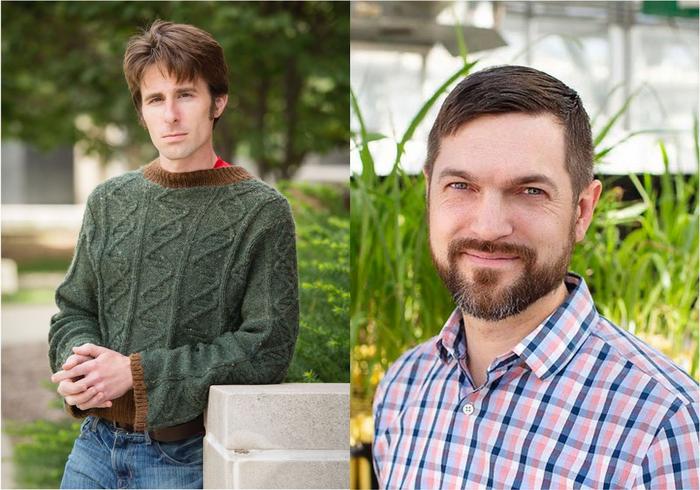
Credit: University of Illinois Urbana-Champaign and Colorado State University
URBANA, Ill. — The National Science Foundation (NSF) has funded University of Illinois Urbana-Champaign research that aims to connect the dots between quantitative and molecular genetics and improve crop breeding.
The four-year, $795,000 grant investigates new theories on how genetics influence complex crop traits, such as yield or grain quality. These traits are controlled by lots of different genes — sometimes hundreds or thousands — which makes untangling their contributions difficult. Crop breeders use a host of advanced genetic tools to predict and select desirable complex traits, but these tools rely on outdated genetic understanding, believes project leader Alex Lipka.
“The theory used to quantify genetic contributions to traits in statistical models stems back from 1918. In 1918, they didn’t have the central dogma of molecular biology, so they didn’t even know that DNA had two strands. There are over a century of advancements that have not been incorporated into the most widely used models to quantify genetic architecture,” said Lipka, an associate professor in the Department of Crop Sciences, part of the College of Agricultural, Consumer and Environmental Sciences (ACES) at Illinois.
An emerging genetic framework called the omnigenic model incorporates modern advances in molecular biology into classical genetic theory. The omnigenic model divides all the genes in an organism’s genome into two components: core genes and peripheral genes. According to the model, the core genes directly control the trait of interest. If, for example, several core genes for plant height are switched on, the plant should be taller.
Peripheral genes, on the other hand, do not directly control the trait but can still subtly impact it. These genes are involved in cellular processes that influence how the core genes direct the trait. For example, a peripheral gene might produce a protein that can travel within the cell and change the activity of a plant height core gene. While the effects of the peripheral genes may be small individually, added together they can contribute even more to genetic variability than core genes.
If the omnigenic model is correct, Lipka believes that incorporating peripheral genes could advance breeding tools. “If we can harness the collective effects of the peripheral genes, then there can be really powerful ramifications for getting and selecting for optimal trait values,” Lipka said.
Lipka and his collaborator Geoffrey Morris at Colorado State University, who also received an NSF grant for this project, will develop statistical methods for testing the omnigenic model in crops.
“We don’t currently have the statistical tools to properly assess evidence of the omnigenic model,” Lipka said. “We’re going to develop these tools and test them out in a biologically rigorous manner.”
They plan to use a software package previously developed by Lipka’s team to simulate how core genes, peripheral genes, and the interaction between genes could affect complex traits in a simulated crop population. Their simulations will be informed with data from Arabidopsis, a model plant species, and sorghum, a climate-resilient crop widely eaten in areas of the world with food insecurity.
“It’s difficult for plant breeders to keep pace with a changing climate and increasing food demand,” said Morris, whose team supports plant breeding programs around the world. “In this project, new methods will first be rigorously tested with data sets from ongoing breeding partnerships in the U.S., Senegal, and Haiti. Ultimately, though, our goal is to see these methods deployed by plant breeders to identify high-yielding, climate-resilient varieties.”
They will simulate multiple populations with different types of selection and selection intensity, repeat this for several generations, and ultimately quantify evidence for or against the omnigenic model. By the end of the project, they will put all of their work into a new software package that other researchers can use to test and apply the model.
“In some of the preliminary studies, the omnigenic model actually seems like it might be working, which is just really cool,” Lipka said.
Lipka is also affiliated with the College of Liberal Arts and Sciences, the Carl R. Woese Institute for Genomic Biology, and the National Center for Supercomputing Applications at Illinois.

