

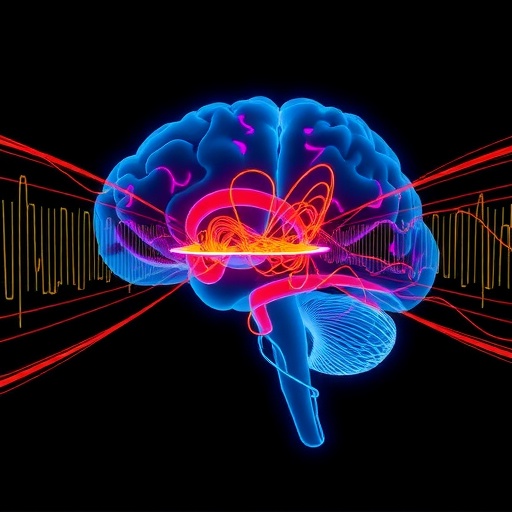
A Groundbreaking Leap in Brain Monitoring: Interferometric Diffusing Wave Spectroscopy
Cerebral blood flow (CBF) plays a pivotal role in sustaining healthy brain function, acting as the delivery system for oxygen and essential nutrients throughout the neural landscape. The ability to monitor this flow noninvasively has long been a holy grail for neuroscience and clinical medicine, promising earlier diagnosis and better management of neurological disorders. Traditional optical techniques, particularly diffuse correlation spectroscopy (DCS), have harnessed the dynamic “dance” of coherent light speckles scattered by moving red blood cells to estimate CBF. However, conventional DCS has been hampered by limited sensitivity to the brain, as photons must traverse superficial tissues—scalp and skull—adding noise and signal attenuation before reaching deeper cerebral regions.
The pursuit to transcend these limitations has led to an innovative breakthrough by Dr. Mingjun Zhao and her team at New York University Langone Health. Their pioneering work introduces interferometric diffusing wave spectroscopy (iDWS), a novel approach that amplifies the subtle optical signatures emerging from the brain. Unlike traditional DCS, iDWS employs interferometry, coherently mixing the weak light field backscattered from brain tissue with a strong reference beam. This process enhances the signal through coherent amplification, thus allowing simultaneous and parallelized detection of minute fluctuations using cost-effective complementary-metal-oxide-semiconductor (CMOS) sensors instead of expensive single-photon counting modules.
One of the chief obstacles for brain monitoring with optical methods arises from the anatomical configuration: the brain sits approximately 1–2 centimeters beneath the scalp and skull, causing prior techniques to predominantly sample superficial layers instead of meaningful cerebral blood flow. Attempts to increase the source-collector distance to access deeper regions face the challenge of severe light attenuation and consequently diminished photon counts. These constraints often translate into prohibitively expensive systems with large arrays of photon counting channels to maintain acceptable signal levels. The newly optimized iDWS system deftly sidesteps these limitations by combining coherent detection with highly sensitive CMOS cameras, reducing expense by roughly two orders of magnitude relative to large photon avalanche diode arrays.
The research team’s latest publication, released in February 2025 and featured in the IEEE Journal of Selected Topics in Quantum Electronics, outlines an exhaustive optimization of iDWS operating at 852 nanometers wavelength. Their meticulous improvements focused on maximizing independent detection channels, optimizing camera duty cycle and pixel full well capacity, and controlling laser power to enhance signal-to-noise ratio while minimizing artifacts and measurement noise. The results are remarkable: an overall enhancement exceeding 20-fold in signal quality compared to prior implementations. They specifically demonstrated real-time pulsatile monitoring of cerebral blood flow indices (CBFi) at source-collector distances of up to 4 to 4.5 centimeters in adults of moderate skin pigmentation (Fitzpatrick scale 4).
Further evolution of their technology saw the deployment of an iDWS system operating at a longer wavelength of 1,064 nanometers, which has subsequently enabled pulsatile CBFi detection beyond 5 centimeters separation. This milestone significantly extends noninvasive probing depths, marking a new standard for brain sensitivity and spatial resolution in diffuse optical monitoring. By capturing the rapid speckle fluctuations that stem from high blood flow velocities within the brain, iDWS surpasses competing methods like speckle contrast optical spectroscopy, which suffer from temporal limitations in exposure and thereby reduced sensitivity.
A remarkable advantage of the iDWS system lies in its clever engineering for clinical utility. Interferometry typically requires highly stable setups, traditionally confined to isolated optical tables in well-controlled laboratory environments. Dr. Zhao’s team has successfully engineered a cart-based configuration robust against mechanical perturbations and spatial constraints of hospital settings. This mobile platform ensures reliable operation without pneumatic isolation, a significant innovation that opens the door for widespread clinical deployment. The instantiation of a stable, clinical-compatible interferometric brain monitor represents a landmark achievement in translating sophisticated photonics research into practical healthcare tools.
Preliminary deployment of the mobile iDWS system within a Neuro Intensive Care Unit highlights its clinical potential. Early measurements of CBFi in patients illustrate the technique’s ability to capture meaningful physiological data under real-world conditions, pushing beyond previous technical and operational limitations. This real-time cerebral monitoring platform could profoundly impact neurocritical care, enabling continuous assessment of brain perfusion, early detection of ischemic episodes, and tailored therapeutic interventions to mitigate damage from stroke or traumatic injury.
Looking toward the future, the research agenda aims to validate long-term operational stability of the 852 nm iDWS platform in intensive care environments. Incorporation of time-of-flight filtering is anticipated to further refine sensitivity by discriminating photons based on their transit times, isolating signals truly emanating from cerebral tissue layers. Beyond hardware advancements, clinical trials are poised to explore iDWS application for diagnosing and tracking neurological pathologies, ranging from ischemic stroke to traumatic brain injury. Such deployment could revolutionize bedside monitoring, transforming how clinicians understand and intervene in brain health.
In sum, the comprehensive optimization of interferometric diffusing wave spectroscopy heralds a new era in neuroimaging, coupling cutting-edge quantum optical principles with pragmatic clinical design. By achieving unprecedented brain sensitivity at reduced cost and enhanced portability, iDWS stands to become an indispensable tool in neuroscience research and neurocritical care. This technology bridges the divide between laboratory innovation and patient-centered diagnostics, offering hope for deeper insights into cerebral hemodynamics and improved outcomes for neurological disease sufferers globally.
Subject of Research: People
Article Title: Comprehensive Optimization of Interferometric Diffusing Wave Spectroscopy (iDWS)
News Publication Date: 13-Feb-2025
Web References: https://doi.org/10.1109/JSTQE.2025.3537642
References: Mingjun Zhao et al., IEEE Journal of Selected Topics in Quantum Electronics, Volume 31, Issue 4, July-August 2025
Image Credits: Dr. Oybek Kholiqov (University of California, USA) and Dr. Mingjun Zhao (New York University Langone Health, USA)
Keywords: Biomedical engineering, Medical imaging, Neuroscience, Optics, Photonics, Brain, Brain structure, Health and medicine, Blood flow


