

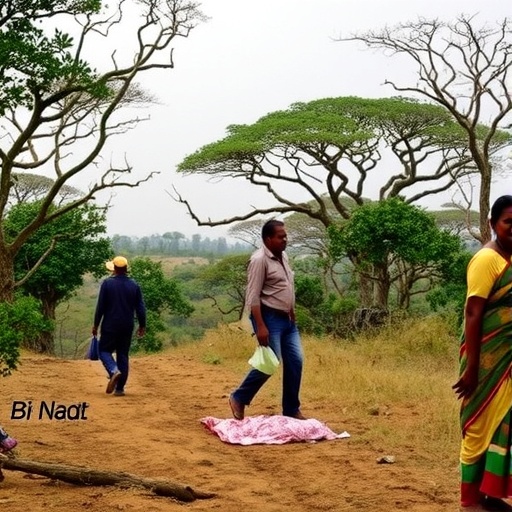
In the vast ecological tapestry of India, the interplay between forests and savannas forms a vital backdrop for biodiversity, cultural heritage, and environmental health. Current research conducted by experts N. Dubey, T.A. Chauhan, and S. Ghosh has ventured into this intricate relationship, particularly focusing on how human interventions and climate change are reshaping the balance between these two ecosystems. Their article, slated for publication in Commun Earth Environ in 2025, promises to be a cornerstone in our understanding of these dynamics.
As a diverse nation, India boasts an array of ecosystems ranging from densely wooded forests to expansive savanna plains. Each ecosystem harbors unique flora and fauna, contributing to the country’s rich biodiversity. However, the looming specter of climate change threatens to disrupt this delicate equilibrium, leading to potential consequences that could resonate through the economy, agriculture, and social structures. The compelling narrative woven by Dubey and colleagues aims to highlight these pressing issues and assess the ramifications of human activity on environmental resilience.
The researchers meticulously outline the significance of forest-savana dynamics, which play a crucial role in moderating climate impacts. Forests act as carbon sinks, absorbing CO2 and helping to mitigate global warming. Savannas, on the other hand, provide essential grazing grounds for livestock, support agriculture, and harbor unique wildlife. The stability of these ecosystems is paramount to sustaining both human and animal populations, particularly in a country with a growing population and increasing environmental pressures.
In recent decades, human interventions have come to redefine the landscape of India’s forests and savannas. Agricultural expansion, urbanization, and resource extraction have caused significant habitat fragmentation and degradation. Such activities not only threaten endemic species but also compromise the ecological services that forests and savannas provide. The implications of these changes are dire, as disrupted ecosystems are less able to absorb shocks from climate variability, leading to increased vulnerability.
Conversely, climate change exacerbates the situation, influencing temperature, precipitation patterns, and the frequency of extreme events such as droughts and floods. These climatic shifts alter the very fabric of forest-savana dynamics, making ecosystems more susceptible to invasions by non-native species and destabilizing the intricate relationships that have developed over millennia. Dubey, Chauhan, and Ghosh highlight how even minor climatic fluctuations can have disproportionate impacts on the delicate equilibrium of these ecosystems.
One key aspect of the research is the exploration of adaptive management strategies. The authors argue for a multidisciplinary approach that integrates ecological science, social dynamics, and traditional knowledge systems. This perspective underscores the importance of community involvement in conservation efforts, emphasizing that local populations often possess invaluable insights into sustainable practices that can aid in restoring and maintaining ecological stability. Policies that facilitate collaboration between scientists, local communities, and policymakers are essential for developing resilient strategies.
Moreover, the researchers emphasize the need for long-term studies that monitor the effects of both climate and human activities on forest and savanna stability. Current data, while informative, often lacks the temporal depth necessary to draw robust conclusions about trends and potential future scenarios. Advanced remote sensing technologies and ecological modeling can enhance our understanding of these changes, providing vital insights into the interactions between vegetation, climate, and land use.
As the article progresses, it delves into case studies from various regions of India, presenting evidence of successful interventions that have led to the restoration of ecological balance. These examples serve as a reminder of the potential for positive change when communities embrace a holistic view of ecosystem management. By fostering local stewardship and integrating scientific findings into everyday practices, significant strides can be made toward healing the rifts between human activity and environmental health.
The implications of Dubey, Chauhan, and Ghosh’s work extend beyond India’s borders. The global environmental community is grappling with similar challenges, as ecosystems worldwide face the dual threats of climate change and human encroachment. This research offers a blueprint for managing these crises by demonstrating that effective solutions can be rooted in localized contexts while also contributing to the broader discourse on sustainability.
As we face unprecedented environmental challenges, the findings of this research hold critical relevance. They serve as a call to action for researchers, conservationists, and policymakers to rethink their approaches to ecosystem management. The urgency for comprehensive policy frameworks that prioritize both ecological health and community resilience cannot be overstated.
The overarching conclusion drawn from this research advocates for a paradigm shift: one that views forests and savannas not as isolated entities but as interconnected systems deeply influenced by human actions and climate variability. Understanding this interconnectedness is pivotal for fostering resilience in the face of looming environmental uncertainties. As we look to the future, the insights provided by Dubey, Chauhan, and Ghosh offer hope—a path toward sustainability that honors the intricate dance between nature and humanity.
In summary, the work of these researchers highlights the precarious balance that exists within India’s diverse ecosystems. As scientists continue to unravel the complexities of forest and savanna dynamics, it becomes increasingly clear that safeguarding these natural landscapes requires collaborative efforts that bridge the gap between human activity and environmental stewardship.
The anticipation surrounding the publication of this research speaks not only to its scientific rigor but also to its potential impact on policy and community engagement. It is a reminder that in the face of climate change, every action counts, and the choices we make today will reverberate through generations to come. Let us heed the lessons from India’s forests and savannas as we navigate our collective path toward a more sustainable future.
Subject of Research: The relationship between forest and savanna ecosystems in India, focusing on human interventions and climate change impacts.
Article Title: Forest-savanna stability in India under human interventions and changing climate.
Article References:
Dubey, N., Chauhan, T.A. & Ghosh, S. Forest-savanna stability in India under human interventions and changing climate.
Commun Earth Environ (2025). https://doi.org/10.1038/s43247-025-03076-5
Image Credits: AI Generated
DOI:
Keywords: Forest ecosystems, Savanna ecosystems, Climate change, Human interventions, Biodiversity, Sustainable management, Ecosystem stability.


