

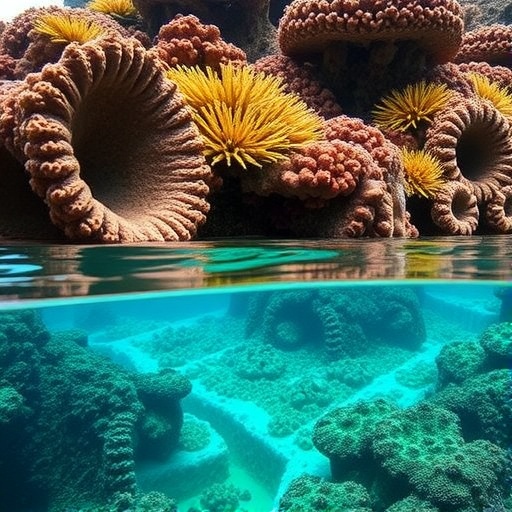
Coral reefs, often referred to as the “rainforests of the sea,” represent some of the most vibrant and bio-diverse ecosystems on our planet. These structures, primarily composed of calcium carbonate deposits secreted by coral polyps, are essential for marine life, offering habitat, food, and shelter to myriad species. However, emerging research presented by A.S. Walker and R. van Woesik highlights a growing concern that local human disturbances may significantly undermine the potential for these ecosystems to act as climate refugia in the face of global warming. This study, set to be published in Commun Earth Environ in 2026, delves into the intricacies of local versus global environmental pressures and their implications for the future of coral reefs.
The central thesis of Walker and van Woesik’s research reveals that while some coral reef areas might initially appear resilient or capable of providing thermal refuges against warming waters, localized disturbances such as pollution, overfishing, and coastal development severely compromise these benefits. These findings challenge the optimistic narrative surrounding certain coral ecosystems that were believed to harbor the potential to withstand the changing climate. The implications of this research are vast, suggesting that climate action initiatives focused solely on broader environmental alterations may not suffice if local human activities are neglected.
To grasp the significance of this research, it is crucial to understand the concept of climate refugia. These are areas that, due to unique geographical or environmental conditions, are less affected by climate change than surrounding regions. In the context of coral reefs, thermal refugia are zones where corals can survive rising water temperatures better than in other areas. However, the study by Walker and van Woesik presents compelling evidence that even these sanctuaries are at risk when faced with local disturbances that can exacerbate stress on corals.
One of the most alarming findings of the study is the extent to which human activities can diminish coral resilience. For instance, nutrient runoff from agriculture can lead to algal blooms that outcompete corals for space and resources. Additionally, harmful fishing practices such as blast fishing damage not just the target fish species but the entire reef structure. Coral reefs require a delicate balance of species to thrive, and disturbances can derail these ecosystems’ complexity, inhibiting their ability to recover from climate-induced stressors.
Another critical aspect of Walker and van Woesik’s findings pertains to the socio-economic implications of deteriorating coral reefs. Many coastal communities depend on these ecosystems for their livelihoods, particularly through fishing, tourism, and recreation. As the structural integrity of coral reefs declines due to local disturbances, so too does the economic stability of these communities. The authors argue that stakeholders must recognize the intrinsic link between reef health and human well-being, stressing the need for holistic management strategies that consider both local impacts and broader climate considerations.
Moreover, this research underscores the importance of interdisciplinary approaches in understanding coral reef dynamics and developing effective conservation strategies. Marine ecologists, climate scientists, policymakers, and local communities must collaborate to address the full spectrum of threats facing coral reefs. Such cross-disciplinary partnerships can help develop innovative solutions, such as establishing marine protected areas, enforcing sustainable fishing regulations, and minimizing pollution from land-based sources.
In light of these findings, it is essential for policymakers to prioritize local human impact mitigation strategies in their climate action plans. Initiatives aimed at reducing nutrient loading, controlling coastal development, and protecting fish populations must be integrated into broader climate adaptation frameworks. Only by addressing local disturbances can the potential of coral reefs as climate refugia be meaningfully realized.
There is also a pressing need for increased public awareness about the fragility of coral reef ecosystems and the threats they face. Educational campaigns that inform communities about sustainable practices can foster greater empathy and responsibility towards marine resources. Grassroots engagement can also empower local populations to advocate for better management practices and conservation measures, ensuring their voices are heard in the decision-making processes.
The study by Walker and van Woesik serves as a critical warning to the global community. If we continue to overlook the significance of local human disturbances, we may ultimately diminish the chances for coral reefs to survive the escalating impacts of climate change. Conclusively, the health of coral reefs is an indicator of our planet’s overall ecological well-being; thus, their preservation is paramount not just for marine life but also for humanity’s survival.
In summary, the intricate relationship between local human activities and coral reef resilience to climate change necessitates urgent action from all sectors of society. Walker and van Woesik’s research poignantly illustrates that without a concerted effort to mitigate local disturbances, even those reefs deemed as potential climate refugia are at risk of failing. The stakes could not be higher, as the fate of these cherished ecosystems hangs in the balance—and with them, the livelihood of countless communities and the health of our oceans.
The overwhelming evidence presented in this study amplifies the call to prioritize ecological integrity in policymaking, emphasizing the interconnectedness of environmental health and human prosperity. Coral reefs must not only survive but thrive, and that goal will require the unwavering commitment of society to address both local and global threats concurrently.
As we look towards the future, the onus is upon us to choose a path that bolsters the resilience of coral reef ecosystems. It is imperative to remember that our actions today will shape the oceans of tomorrow, and safeguarding the health of coral reefs is essential for the well-being of both marine biodiversity and human populations alike.
Subject of Research: Local human disturbances on coral reefs and their impact on climate refugia.
Article Title: Negating Climate Refugia: The Impact of Local Disturbances on Coral Reefs.
Article References: Walker, A.S., van Woesik, R. Local human disturbances on coral reefs negate potential climate refugia.
Commun Earth Environ (2026). https://doi.org/10.1038/s43247-026-03261-0
Image Credits: AI Generated
DOI:
Keywords: Coral reefs, climate refugia, human disturbances, marine ecosystems, biodiversity, conservation.


