

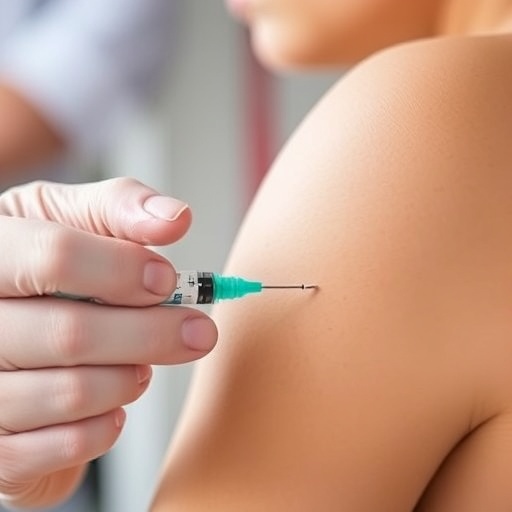
A groundbreaking longitudinal study published in The BMJ has provided compelling evidence that vaccination against human papillomavirus (HPV) offers robust, long-lasting protection against invasive cervical cancer. This extensive research, conducted using Swedish national registers, is the first to demonstrate persistent vaccine efficacy up to 18 years post-immunization, dispelling previous uncertainties regarding waning immunity over time. Given the global burden of cervical cancer, these findings carry profound implications for public health policies and the future of cancer prevention.
HPV stands as one of the most prevalent sexually transmitted infections worldwide, with specific oncogenic strains directly linked to the majority of cervical cancer cases. Since the advent of prophylactic HPV vaccines in the mid-2000s, many countries have integrated HPV immunization into routine adolescent vaccination schedules, primarily targeting young girls prior to sexual debut. These vaccines, including the quadrivalent formulation studied here, target HPV types 6, 11, 16, and 18, with types 16 and 18 responsible for approximately 70% of cervical cancers globally.
Despite the proven short-term efficacy of HPV vaccines in preventing high-grade cervical lesions and persistent infections, data regarding their long-term effectiveness in preventing actual invasive cervical cancer has been limited. Moreover, concerns persisted around possible attenuation of immune protection many years after vaccination, particularly varying with the age at which vaccines were administered. Addressing these critical knowledge gaps, the Swedish cohort study leverages one of the world’s most comprehensive population-wide health registries to track outcomes among hundreds of thousands of women for nearly two decades.
The study cohort comprised 926,362 girls and women born between 1985 and 2001 residing in Sweden, all without prior HPV vaccination or invasive cervical cancer at baseline in 2006. Participants were stratified by vaccination status and age at vaccination, and scrutinized for incident cases of invasive cervical cancer through linkage with high-quality cancer registries. Demographic and socioeconomic confounders were rigorously controlled for, including participants’ county of residence, mother’s country of origin, parental education, and income, to isolate the vaccine’s protective impact.
Within the nearly 18-year follow-up period concluding in 2023, 365,502 participants (40%) received at least one dose of the quadrivalent HPV vaccine. A total of 930 invasive cervical cancer cases emerged, with just 97 cases among vaccinated women versus 833 among their unvaccinated counterparts. Strikingly, those vaccinated before 17 years of age experienced a 79% reduction in invasive cervical cancer risk, with sustained protection remaining as high as 77% up to 15 years after immunization. This remarkable durability of vaccine effect challenges previous assumptions of potential waning immunity.
Women inoculated at age 17 or older also benefited significantly, with a 37% lower invasive cervical cancer risk overall compared to unvaccinated individuals. Protection in this older group appeared to strengthen over time, achieving a 46% risk reduction between 10-12 years post-vaccination and rising to 77% lower risk 13-15 years afterward. This trend suggests immunological memory and long-term adaptive immune responses elicited by the vaccine may continue to mature and enhance protection well after initial dosing.
Beyond individual-level benefits, the study documented substantial population-level declines in invasive cervical cancer incidence correlated with progressively younger birth cohorts. Women born between 1985 and 1988 exhibited the highest cancer rates, with approximately 250 cases per 100,000 by age 38. This rate progressively diminished in subsequent cohorts, falling dramatically to 4 per 100,000 by age 24 among those born between 1999 and 2001. Such epidemiological shifts underscore the profound impact of widespread HPV vaccination programs on public health at large.
Although observational by design and susceptible to inherent limitations such as misclassification bias or unmeasured confounding factors—including lifestyle behaviors like smoking and sexual activity—the study’s rigor and comprehensive dataset bolster confidence in its conclusions. Sensitivity analyses further confirmed the robustness of the findings across multiple time intervals and analytic adjustments, reinforcing the evidence for durable vaccine-induced protection against cervical cancer.
Immunologically, the sustained efficacy observed aligns with data suggesting that HPV vaccines induce durable B-cell memory and high-affinity neutralizing antibodies, key mechanisms in long-term protective immunity. The apparent lack of immunity waning decades after vaccination strengthens the rationale for early vaccination policies targeting pre-adolescents before exposure to HPV. It also alleviates concerns regarding the need for booster doses in the general population, simplifying immunization strategies.
These landmark findings offer compelling support for global cervical cancer elimination initiatives, which depend heavily on achieving and maintaining high HPV vaccination coverage. The World Health Organization’s call to action for cervical cancer eradication hinges on widespread vaccine uptake, early vaccination in adolescence, and continued surveillance of vaccine impact—measures substantiated by this comprehensive Swedish study.
In conclusion, the extended follow-up affirms that the quadrivalent HPV vaccine provides sustained, potent protection against invasive cervical cancer for at least 18 years post-immunization with no evidence of declining immunity. This robust protective effect underlines the critical role of national HPV vaccination programs in drastically reducing cervical cancer morbidity and mortality. As countries accelerate their vaccine rollouts, these findings promise a future where cervical cancer may become a rare disease, heralding a new era in cancer prevention through immunization.
Subject of Research: People
Article Title: Extended follow-up of invasive cervical cancer risk after quadrivalent HPV vaccination: nationwide, register based study
News Publication Date: 25-Feb-2026
Web References: 10.1136/bmj-2025-087326
Keywords: Cervical cancer, Vaccination


