

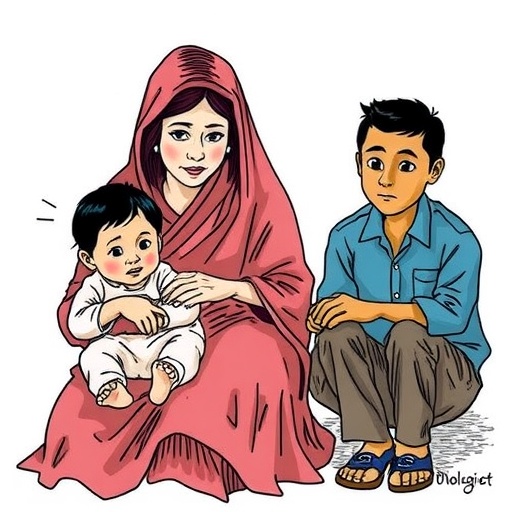
In a thought-provoking study set to release in 2026, researchers Zhang, R., Zhang, Z., and Liu, A. delve deep into the intricate dynamics between childhood family poverty and its implications on time management among Chinese university students. By employing a robust Conservation of Resources (COR) perspective, the study highlights the often-overlooked psychological and social ramifications of parentification experienced during childhood. The findings serve as a compelling narrative that not only touches on the individual struggles of students but also reflects broader societal issues surrounding poverty and its multifaceted impacts.
The phenomenon of parentification occurs when children are forced to take on adult responsibilities prematurely, often due to economic hardships within the family. This dynamic can lead to significant psychological stress, as these young individuals navigate the demands of both childhood and adult life. For university students coming from impoverished backgrounds, the burden of parentification does not merely fade into childhood but continues to cast long shadows over their academic and personal lives.
As the study elucidates, poverty does not merely manifest in financial instability; it permeates social structures and alters familial relationships, often culminating in the phenomenon of time poverty. Time poverty describes a state where individuals feel they do not have enough time to engage in necessary activities, including education and self-care. The study posits that for many Chinese university students, their ability to manage time effectively is inherently linked to the responsibilities they shouldered in their formative years—a key insight that refocuses our understanding of how poverty shapes life trajectories.
In exploring this relationship, the researchers utilized a comprehensive survey methodology that enabled them to gather nuanced insights from a diverse cohort of university students across China. The data revealed a stark correlation between experiences of parentification and the subsequent challenges faced in time management. This connection provides valuable evidence for educators, policymakers, and mental health professionals, suggesting that academic support systems must be tailored to address the unique struggles of students who have navigated similar circumstances.
Moreover, the COR perspective applied in this research sheds light on resource depletion and mobilization strategies that individuals employ in times of stress. For parents who fall into the category of working-class or economically disadvantaged households, the continuous demand for resources—be they emotional, social, or financial—leads to a psychological drain that further exacerbates feelings of time poverty. This perspective adds an essential layer of complexity to understanding how deeply rooted socio-economic factors influence student behavior and academic outcomes.
The implications of these findings extend far beyond individual narratives. They challenge existing frameworks in educational policy and student support services that often overlook the impact of early familial responsibilities on academic success. Addressing the unique challenges faced by students with a history of parentification requires a paradigm shift; educators and administrators must acknowledge the intertwining relationship between emotional well-being, time management, and the socio-economic backgrounds of their students.
As the study continues to garner attention, it is expected to spark discussions and debates within academic circles about the intersection of poverty, education, and mental health. It poses critical questions: How do we create academic environments that are sensitive to the multifaceted experiences of students? What role should universities play in mitigating the adverse effects of early-life socio-economic struggles on their academic journeys?
With a rich dataset and a clear theoretical lens, the study promises to fill vital gaps in existing literature and inform future research endeavors. As researchers continue to explore these pressing issues, it becomes evident that understanding the psychological consequences of childhood experiences can lead to more effective educational strategies and support systems.
The urgent call to action that emerges from this study is not merely an academic concern; it reflects a moral imperative to recognize the diverse backgrounds of students and craft solutions that foster inclusivity and equity within educational institutions. The study’s insights underscore the need for systemic changes that address the undercurrents of socio-economic disparity, thereby empowering vulnerable student populations to thrive academically.
As we anticipate the publication of this comprehensive research, it stands as a beacon for future inquiries that aim to disentangle the complex web of factors influencing student success. Through its innovative approach, the study illuminates critical pathways to enhancing academic experiences, thereby ultimately contributing to the broader discourse surrounding poverty and education in today’s society.
The urgency of these conversations is amplified in a modern context where myriad students are navigating their university years while juggling substantial personal and familial responsibilities. The findings from Zhang, R., Zhang, Z., and Liu, A. encourage us to rethink our assumptions regarding student success and reinforce the idea that educational frameworks must evolve to meet the diverse needs of the contemporary learner.
In conclusion, the findings from this study not only promise to reshape our understanding of parentification and its long-lasting effects but also serve as a crucial reminder of the interconnectedness of individual experiences and broader societal structures. As we move toward an era that champions inclusivity and understanding, studies like this one will be pivotal in guiding policies that foster a more equitable educational landscape for future generations.
Through the lens of conservation of resources, we are invited to appreciate the resilience of students who manage both their academic pursuits and the legacies of their childhood experiences. This research stands as a call to educators and legislators alike to take action in supporting those who face the dual challenges of economic hardship and the emotional toll of parental responsibilities. As these conversations gain traction, we can only hope for a more inclusive future for all students, irrespective of their backgrounds.
Subject of Research: The relationship between childhood family poverty, parentification, and time poverty among Chinese university students.
Article Title: Parentification as a Bridge Between Childhood Family Poverty and Time Poverty Among Chinese University Students: A Conservation of Resources Perspective.
Article References: Zhang, R., Zhang, Z., Liu, A. et al. Parentification as a Bridge Between Childhood Family Poverty and Time Poverty Among Chinese University Students: A Conservation of Resources Perspective. Applied Research Quality Life (2026). https://doi.org/10.1007/s11482-025-10543-w
Image Credits: AI Generated
DOI: https://doi.org/10.1007/s11482-025-10543-w
Keywords: Childhood poverty, parentification, time poverty, Chinese university students, conservation of resources.


