

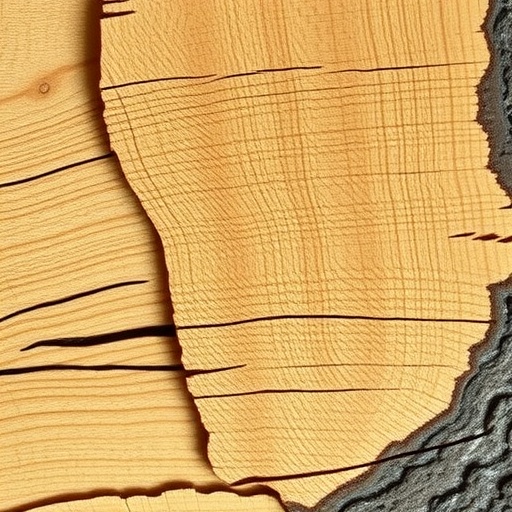
Wood density, an important operational trait in timber industries and ecological studies, has often been studied with a narrow lens, overlooking the broad impacts of diverse natural physical variables. A groundbreaking study published in the journal Discover Forestry sheds light on the interrelation between these variables and wood specific gravity, particularly in oak trees. This comprehensive exploration, carried out by a team of researchers including Febles Díaz, Schopen, and Fan, embarks on an extensive journey through various geographic regions to elucidate how environmental factors can shape wood properties.
The oak species is vital in many habitats and serves as a keystone in ecological systems. Understanding the factors that influence wood specific gravity in oak can provide crucial insights for both ecologists and forestry professionals. This study addresses the pressing need for detailed research on oak’s adaptability and resilience across diverse environmental conditions. The research findings illustrate just how sensitive these trees are to their surroundings, making it crucial for future conservation efforts and forest management strategies.
One of the most striking revelations of the study is the significant impact of climate variables on wood specific gravity. Temperature, precipitation patterns, and humidity levels play fundamental roles in the physiological and biochemical processes of trees. Variation in these climatic factors can lead to substantial differences in wood density, altering its structural integrity and mechanical properties. The research underscores the necessity of considering climatic impacts when analyzing wood characteristics, which can affect everything from timber strength to ecological adaptability.
Another pivotal aspect of the research is the role of soil composition and health in influencing wood density. The study carefully examines how different soil types, nutrient availability, and moisture levels can alter the specific gravity of oak wood. Results promote an understanding of how trees interact with their soil environments, revealing that certain tree species may thrive in soils rich in specific minerals or organic matter, consequently affecting their growth and wood quality. These insights provide valuable information for reforestation and agricultural practices aiming to maximize timber yield and sustainability.
Geographical diversity also plays a critical role in wood density variations among oak populations. The research team traveled across expansive landscapes, collecting data from different ecological zones and climates. This geographical breadth allows for a comprehensive analysis and understanding of how local conditions can influence tree growth and development. It emphasizes the importance of regional studies in forestry, underscoring the need for tailored management approaches that reflect local environmental realities.
The research also dives into the historical context of oak trees and their interactions with changing environments. As climate change continues to pose unprecedented challenges, understanding how oak trees adapt to fluctuating conditions becomes paramount. The study’s findings highlight not only the immediate impacts of climate variables but also the long-term implications for oak populations facing ongoing environmental stresses. This is particularly urgent today, as forests worldwide are increasingly threatened by climate change and anthropogenic factors.
By correlating data collected across multiple regions, the researchers were able to identify specific trends in wood density related to physical environmental factors. For instance, higher altitudes with cooler climates exhibited distinct wood density variations compared to lower, warmer areas. This correlation indicates that elevation and temperature gradients can significantly influence tree growth patterns and wood properties. The identification of such relationships can aid in predicting how oak species will respond to future climate scenarios.
Furthermore, the study emphasizes the implications for forestry practices and timber industries. Manufacturers and forestry managers rely heavily on wood specific gravity as a key indicator of wood quality and performance. Understanding the natural variables influencing this trait not only aids in selecting optimal harvesting sites but also informs sustainable forest management practices. In an era where sustainable practices are becoming essential for industry survival, this research provides foundational knowledge for improving resource management.
Additionally, the findings raise interesting questions related to genetic diversity among oak populations. Different oak varieties might display unique responses to environmental variables, leading to differences in growth rates and wood density. This observation opens avenues for future research into selective breeding and conservation strategies aimed at preserving genetic diversity. The potential benefits of such initiatives could enhance the resilience of oak trees to changing climates and pests.
The integration of geographic and climatic data sets allows for more reliable predictions of future trends in oak wood density. By leveraging advanced modeling techniques, the research team has provided a framework that can be utilized by other researchers and forestry professionals to assess various regions’ vulnerability to climate change impacts. This predictive capacity could revolutionize forest management and conservation strategies globally.
As the study concludes, it emphasizes the necessity of interdisciplinary approaches in studying forestry and ecological dynamics. By marrying ecological research with climate science and soil chemistry, researchers can foster a more integrated understanding of forest ecosystems. This holistic perspective is crucial for developing effective policies and practices to ensure the survival of vital tree species like oak in a rapidly changing world.
The findings from this research on oak trees represent a significant step forward in understanding the complex relationships within forest ecosystems. By revealing how various natural physical variables impact wood-specific gravity, the researchers have provided valuable insights that could transform forestry practices and ecological conservation efforts. The balance between utilizing these resources sustainably while ensuring the health of our forests lies at the heart of this study’s importance.
In summary, the exploration of how natural physical variables influence wood specific gravity in oak trees across geographic ranges reveals critical linkages between the environment, tree physiology, and sustainable resource management. This groundbreaking research sets a precedent for future studies, encouraging continued investigation into ecological dynamics as a response to environmental changes.
With the increasing pressures of climate change, this research stands as a beacon of hope, offering pathways to enhance ecological resilience and promote sustainable forestry. Its findings are not just academic; they hold real-world implications for how forests, particularly vital species like oak, can be preserved for generations to come.
In essence, as we look to the future, understanding the science behind wood properties and their relationship with environmental conditions will be crucial in shaping effective management strategies that prioritize both human needs and ecosystem health.
Subject of Research: The influence of natural physical variables on wood specific gravity in oak trees.
Article Title: Exploring the influence of natural physical variables on wood specific gravity in oak across a broad geographic range.
Article References:
Febles Díaz, J., Schopen, E., Fan, Z. et al. Exploring the influence of natural physical variables on wood specific gravity in oak across a broad geographic range.
Discov. For. 1, 55 (2025). https://doi.org/10.1007/s44415-025-00058-5
Image Credits: AI Generated
DOI: https://doi.org/10.1007/s44415-025-00058-5
Keywords: oak, wood specific gravity, natural variables, climate, soil composition, ecological adaptability, forestry management, climate change.


