

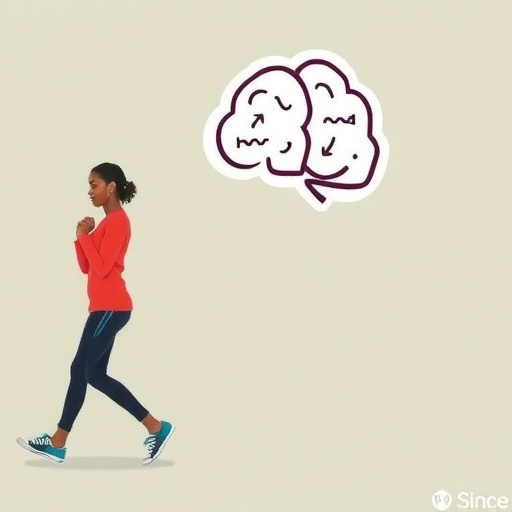
In recent years, the mental health of university students has gained increasing attention as a crucial area of concern worldwide. Among the plethora of psychological challenges faced by this demographic, anxiety stands out as particularly prevalent and debilitating. A groundbreaking study published in BMC Psychology in 2026 by Ge, Li, Li, and colleagues delves deeply into the multifaceted relationships between physical activity and anxiety among university students. Through an exhaustive systematic review combined with meta-analytic structural equation modeling, the researchers unveil the underlying pathways that interconnect exercise, psychological resilience, and social support. This comprehensive analysis emerges as a pivotal contribution to understanding how physical activity not only alleviates anxiety directly but also fosters internal and external mechanisms that serve as buffers in stressful environments typical of university life.
The study’s foundation rests upon an extensive exploration of existing empirical literature addressing physical activity’s psychological effects. Prior research has consistently suggested exercise as a potent intervention for anxiety reduction; however, the exact mechanisms remained under-examined or often oversimplified. The research team adopted a meta-analytic structural equation modeling (MASEM) approach to pierce beyond correlations, aiming to illuminate causative pathways and interaction effects. This technique synthesizes quantitative data across numerous studies, allowing the authors to assess complex interrelations and potential mediating variables. By integrating systematic review methodologies, the study ensures a rigorous selection of quality studies, further buttressing the robustness of its conclusions.
Central to their findings is the recognition of psychological resilience as a critical mediating factor through which physical activity attenuates anxiety symptoms. Psychological resilience here is defined as an individual’s capacity to adapt effectively to stress and adversity. The research indicates that engaging in regular physical activity enhances resilience by promoting neurobiological changes that strengthen stress-coping mechanisms and cognitive flexibility. Exercise-induced improvements in brain-derived neurotrophic factor (BDNF) levels, neurogenesis, and hypothalamic-pituitary-adrenal (HPA) axis regulation contribute to this resilience, allowing students to maintain emotional equilibrium amidst academic pressures and social challenges. This nuanced understanding highlights that exercise’s beneficial effects extend beyond immediate mood enhancement, embedding deeper psychological fortifications against anxiety.
In parallel, the study explores the role of social support as both a direct and indirect moderator in the relationship between physical activity and anxiety reduction. Social support encompasses perceived availability of assistance, emotional encouragement, and shared social activities. Physical activity, especially in communal or group settings such as team sports or fitness classes, fosters social interactions that amplify feelings of belonging and connectedness. This social engagement not only provides external buffering against anxiety-provoking stimuli but also synergizes with psychological resilience to reinforce mental well-being. The presence of supportive networks may help sustain motivation for regular physical activity, creating a positive feedback loop conducive to longer-term anxiety management.
The meta-analytic findings quantitatively underscore that physical activity exerts a significant inverse effect on anxiety symptoms, mediated substantially by increased psychological resilience and augmented social support. Notably, the structural equation model elucidates that these two mediators do not operate in isolation but exhibit interactive properties, reinforcing one another’s protective capacities. This interaction suggests that interventions targeting the promotion of physical activity in university settings should incorporate elements that simultaneously build resilience and foster social ties. Such an integrated framework may yield superior anxiety amelioration compared to approaches focusing solely on exercise frequency or intensity.
Delving into the intricacies of exercise modalities, the research differentiates among aerobic activities, resistance training, and mind-body exercises such as yoga or tai chi. While all forms contribute positively to anxiety reduction, the pathways through which they impact psychological resilience and social support differ. Aerobic exercise is particularly effective in enhancing neurophysiological factors underlying resilience, whereas mind-body disciplines also emphasize cognizance, emotional regulation, and stress appraisal changes. Resistance training, often underexplored in anxiety research, emerges as a notable contributor to self-efficacy—a component closely linked with resilience. The study advocates for a diversified exercise regimen to maximize mental health benefits, tailored to individual preferences and psychosocial contexts.
Examining the demographic nuances, the analysis identifies variations in how physical activity influences anxiety across gender, year of study, and cultural backgrounds among university students. Female students often report higher baseline anxiety levels, and their responsiveness to social support mechanisms may be more pronounced, suggesting gender-sensitive programming is crucial. Additionally, first-year students grappling with transitional stressors may derive more substantial resilience gains from physical activity interventions. Cultural factors shape attitudes toward exercise and social engagement practices, emphasizing the need for culturally adapted strategies when implementing such mental health programs globally.
The implications of these findings are profound for university administrators, mental health professionals, and policymakers striving to curb the rising tide of psychological distress in academic environments. Incorporating structured physical activity programs into campus wellness initiatives, with explicit components targeting resilience training and community building, could represent a cost-effective and evidence-based approach to reduce anxiety prevalence. Furthermore, the study advocates for increased interdisciplinary collaboration spanning kinesiology, psychology, and social sciences to design holistic interventions that address the multifactorial nature of anxiety.
From a neurobiological standpoint, the elucidation of pathways linking exercise to anxiety and its mediators enhances understanding of mental health disorders’ pathophysiology. It highlights the bidirectional interplay between behavioral activity and brain function, reinforcing paradigms that view mental health through biopsychosocial lenses. Future research inspired by this work may investigate the genetic and molecular underpinnings of exercise-induced resilience enhancement, potentially informing personalized medicine approaches.
Technological advancements also stand to benefit from these insights. The proliferation of fitness trackers, mobile health applications, and virtual social platforms can be harnessed to monitor physical activity levels, deliver personalized motivational feedback, and sustain social connections among student cohorts. Integrating these tools into university mental health strategies aligns with contemporary trends and can facilitate real-time data collection for ongoing research and quality improvement.
Critically, the investigation highlights the limitations inherent in existing studies, such as reliance on self-reported physical activity data and cross-sectional designs. The authors call for longitudinal randomized controlled trials that can more definitively ascertain causality and temporal dynamics. Additionally, standardized measurement protocols for psychological resilience and social support would enhance comparability and meta-analytic power. Addressing these gaps will refine intervention strategies and optimize outcomes.
The comprehensive analysis undertaken by Ge and colleagues thus stands as a landmark study, advancing the psychological sciences by disentangling the complex pathways through which physical activity mitigates anxiety in university students. It reveals that fostering both internal psychological resources and external social environments is paramount in leveraging exercise’s full mental health potential. As global academic pressures intensify amid evolving socioeconomic challenges, such multidimensional strategies could play an essential role in safeguarding student well-being and academic success.
In conclusion, this research underscores the transformative capacity of physical activity beyond physical health, positioning it as a cornerstone for psychological resilience and social interconnectedness that collectively suppress anxiety within vulnerable university populations. By embracing these insights, educational institutions and healthcare providers can collaboratively cultivate environments where students thrive mentally and physically, ensuring that the academic journey is not unduly marred by anxiety disorders. This study paves the way for innovative, integrative mental health promotion methods that resonate with contemporary student needs and scientific rigor.
Subject of Research: The study investigates how physical activity influences anxiety levels in university students, focusing on the mediating roles of psychological resilience and social support.
Article Title: The influence pathways of physical activity on anxiety in university students: a systematic review and meta-analytic structural equation modeling study based on psychological resilience and social support.
Article References:
Ge, C., Li, X., Li, J. et al. The influence pathways of physical activity on anxiety in university students: a systematic review and meta-analytic structural equation modeling study based on psychological resilience and social support. BMC Psychol (2026). https://doi.org/10.1186/s40359-025-03915-2
Image Credits: AI Generated


