

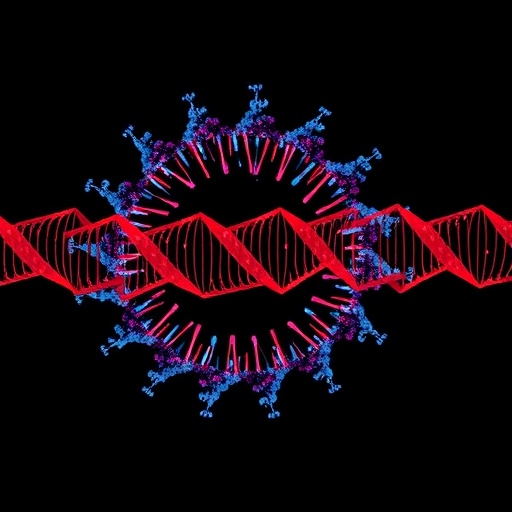
In a groundbreaking discovery that reshapes our understanding of HIV-1 biology, researchers have identified a novel circular RNA encoded by the HIV-1 genome that significantly enhances viral transcription. Circular RNAs (circRNAs) are unique RNA molecules characterized by their covalently closed loop structures, lacking the traditional 5′ and 3′ ends. Although circRNAs have been documented in various RNA viruses, their presence and functional implications in retroviruses like HIV-1 were unknown until now. This latest study reveals the existence of an HIV-1-encoded circRNA, termed circHIV, highlighting an uncharted dimension of viral gene regulation.
The team utilized sophisticated molecular techniques, including reverse transcription quantitative PCR (RT-qPCR) and northern blot analyses, to detect circHIV within plasma samples from 18 individuals living with HIV. In addition, circHIV was observed in various infected cellular models, such as primary cells and T-cell lines, underscoring its robust presence during active viral infection. This pivotal detection not only confirms the generation of circRNAs by the HIV-1 genome but also suggests circHIV’s potential role as a functional RNA species in the viral life cycle.
Encapsulation of circHIV within HIV-1 virions marks a remarkable finding. Virion packaging is a critical step dictating viral infectivity and replication efficiency, and the incorporation of circHIV hints at a purposeful evolutionary adaptation. The study’s analyses point to the selective incorporation of circHIV into budding virions, indicating its importance beyond mere transcription byproduct. This packaging may provide the virus with a means to modulate early infection events post-entry into target cells.
One of the most striking insights from the research lies in the interaction between circHIV and the viral Tat protein. Tat, a well-characterized transactivator of HIV-1 transcription, is essential for the efficient elongation of viral transcripts from the long terminal repeat (LTR) promoter region. The newly identified binding of circHIV to Tat was validated through RNA immunoprecipitation and in vitro pulldown assays, unveiling a novel RNA–protein partnership critical to viral gene expression regulation.
Functionally, circHIV’s binding to Tat was shown to enhance transcriptional activity at the HIV-1 LTR promoter. This enhancement suggests that circHIV serves as a transcriptional regulator by potentiating Tat function, ultimately leading to increased viral mRNA synthesis. This discovery reframes circRNAs—traditionally viewed as noncoding RNA entities—as active participants in viral pathogenesis and gene regulation mechanisms.
Understanding the molecular interface between circHIV and Tat opens exciting avenues for therapeutic intervention. Targeting this interaction may offer a new strategy to dampen HIV-1 transcription selectively, potentially suppressing viral replication more effectively. Moreover, the identification of circHIV adds complexity to the viral RNA milieu and underscores the importance of RNA species beyond the classical messenger RNAs and regulatory noncoding RNAs previously characterized.
The detection of circHIV in plasma not only reflects intracellular processes but also presents a possible biomarker for monitoring active infection or reactivation events. Its presence outside cells in bodily fluids could offer new diagnostic and prognostic avenues, thereby expanding HIV-1 clinical management tools. Further studies are warranted to explore the stability and turnover of circHIV in different biological compartments.
This study also sheds light on the evolutionary conservancy of circRNAs across viral families. It suggests that the production of circular RNAs is a broader viral strategy employed to modulate host-pathogen interactions, viral persistence, and immune evasion. HIV-1’s exploitation of this RNA form for enhancing transcriptional output adds to the sophisticated mechanisms the virus uses to sustain its replication despite host defenses.
The detailed biochemical characterization of circHIV revealed its topology and resistance to exonuclease digestion, aligning with canonical circRNA properties. Understanding these structural attributes is essential as they may contribute to circHIV’s stability and interaction dynamics within the viral replication machinery. This stability is likely a factor in its ability to be packaged within virions and persist extracellularly.
From a virology standpoint, uncovering circHIV challenges previous dogmas that retroviral genomes produce only linear RNA transcripts. The discovery necessitates revisiting the HIV-1 transcriptome landscape using circular RNA-focused approaches. It prompts a reexamination of viral RNA species that could have regulatory or functional relevance, which were overlooked by traditional sequencing techniques biased toward linear transcripts.
Future research directions include investigating whether circHIV directly influences other viral proteins or host cell factors that contribute to HIV-1 replication and latency. Determining the circHIV interactome within infected cells could reveal additional molecular partners and pathways modulated by this circRNA. The potential cross-talk between circHIV and host circular RNAs also represents an intriguing but unexplored area.
Clinically, targeting circHIV or its interaction with Tat provides a novel molecular target distinct from conventional antiretroviral therapies that primarily inhibit enzymatic functions like reverse transcriptase or protease activity. Such RNA-based targets might circumvent existing drug resistance issues and offer synergistic effects in combination treatments. The study thereby catalyzes renewed interest in RNA therapeutics against HIV.
In conclusion, the identification and characterization of circHIV deepen our understanding of HIV-1 transcriptional regulation and virus-host dynamics. This viral circRNA exemplifies how viruses co-opt diverse RNA forms to fine-tune their replication strategies. As research progresses, circHIV could prove central to the development of innovative diagnostic, therapeutic, and viral eradication approaches in HIV-1 infection.
This study exemplifies the rapid advancements in RNA biology intersecting with virology, demonstrating that circRNAs are not mere cellular curiosities but may represent critical regulators in infectious diseases. The integration of molecular virology, RNA biochemistry, and clinical research promises to unlock further secrets of HIV-1 pathogenesis, potentially transforming management paradigms for HIV and related viral infections.
The discovery of circHIV heralds a new era where circular RNAs may emerge as pivotal modulators in diverse viral systems. It calls for a concerted effort among scientists to explore the role of circRNAs comprehensively across the viral kingdom, leveraging this knowledge to thwart viral infections more effectively. The findings thus stand as a testament to the intricate and multifaceted nature of viral evolution and gene regulation.
Subject of Research: HIV-1 viral circRNA and its role in enhancing viral transcription through interaction with Tat protein.
Article Title: HIV-1-encoded circular RNA enhances viral transcription through Tat binding.
Article References:
Obi, P., Yan, L., Dujsikova, A. et al. HIV-1-encoded circular RNA enhances viral transcription through Tat binding. Nat Microbiol (2026). https://doi.org/10.1038/s41564-026-02271-0
DOI: https://doi.org/10.1038/s41564-026-02271-0


