

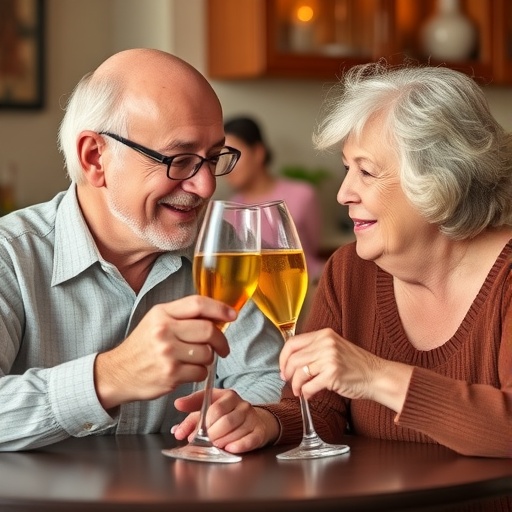
In a groundbreaking new study published in BMC Geriatrics, researchers have unveiled a complex relationship between high-frequency alcohol consumption and marital satisfaction among older adults in China, shedding light on a nuanced aspect of geriatric psychology and public health. The research, spearheaded by Zhang, Lin, Wang, and colleagues, provides compelling evidence that the frequency of drinking can significantly impact marital dynamics in later life, a subject that until now has remained underexplored in scientific literature, particularly within the unique socio-cultural context of China.
The study meticulously evaluates how habitual drinking behavior influences the emotional and relational well-being of seniors, a demographic often overlooked in alcohol research. Unlike previous studies that predominantly focus on younger populations or the pathological effects of alcohol abuse, this research delves into the routine and social dimensions of drinking, emphasizing its frequency rather than merely the quantity consumed per session. This perspective offers a novel lens through which to assess the broader implications of alcohol use on interpersonal relationships during the aging process.
China presents a particularly interesting case for this investigation due to its rapidly aging population and distinct cultural frameworks surrounding alcohol consumption. Drinking in China is closely entwined with social customs, business practices, and family rituals, which can either reinforce strong bonds or sow discord. The researchers capitalized on these cultural idiosyncrasies to explore whether habitual drinking acts as a facilitator of social connection and marital harmony or as a disruptive element contributing to conflict and dissatisfaction.
Employing a robust methodological design, the team utilized large-scale, nationally representative datasets encompassing demographics, drinking patterns, and measures of marital satisfaction. By using advanced statistical modeling and controlling for confounding variables like socioeconomic status, health conditions, and education level, they were able to isolate the specific effects of drinking frequency on marital quality. This methodological rigor distinguishes the study by providing a clearer cause-and-effect understanding rather than mere correlational data.
One of the most striking findings is the dualistic role that frequent alcohol consumption plays. On one hand, moderate yet frequent social drinking emerged as a factor that could potentially enhance emotional intimacy and communication between spouses. Ritualistic drinking occasions may stimulate shared experiences and mutual enjoyment, thereby reinforcing the marital bond. However, the study warns that this benefit appears to plateau and then decline when alcohol intake escalates beyond moderate levels or devolves into dependency, which invariably leads to increased relational strain.
Moreover, the research highlights a gender-specific dimension to these dynamics. Chinese social norms often ascribe different drinking behaviors and expectations to men and women, resulting in divergent impacts on marital satisfaction. For instance, frequent drinking by husbands correlated more strongly with lowered marital satisfaction for both partners, arguably due to traditional household roles and expectancy patterns. Conversely, wives engaging in similar drinking frequency often reported less negative impact, underscoring the complexity of gender interplay in this sphere.
Importantly, the study also accounts for the psychological and physiological consequences of high-frequency drinking, such as mood instability, reduced cognitive functioning, and health complications, all of which can exacerbate marital conflicts. The researchers argue that these factors contribute to communication breakdowns, reduced empathy, and increased irritability, which collectively erode the foundation of marital satisfaction.
The role of social support networks outside the marriage was another key element investigated. Findings indicate that older adults who maintain extensive social drinking routines with friends or family members outside their spouse tend to report mixed impacts on their marriage. On one side, these social networks provide emotional outlets and reduce pressure on the marital relationship; on the other, they can sometimes lead to neglect or perceived emotional distancing within the marriage itself.
From a policy perspective, this research offers critical insights for public health interventions aimed at promoting healthy aging and relationship quality. The nuanced understanding of how drinking frequency relates to marital satisfaction can inform tailored counseling approaches that address not only alcohol use but also its relational context. For example, programs might focus on enhancing communication and conflict resolution skills among older couples while considering their drinking habits and cultural backgrounds.
The study’s findings also open up avenues for further exploration around how other lifestyle factors intersect with alcohol consumption to influence marital quality in older adults. Variables such as retirement status, financial security, and caregiving responsibilities might interact with drinking habits to modulate relationship satisfaction, warranting multidisciplinary approaches to geriatric health research.
In the broader scientific context, this study contributes to an emerging body of gerontology literature that emphasizes the social dimensions of aging rather than purely biomedical aspects. It challenges the scientific community to reconsider traditional narratives around alcohol use and marital satisfaction by incorporating cultural specificity, age-related changes, and relational contexts into the analysis.
Critically, the authors advocate for a balanced approach to older adults’ alcohol consumption that acknowledges the potential social benefits of moderate drinking while remaining vigilant about the risks associated with excessive use. Educational campaigns aimed at older populations might benefit from emphasizing not only health risks but also relational impacts, empowering individuals and couples to make more informed decisions regarding alcohol use.
The implications of this research extend beyond China, as many societies worldwide are confronting similar demographic shifts with aging populations. While cultural factors undoubtedly influence drinking norms and marital expectations, the fundamental insights into how habitual behaviors affect emotional bonds can inform global public health strategies and geriatric counseling practices.
Looking forward, longitudinal studies would be instrumental in tracking changes over time in both drinking patterns and marital satisfaction, allowing for causal inferences and identification of potential intervention points. Incorporating qualitative data could also enrich understanding by capturing personal experiences and subjective meanings attached to drinking and marital relationships.
In essence, Zhang and colleagues’ work marks a significant advancement in geriatric research, illuminating the delicate balance between lifestyle habits and emotional wellbeing among older adults. Their findings call for a holistic perspective that embraces the complexity of aging lives, recognizing the interplay of individual behavior, cultural context, and intimate partnerships.
This study invites readers and policymakers alike to rethink aging-related health strategies, promoting not only longevity but also the quality of social and emotional connections. In an era where healthy aging is gaining unprecedented attention, understanding how seemingly everyday activities like drinking shape fundamental human relationships is both scientifically vital and socially urgent.
As populations around the world continue to age, the insights from this research underscore the importance of fostering supportive environments that respect cultural traditions while encouraging healthy behaviors. By highlighting the intricate ways high-frequency drinking intersects with marital satisfaction, this study paves the way for innovative, culturally sensitive approaches to enhancing the lives of older adults and their families.
Subject of Research: The association between high-frequency alcohol consumption and marital satisfaction among older adults in China.
Article Title: How is high-frequency drinking associated with the marital satisfaction of older adults? Evidence from China.
Article References: Zhang, C., Lin, L., Wang, L. et al. How is high-frequency drinking associated with the marital satisfaction of older adults? Evidence from China. BMC Geriatr (2026). https://doi.org/10.1186/s12877-026-07245-9
Image Credits: AI Generated


