

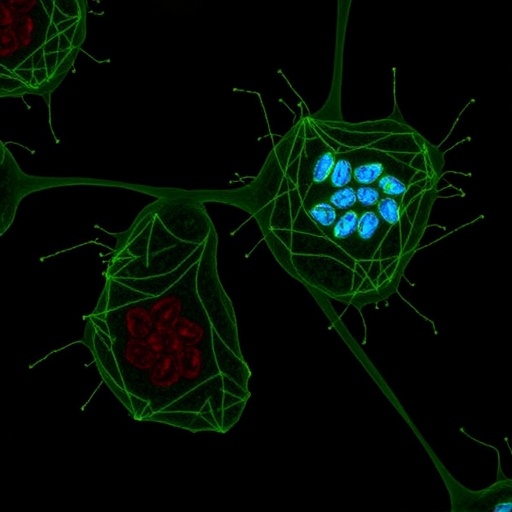
In a landmark discovery that promises to reshape the therapeutic landscape for fatty liver diseases, researchers have identified the hepatocyte transporter SLCO4C1 as a pivotal regulator of lipid metabolism through its role in cyclic adenosine monophosphate (cAMP) uptake. This novel finding, published in the prestigious journal Nature Communications, unveils a previously unrecognized mechanism by which SLCO4C1 mediates intracellular cAMP levels, consequently inhibiting lipogenesis and offering a promising target for treating metabolic dysfunction-associated steatotic liver disease (MASLD).
The study delves deep into the molecular underpinnings of hepatic lipid accumulation, a hallmark of MASLD, which affects an ever-growing population worldwide. Traditionally, therapeutic approaches have focused on modulating systemic metabolic factors or targeting lipid synthesis pathways indirectly. However, the identification of SLCO4C1 as a direct transporter facilitating cAMP uptake into hepatocytes provides a critical insight into the intracellular signaling dynamics that govern lipid homeostasis.
cAMP is a well-known secondary messenger involved in numerous cellular processes, including the regulation of metabolism. Its role in hepatic lipid metabolism has been acknowledged, although the mechanisms by which cAMP levels are regulated within hepatocytes have remained elusive. The detailed molecular characterization of SLCO4C1’s function exposes its unique capacity to shuttle extracellular cAMP into the liver cells, thus enabling direct modulation of signaling cascades that suppress lipogenic gene expression.
Using advanced biochemical assays alongside cutting-edge imaging techniques, the research team demonstrated that enhanced SLCO4C1 activity correlates with a significant reduction in lipid droplet formation within hepatocytes. These observations were consistently replicated across in vitro hepatocyte cultures and in vivo murine models genetically engineered to overexpress or knock down SLCO4C1. The data suggest that SLCO4C1 acts as a crucial gatekeeper, controlling the intracellular availability of cAMP and maintaining the delicate balance between lipid synthesis and breakdown.
The therapeutic implications of these findings cannot be overstated. MASLD is an umbrella term encompassing a spectrum of progressive liver conditions characterized by excessive fat deposition independent of significant alcohol consumption. Current treatment options are limited and primarily focused on lifestyle intervention, which, while effective to some extent, lack precision and fail to target the molecular drivers of the disease.
By directly enhancing SLCO4C1 activity or mimicking its cAMP transport function, it may be possible to devise pharmacological strategies that stably elevate intracellular cAMP concentrations in hepatocytes, thereby hampering aberrant lipogenesis and preventing steatosis progression. Such approaches could revolutionize the management of MASLD, moving beyond symptomatic treatment towards disease-modifying therapies with mechanistic specificity.
Further molecular interrogation revealed that cAMP uptake via SLCO4C1 influences downstream signaling pathways, notably those involving protein kinase A (PKA) and AMP-activated protein kinase (AMPK). Activation of these kinases resulted in the suppression of key enzymes responsible for fatty acid synthesis, including acetyl-CoA carboxylase and fatty acid synthase. This pathway elucidation strengthens the conceptual framework linking SLCO4C1-mediated cAMP uptake to comprehensive metabolic control within hepatic cells.
Intriguingly, the study also uncovered that pathological states associated with MASLD correspond with decreased expression and functionality of SLCO4C1. This downregulation contributes to impaired cAMP transport, perpetuating intracellular lipid accumulation and inflammasome activation. Rectifying this deficit through targeted therapeutics may halt or reverse disease progression, underscoring SLCO4C1’s role not only as a metabolic regulator but also as a critical node in hepatocellular health.
The authors employed robust multi-omics analyses integrating transcriptomic, proteomic, and metabolomic data, thereby providing a holistic view of SLCO4C1’s impact on hepatic physiology. The comprehensive datasets revealed synchronized shifts in metabolic gene networks upon modulation of SLCO4C1, emphasizing its central position in coordinating lipid metabolism at the cellular level.
This discovery opens the door to a new class of liver-directed interventions. Drug development efforts can now focus on small molecules or biologics that enhance SLCO4C1 expression or activity, thereby boosting hepatocyte sensitivity to extracellular cAMP. Such precision medicines hold promise not just for MASLD but potentially for other metabolic syndromes where hepatic lipid handling is disrupted.
Given the rising global prevalence of MASLD, partly fueled by obesity and insulin resistance epidemics, the identification of SLCO4C1 as a druggable target addresses an urgent unmet medical need. Moreover, since SLCO4C1 is part of the solute carrier organic anion transporter family, a family already recognized for its pharmacological relevance, there is a plausible translational pathway towards clinical applications.
Beyond hepatology, the ramifications of cAMP transport modulation via SLCO4C1 might extend to other cAMP-dependent physiological systems, suggesting broader implications for metabolic diseases, cancer biology, and signal transduction research. Understanding the transport dynamics and regulatory mechanisms governing SLCO4C1 will be crucial for harnessing its full therapeutic potential.
Moving forward, clinical trials evaluating SLCO4C1-directed therapies will be imperative to assess efficacy, safety, and long-term outcomes. Biomarker development for SLCO4C1 activity could also facilitate patient stratification and monitor therapeutic responses, paving the way for personalized medicine in MASLD.
In conclusion, the identification of SLCO4C1 as a cAMP transporter that directly inhibits lipogenesis marks a paradigm shift in our understanding of hepatic lipid metabolism and offers a potent therapeutic target. This breakthrough brings hope to millions affected by fatty liver diseases and heralds a new era of molecularly targeted interventions designed to restore metabolic homeostasis and liver function.
Subject of Research: Hepatocyte SLCO4C1 transporter role in cAMP uptake and its impact on inhibiting lipogenesis in metabolic liver disease.
Article Title: Hepatocyte SLCO4C1 is a cAMP uptake transporter for inhibiting lipogenesis and a therapeutic target for MASLD.
Article References:
Huang, X., Liang, S., Zhao, N. et al. Hepatocyte SLCO4C1 is a cAMP uptake transporter for inhibiting lipogenesis and a therapeutic target for MASLD. Nat Commun (2026). https://doi.org/10.1038/s41467-026-70729-0
Image Credits: AI Generated


