

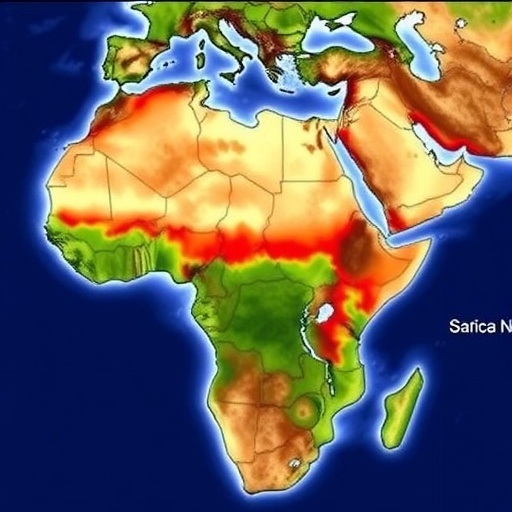
In an intriguing avenue of climate science, a recent study authored by researchers Camuera, Armstrong, and Valdes delves deep into the phenomena known as Heinrich stadials, particularly focusing on their occurrences in the West Mediterranean and West African regions. This research highlights not only the striking patterns of these climatic events but also illuminates the profound connections they share with shifts in atmospheric circulation. Their findings, published in the forthcoming issue of Commun Earth Environ, mark a significant contribution to our understanding of past climate variability and its implications for future environmental conditions.
Heinrich stadials are critical periods characterized by dramatic increases in ice sheet discharges into the North Atlantic Ocean, which historically have had substantial repercussions on global weather patterns. The study meticulously chronicles the timing and impact of these events across the Mediterranean and Africa, regions that are already highly sensitive to climatic shifts. By illustrating past occurrences, the authors not only position their study within the established scientific framework but also pave the way for future research on climate interactions.
The research methodology employed by the authors is comprehensive and innovative. They utilized a variety of geological and paleoclimatic data to reconstruct the climate history of the West Mediterranean and West African regions. This includes analysis of marine sediment cores, which reveal vital information about ocean temperatures and the extent of ice sheet activity. Additionally, terrestrial records from lake sediments and speleothems provided crucial insights into precipitation patterns and vegetation changes during Heinrich stadials.
Crucially, the paper discusses how alterations in oceanic currents due to ice sheet discharges have historically driven atmospheric changes, impacting not only local climates but also larger scale weather patterns across Europe and Africa. For instance, the alterations in thermohaline circulation, which is primarily caused by the influx of freshwater into the North Atlantic, can lead to cooling in the West Mediterranean and even affect monsoon patterns in West Africa. Understanding these linkages can transform how we view contemporary climate challenges, especially as global temperatures continue to rise.
The insights drawn from this study are particularly relevant in light of current climate conditions. As modern-day ice sheets continue to diminish due to anthropogenic climate change, the potential for triggering similar stadial events increases. The researchers call for a heightened awareness of how these events could impact current weather patterns, emphasizing the pressing need for climate models that incorporate historical data on Heinrich stadials. Addressing potential future consequences through robust climate modeling stands as a crucial recommendation of the research.
Furthermore, the study dutifully examines the socio-economic ramifications of such climatic shifts. Given that both the Mediterranean and West African regions are populous and economically diverse, shifts in weather patterns can have profound implications for agriculture, water supply, and overall human health. The authors highlight the necessity for governments and policymakers to recognize these risks and prepare adaptive strategies that can withstand potential extreme weather scenarios driven by past patterns.
In synopsis, the research not only sheds light on the occurrences of Heinrich stadials but also intricately connects these climatic events to the broader narrative of global atmospheric circulation changes. The authors make an impactful call for the integration of paleoclimatic data in current climate assessments, noting how historical context can inform present-day climate predictions and policies. This intersection of ancient climate history with modern implications presents a compelling narrative for both the scientific community and the public alike.
As this study sets the stage for future research, it serves as a robust reminder of the lessons that can be gleaned from the past. By understanding how Heinrich stadials have influenced regional climates through history, scientists can better equip humanity to face the inevitabilities of climate change in the coming decades. It is in the detailed understanding of these historic climatic phenomena that we find greater insight into not only our environment but also our ability to adapt to the evolving challenges of a changing planet.
In closing, this research paper stands as a reminder that our planet’s climate history is rich with lessons. The patterns established by Heinrich stadials reveal an intricate dance between ice, ocean, and atmosphere, teaching us that today’s climate challenges are deeply rooted in the Earth’s geological past. This nuanced understanding is essential as we endeavor to navigate the complexities of climate change and work towards a sustainable future for all.
By shedding light on the past and tracing its footprints into the future, this study not only enriches our scientific knowledge but also serves as a clarion call for concerted action against climate change, urging stakeholders at all levels to heed the warnings inscribed in our planet’s climate history.
Subject of Research: The occurrence of Heinrich stadials and their effects on atmospheric circulation in the West Mediterranean and West African regions.
Article Title: Occurrence of Heinrich stadials in the West Mediterranean and West African regions and their connections to atmospheric circulation changes.
Article References:
Camuera, J., Armstrong, E., Valdes, P. et al. Occurrence of Heinrich stadials in the West Mediterranean and West African regions and their connections to atmospheric circulation changes. Commun Earth Environ (2026). https://doi.org/10.1038/s43247-025-03103-5
Image Credits: AI Generated
DOI:
Keywords: Heinrich stadials, atmospheric circulation, climate change, West Mediterranean, West Africa, paleoclimatology.


