

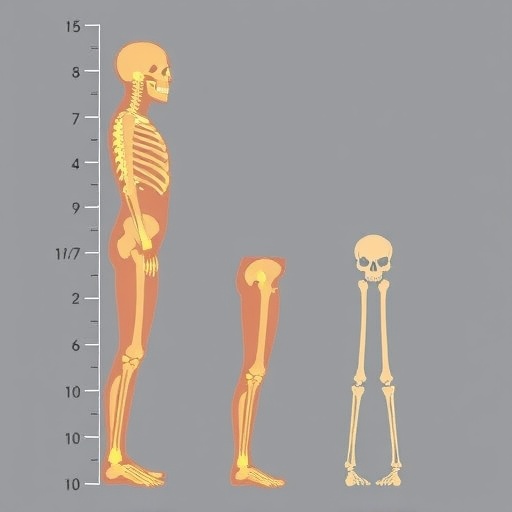
Recent research has unveiled significant insights into the relationship between standing height and bone mineral density among adolescents, with particular focus on individuals aged 12–19. Conducted using data from the National Health and Nutrition Examination Survey (NHANES) spanning from 2011 to 2018, the study addresses a critical aspect of pediatric health. This research, published under the auspices of BMC Pediatrics in 2025, demonstrates a positive correlation that could have far-reaching implications concerning adolescent health and development metrics.
The NHANES data utilized represents a comprehensive and authoritative source on the nutritional and health status of Americans. By analyzing this extensive dataset, the researchers, Wei, Wang, and Liao, were able to explore not only the association between height and bone mineral density (BMD) but also contextualize their findings within the broader scope of adolescent health. Such investigations are fundamental, as bone health during these formative years can influence long-term skeletal integrity and overall well-being.
Bone mineral density is an essential marker of bone strength, with higher BMD being indicative of more robust skeletal structure, which is particularly vital during adolescence—a period marked by rapid growth and skeletal development. The findings from this study are especially relevant given the rising concerns surrounding obesity and sedentary lifestyles that have become prevalent among youth. This research sheds light on how these factors could influence BMD and, by extension, overall health outcomes in young individuals.
Moreover, the researchers have identified that variations in height, which can be influenced by genetics and environmental factors, also correspond to significant differences in BMD. This finding invites further investigation into the underlying mechanisms that drive this relationship, as other factors such as physical activity, dietary intake, and hormonal changes during puberty could also play a substantial role. Understanding these dynamics is crucial for developing tailored health interventions that promote optimal growth and bone health during these critical years.
The implications of this research extend beyond mere academic interest; they assert the necessity for healthcare providers and educators to implement strategies that encourage healthy growth patterns among adolescents. Emphasizing regular physical activity and proper nutrition can play an essential role in enhancing BMD and ensuring that adolescents reach their full physical potential. For instance, weight-bearing exercises are particularly effective for improving bone density, and when coupled with a balanced diet rich in calcium and vitamin D, they can significantly aid in maximizing bone health.
In addition to physical measures, there are sociocultural implications that merit consideration. Height can be associated with confidence and social perception, particularly during adolescence when peer influences are pronounced. As such, the research results may suggest a dual approach; not only should health interventions focus on improving physical metrics, but they should also foster an environment that encourages positive body image and self-esteem among adolescents, which can further motivate them to engage in health-promoting behaviors.
Another consideration highlighted by the research is the potential disparities in bone health outcomes among different demographics. As the study utilized a nationally representative sample, it opens up discussions surrounding equity in health and the potential variabilities in access to resources necessary for supporting optimal growth and BMD. Public health initiatives that aim to bridge these gaps can be instrumental in addressing the systemic issues that contribute to health disparities.
This study’s findings also prompt a reassessment of current health guidelines related to adolescent nutrition and physical activity. As bone health directly impacts future risks for osteoporosis and fractures, particularly in populations predisposed to these conditions, proactive measures taken during adolescence can yield significant dividends later in life. By integrating findings from this research, healthcare authorities can refine existing health policies to better protect and support the burgeoning adolescent population.
As the conversation surrounding adolescent health continues to evolve, the importance of leveraging robust research such as that conducted by Wei, Wang, and Liao cannot be overstated. Their findings contribute not just to our existing knowledge, but also lay the groundwork for future investigations aimed at uncovering additional factors that influence growth and bone health. The pathways of physical development during these formative years are complex and multifaceted; thus, continued research will play an essential role in enhancing our understanding of these issues.
In conclusion, the study provides a vital lens through which we can examine the interplay between standing height and bone mineral density among adolescents. By drawing on rich datasets and employing rigorous analytical techniques, the researchers underscore the importance of holistic approaches to adolescent health. As the health community plans for the future, this research will serve as a key resource for developing comprehensive strategies aimed at promoting healthy growth patterns, enhancing bone health, and ultimately improving health outcomes for future generations.
This study not only enriches our understanding of adolescent health but also stresses the need for continual dialogue and action in the realms of public health, education, and community support. Stakeholders at every level must engage in targeted efforts to uplift youth health standards, laying a foundation for a healthier, resilient generation.
In the domain of pediatric health research, studies such as this remain central to our overarching mission: cultivating environments where young people can thrive both physically and psychologically. The association between height and BMD provides a clear avenue for further inquiry and intervention, ensuring that we move forward with knowledge that translates into actionable outcomes for adolescents everywhere.
Ultimately, this comprehensive understanding sets the stage for further exploration into the various determinants of bone health in youth populations, paving the way for a future where health equity is realized, and every adolescent has the opportunity to flourish.
Subject of Research: Positive association between standing height and bone mineral density in adolescents aged 12–19
Article Title: Positive association between standing height and bone mineral density in adolescents aged 12–19: NHANES 2011–2018
Article References:
Wei, J., Wang, Y. & Liao, H. Positive association between standing height and bone mineral density in adolescents aged 12–19: NHANES 2011–2018.
BMC Pediatr (2025). https://doi.org/10.1186/s12887-025-06388-9
Image Credits: AI Generated
DOI: 10.1186/s12887-025-06388-9
Keywords: Adolescent health, bone mineral density, NHANES, nutrition, physical activity, health disparities.


