

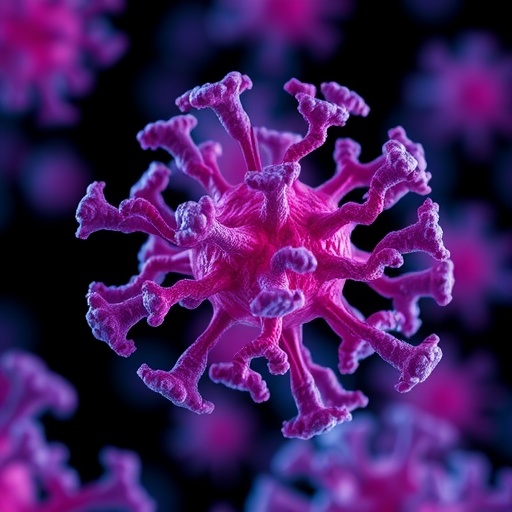
In a groundbreaking development poised to redefine cancer immunotherapy, researchers at the University of Liège, led by Pierre Close, have uncovered an innovative mechanism by which subtle alterations in tumor protein synthesis can unleash a powerful immune assault against tumors. This pioneering study elucidates how interfering with the precision of protein production within cancer cells exposes them to immune detection in a manner previously unrecognized, revealing new therapeutic opportunities to combat malignancies traditionally resistant to immunotherapy.
Central to cellular function is the faithful translation of genetic information into proteins, the molecular workhorses that maintain physiological homeostasis. This process relies heavily on transfer RNAs (tRNAs), specialized adaptor molecules that decipher genetic messages and ensure amino acids are assembled in the correct sequence. Cancer cells, however, have evolved to exploit this meticulous protein synthesis machinery to maintain their survival and evade immune recognition, effectively cloaking themselves from the body’s natural defense systems.
The researchers focused on a specialized tRNA modification orchestrated by the KEOPS enzyme complex, indispensable for the threonylation of tRNA molecules. This modification ensures high fidelity in protein assembly. In melanoma tumors, the disruption of this modification precipitates an influx of aberrantly folded proteins, instigating a cellular crisis. Unlike normal cells that clear these defective proteins efficiently, tumoral cells accumulate these malformed proteins, triggering a potent immunological alarm.
Pierre Close, Director of the Laboratory of Cancer Signaling, explains, “By deliberately disturbing the tRNA modification pathway, we compel cancer cells to produce faulty proteins that they cannot manage to hide. This proteotoxic stress effectively unmask the tumor, activating innate immune sensors akin to the body’s response to viral invasion.” This proteotoxic state stimulates the RIG-I pathway, an innate immune receptor typically tasked with sensing viral RNAs, which in this context is hijacked to detect tumoral distress.
Activation of RIG-I catalyzes a cascade of immune events, including the recruitment and activation of cytotoxic T lymphocytes. These immune effectors penetrate the tumor microenvironment and orchestrate targeted destruction of cancer cells. Preclinical models demonstrated that this mechanism can convert immunologically “cold” tumors—those that are typically resistant to immune infiltration—into “hot” tumors, characterized by robust immune cell presence and diminished tumor progression.
The significance of this discovery lies in redefining the Achilles’ heel of tumors. Rather than the conventional approach of stimulating immune cells directly, this novel strategy undermines tumor cell defenses from within by destabilizing their protein synthesis accuracy. Cléa Dziagwa, first author and Télévie PhD candidate, highlights, “Our findings reveal a previously untapped vulnerability in tumors tied to the stability of their protein translation apparatus. Targeting tRNA modifications could provide avenues to treat cancers impervious to existing immunotherapies.”
This innovative approach proposes a paradigm shift in cancer treatment, targeting the intrinsic molecular machinery that promotes immune evasion rather than relying solely on modulating immune system components. The interplay between RNA biology, proteostasis, and immune activation uncovered here bridges fundamental molecular understanding with translational potential, opening pathways for novel combinatory therapies designed to circumvent tumor immune escape.
Collaborative efforts involving teams from the University of Liège and partners in the UK and Germany have brought this discovery from basic science to the cusp of clinical relevance. Supported by FNRS and WELRI/WELBIO, this work underscores Belgium’s prominent role in RNA biology and cancer immunology research. Clinician-scientists involved anticipate that manipulating RNA modifications and protein quality control will shape future immunotherapeutic modalities, particularly for treatment-refractory cancers.
Integrating RNA modification disruption with immune checkpoint blockade or other immunomodulatory treatments could potentiate synergistic anti-cancer effects. By orchestrating the tumor microenvironment toward heightened immunogenicity, this strategy might reinvigorate immune responses where conventional therapies falter. Consequently, the study holds promise not only for melanoma but potentially for a broad spectrum of solid tumors.
Fundamentally, this research challenges prevailing dogma by illustrating that tumor vulnerability may stem from the internal fidelity of protein production rather than solely from external immune activation. It substantiates a novel concept that cancer’s stealth tactics rely heavily on maintaining protein synthesis precision and that failures in this process can be exploited therapeutically.
The implications extend beyond oncology. The study also illuminates the complex crosstalk between viral mimicry and tumor immunology, showing how innate immune pathways designed for pathogen detection can be unmasked by intracellular stress signals originating from dysregulated protein synthesis. This insight might inspire future research into other disease contexts where proteostasis and immune sensing intersect.
As investigations advance, translating these fundamental biological insights into clinical applications will be paramount. Fine-tuning interventions to selectively disrupt tRNA modifications within tumors without compromising normal tissues will require precision therapeutic delivery techniques and rigorous safety evaluations. Nonetheless, the prospect of transforming “invisible” tumors into immunologically vulnerable targets could herald a new era in cancer treatment.
Ultimately, this study embodies the evolving understanding that the war against cancer may be won not only by directly attacking tumors but also by exposing their concealed weaknesses. Unraveling how cancer cells harness RNA biology and protein homeostasis to evade immunity paves the way toward innovative strategies that empower the immune system to recognize and eradicate malignancies with unprecedented efficacy.
Subject of Research: Cells
Article Title: Disruption of tRNA threonylation triggers RIG-I mediated anti-tumour immune response
News Publication Date: 25-Feb-2026
Web References:
10.1038/s41467-026-69964-2
Image Credits: Copyright (c) ULiège – Philippe Compère
Keywords: Cancer immunotherapy, tRNA modification, KEOPS enzyme, protein quality control, RIG-I pathway, melanoma, immune evasion, proteostasis, tumor microenvironment, innate immunity, cytotoxic T cells, cancer vaccines


