

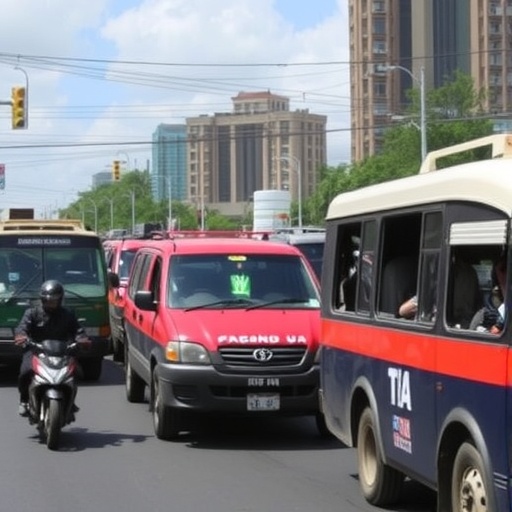
In recent years, the intricate dynamics of workplace relationships have come under intense scrutiny, particularly within informal sectors where interactions between different groups can shape daily operations and community safety. A significant study led by Popoola and colleagues uncovers the challenges faced by informal public transport operators in Durban, South Africa, and their complex relationships with city police and traffic officers. This research reveals an unsettling landscape characterized by harassment, power struggles, and systemic issues that permeate the public transit atmosphere.
The informal transport sector plays a crucial role in South Africa’s public transport landscape, providing affordable and accessible options for commuters. However, this same sector is beleaguered by a variety of challenges, including the threat of harassment from police officers tasked with maintaining order. The study highlights how public transport operators often find themselves in a precarious position, navigating the expectations of passengers while also contending with the demands imposed by law enforcement. The researchers meticulously document cases of harassment, emphasizing that these encounters are not isolated incidents but rather part of a broader systemic issue that affects the working environment for operators.
Harassment manifests in various forms, ranging from verbal abuse to intimidation and unjustified fines. This not only affects the morale of transport operators but also influences their interactions with customers, ultimately impacting the quality of service provided to the public. The emotional toll and stress associated with such experiences often lead to a hostile work environment, where operators are constantly on the defensive. Understanding this dynamic is essential for addressing the prevalence of harassment and developing solutions that foster better relationships among stakeholders involved in public transport.
The researchers also delve into the historical context of these relationships, examining how past policies and socio-economic factors have shaped the current state of interactions between transport operators and law enforcement. Over time, the relationship has been marred by distrust and conflict, largely stemming from a lack of effective communication and collaboration between the two parties. Transport operators often view police officers as adversaries rather than allies, leading to a cycle of conflict that is detrimental to both groups and their objectives.
A salient point made by the authors is how the power imbalance between the transport operators and law enforcement agents can influence daily operations. Police and traffic officers wield significant authority and their actions can have immediate consequences for informal operators, who often lack the resources and support to challenge these encounters. As such, addressing the root causes of this imbalance is crucial for creating a more equitable environment where transport operators can operate without fear of harassment or punitive actions.
The findings of this study are more than just an assessment of interpersonal relationships; they are a call to action for relevant authorities to acknowledge the issues faced by informal transport operators. By examining the underlying issues leading to harassment, policymakers can develop and implement strategies aimed specifically at improving the relationships between operators and law enforcement. This includes training for police officers on how to engage with informal operators respectfully and constructively, reinforcing the idea that both parties serve a vital role in maintaining public order and safety.
Innovative solutions, such as community policing initiatives, could play a pivotal role in minimizing harassment. In this approach, law enforcement collaborates closely with community members, including transport operators, creating a partnership that fosters mutual respect and understanding. This model has been successful in various global contexts, and adapting it to the unique landscape of Durban’s transport sector could yield significant improvements in relationships and working conditions.
The research also addresses the psychological impact of harassment on transport operators. Chronic exposure to stressful encounters with law enforcement can lead to a decline in mental health, which ultimately impacts operators’ performance and the safety of passengers. Therefore, implementing supportive measures such as counseling services or stress relief programs is vital for promoting a healthier work environment. By prioritizing the well-being of transport operators, stakeholders can ensure that they are not only better equipped to serve the public but also feel valued and safe in their workplace.
Moreover, the study suggests that enhancing transparency and accountability in law enforcement practices will be essential in combating harassment. By establishing clear guidelines and robust oversight mechanisms, the potential for abuse can be significantly reduced. This would not only help to protect transport operators but also improve public trust in law enforcement, leading to safer communities overall.
Community engagement is another crucial aspect discussed in the study. Transport operators are often embedded within their local communities, and fostering positive relationships with residents can create an environment where harassment is less likely to occur. Community-led initiatives that encourage unity and collaboration among all stakeholders in the transport sector can help to dismantle the adversarial relationship that has developed over time.
Finally, the researchers emphasize the importance of ongoing dialogue and research to continually assess the dynamics between informal transport operators and law enforcement. Understanding that these relationships can evolve with changing socio-economic conditions is vital for developing effective and adaptive strategies. By keeping lines of communication open and engaging in regular assessments, relevant parties can navigate the complexities of these interactions, paving the way for a more harmonious and cooperative relationship.
In conclusion, the study by Popoola et al. shines a crucial light on the often-overlooked interpersonal dynamics within the realm of informal public transport in Durban. The findings underscore the significance of addressing harassment as a systemic issue deeply rooted in historical, social, and economic contexts. By recognizing the need for reform and fostering collaboration among stakeholders, we can aspire to create a respectful and safe working environment for informal public transport operators, ultimately enhancing the experience for all individuals reliant on this essential service.
Subject of Research: Workplace relationships of harassment in the informal public transport sector.
Article Title: Workplace relationships of harassment between informal public transport operators, city police and traffic officers in Durban, South Africa.
Article References: Popoola, A., Akogun, O., Osayomi, T. et al. Workplace relationships of harassment between informal public transport operators, city police and traffic officers in Durban, South Africa. Discov glob soc 3, 173 (2025). https://doi.org/10.1007/s44282-025-00255-9
Image Credits: AI Generated
DOI: https://doi.org/10.1007/s44282-025-00255-9
Keywords: Harassment, informal transport sector, workplace relationships, law enforcement, community policing, public safety, mental health.


