

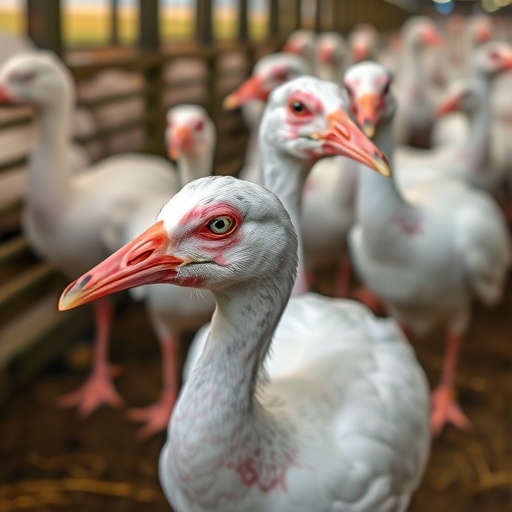
In a groundbreaking new study, researchers have drawn alarming conclusions about the potential effects of a highly pathogenic avian influenza (HPAI) strain, specifically H5N1, which poses a critical threat not only to avian populations but also to the wider agricultural sector in the United States. The findings underscore the interconnectedness of livestock health, food security, and economic stability, revealing how an outbreak could ripple across various sectors beyond just poultry farming. In an era when global trade and supply chains are increasingly susceptible to disruptions, understanding these dynamics is crucial for policymakers and industry stakeholders.
Avian influenza viruses are notorious for causing severe disease in birds, and the H5N1 strain is particularly virulent. Although primarily affecting poultry, the potential for cross-species transmission remains a significant concern. Recent data demonstrate that H5N1 can infect mammals, creating an avenue for potential zoonotic transmission to humans. This raises red flags about public health, as a spillover event could not only threaten avian species but also human populations that interact with or consume infected animals.
The relationship between avian influenza outbreaks and dairy cattle is intricate yet vital. As the research suggests, multiple factors contribute to the anticipated impact. For instance, infected poultry can contaminate the feed supply, which may inadvertently find its way into dairy cattle diets. Cross-contamination could lead to significant losses in dairy production, as cattle infected or stressed by contaminated feed can result in decreased milk yields. This chain reaction illustrates the necessity for rigorous biosecurity measures to contain any outbreaks and maintain the health of livestock beyond just poultry.
In addition to the biological implications, the economic aspects of a potential H5N1 outbreak cannot be overlooked. The dairy sector in the United States is a multi-billion-dollar industry that supports countless jobs in farming, processing, and distribution. An outbreak of HPAI could lead to significant trade barriers as countries implement bans on imports from affected regions due to concerns about disease transmission. Such actions would not only affect the dairy market but would likely have cascading effects on the broader economy, including job losses and increased prices for consumers.
It’s also crucial to consider the role of consumers in this scenario. Public perception and consumer behavior can shift dramatically during health scares, prompting individuals to alter their purchasing patterns. Heightened fear regarding the safety of animal products could lead to a decrease in demand for dairy, compounding the economic setback brought on by an HPAI outbreak. As consumers become more health-conscious and aware of potential risks, the agricultural sector must be proactive in addressing these fears through transparent communication and education.
Furthermore, the link between animal health and zoonotic diseases emphasizes the importance of integrated agricultural practices. More than ever, researchers advocate for the one health approach, which recognizes that the health of humans, animals, and ecosystems is interconnected. By fostering collaboration between veterinarians, public health professionals, and agricultural experts, the goal is to develop comprehensive strategies to mitigate the risks of avian influenza and other zoonotic diseases.
Pre-emptive measures are critical to combat the threats posed by H5N1. Vaccination, surveillance, and biosecurity protocols are essential components of a robust response to potential outbreaks. With advancements in veterinary medicine, rapid diagnostic tools, and early warning systems, the agricultural sector is better equipped than ever to handle emerging infectious diseases. Collaboration among federal, state, and local agencies can create a unified front to prevent disease spread and secure food systems.
Efforts to manage avian influenza outbreaks must also include education and outreach to farmers. Understanding the signs of avian influenza in their flocks and implementing biosecurity measures can significantly reduce the risk of outbreaks. Workshops and training sessions can provide farmers with the necessary information to protect their animals, livelihoods, and the broader agricultural economy. Ultimately, informed farmers are the first line of defense against the spread of avian influenza.
As researchers continue to monitor the evolution of H5N1 and other strains, ongoing research plays a crucial role in understanding the virus’s behavior and developing effective countermeasures. International collaborations are essential in this effort, as viruses do not respect borders and understanding their ecology is imperative to controlling outbreaks. By sharing knowledge, resources, and data, countries can enhance their preparedness for future incidents.
Importantly, future research must also explore the long-term implications of avian influenza on the food supply chain. A comprehensive analysis of how different sectors interact and impact one another can inform policies tailored to enhancing resilience against outbreaks. Investment in research and development focused on sustainable agricultural practices will be key in safeguarding food security in the face of outbreaks like H5N1.
Finally, while the immediate threat posed by H5N1 cannot be underestimated, the broader lessons drawn from such outbreaks can inform future strategies to tackle various zoonoses. Cultivating public awareness and fostering collaborative efforts between health sectors will be essential in mitigating the effects of not just avian influenza but any emerging infectious disease. The stakes are high, as our ability to maintain healthy ecosystems relies on the success of these initiatives.
In conclusion, the research revealing how an outbreak of H5N1 could impact the dairy cattle sector and the broader economy emphasizes the need for a holistic understanding of animal health, public health, and economic stability. Proactive measures, collaborative approaches, and ongoing education will be essential in navigating the challenges posed by avian influenza and in safeguarding the future of agriculture in the United States.
Subject of Research: Impact of HPAI H5N1 on the Dairy Cattle Sector and Economy
Article Title: An outbreak of highly pathogenic avian influenza H5N1 could impact the dairy cattle sector and the broader economy in the United States.
Article References:
Morel, G., Pham, A., Morgenstern, C. et al. An outbreak of highly pathogenic avian influenza H5N1 could impact the dairy cattle sector and the broader economy in the United States.
Commun Earth Environ (2026). https://doi.org/10.1038/s43247-025-03153-9
Image Credits: AI Generated
DOI:
Keywords: Avian influenza, H5N1, dairy cattle, agriculture, zoonotic diseases, economy, biosecurity, food security.


