

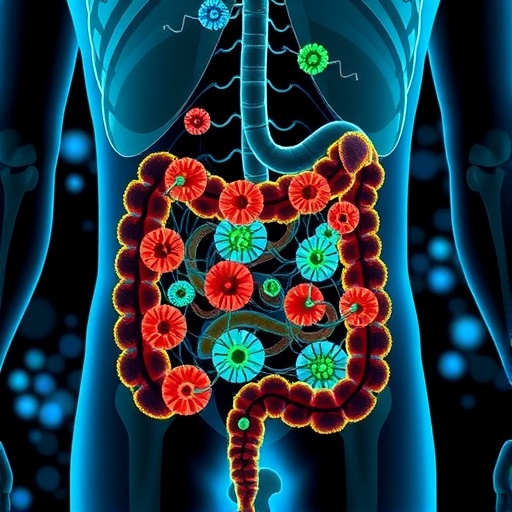
The Human Gut Microbiome: A Revolutionary Frontier in Predicting Rectal Cancer Treatment Outcomes
In the ever-evolving landscape of oncological research, the human gut microbiome has emerged as a critical player in modulating cancer therapy efficacy. A recent systematic review published in the British Journal of Cancer (April 2026) critically consolidates mounting evidence pointing to gut microbiota as a pivotal biomarker in predicting responses to neoadjuvant treatment (NT) in rectal cancer (RC) patients. This breakthrough research provides a profound understanding of how microbial ecosystems within the gastrointestinal tract influence treatment outcomes and heralds a new era of personalized oncology.
Rectal cancer is a formidable adversary in the realm of colorectal malignancies, often necessitating neoadjuvant therapies—including chemoradiotherapy—to reduce tumor size before surgical intervention. However, response variability among patients remains a daunting clinical challenge, complicating decision-making and prognosis. This review meticulously surveys contemporary scientific literature to unravel the microbial compositions associated with favorable or poor responses, bridging the gap between gut ecology and therapeutic stratification.
The human gut microbiome consists of a complex consortium of trillions of microorganisms, encompassing bacteria, viruses, fungi, and archaea. Their metabolic activities and immunomodulatory roles have profound systemic impacts, influencing cancer pathogenesis and treatment responsiveness. Recent high-throughput sequencing technologies coupled with advanced bioinformatics tools have unveiled distinct microbial signatures correlated with NT response in rectal cancer, suggesting that gut flora profiling could become an invaluable predictive tool.
Microbial diversity and relative abundances of specific taxa demonstrate significant associations with therapeutic outcomes. For instance, beneficial gut commensals such as Faecalibacterium prausnitzii and Akkermansia muciniphila, known for their anti-inflammatory properties, are often enriched in responders to neoadjuvant treatment. Contrarily, dysbiosis marked by heightened pathogenic bacteria like Fusobacterium nucleatum correlates with resistance to therapy and suboptimal prognosis, thereby highlighting the dualistic role of the microbiome in cancer biology.
Mechanistically, these microorganisms influence NT efficacy via multiple pathways. They can modulate local immune responses within the tumor microenvironment, alter systemic inflammatory mediators, and affect drug metabolism. Bacterial metabolites such as short-chain fatty acids contribute to epigenetic modifications that potentiate radiotherapy sensitivity. Conversely, microbial-driven inflammation may enhance resistance mechanisms, underscoring the intricate crosstalk between host immunity and microbial functionality.
The review further underscores the heterogeneity of microbiome profiles across different patient cohorts, emphasizing the necessity for standardized sampling methods and longitudinal studies. Variations in dietary habits, antibiotic exposures, and tumor molecular subtypes confound microbiota analyses, thereby necessitating meticulous experimental designs to decode causal relationships. The authors advocate for integrative multi-omics approaches combining metagenomics, metabolomics, and transcriptomics to comprehensively delineate the microbiome’s role in NT response.
Clinically, the implications of these findings are transformative. Incorporating gut microbiota profiling into pre-treatment diagnostic algorithms could enable clinicians to stratify patients more accurately based on predicted treatment response, optimizing therapeutic regimens and minimizing unnecessary toxicities. Furthermore, microbiota-targeted interventions, including probiotics, prebiotics, and fecal microbiota transplantation, represent promising adjunctive strategies to modulate treatment efficacy.
This systematic review also highlights the emerging evidence from interventional studies where modulation of gut microbiota prior to or during NT enhances tumor regression rates. While data remain preliminary, these translational advances pave the way towards microbiome-informed personalized neoadjuvant protocols in rectal cancer. The dynamic nature of microbial communities suggests potential for temporal monitoring to track therapeutic response or identify early relapse indicators.
Importantly, the interplay of gut microbiota with host genetics and immune checkpoints offers new therapeutic targets. Microbial metabolites may augment the effectiveness of immunotherapies combined with NT, a synergy that is currently under intense investigation. Future clinical trials integrating microbiome profiling with immunogenomic analyses are essential to unlock the full therapeutic potential.
Despite burgeoning evidence, methodological challenges persist. Variability in sequencing platforms, bioinformatic pipelines, and biomarker validation protocols hampers the reproducibility of findings across studies. The review calls for international collaborative consortia to harmonize research standards and generate large-scale, high-quality datasets to propel the field forward.
Ethical considerations around microbiome manipulation and patient consent also warrant careful deliberation, particularly for invasive procedures such as fecal microbiota transplantation. Regulatory frameworks must evolve in tandem with scientific progress to ensure patient safety and equitable access to microbiome-based diagnostics and therapeutics.
In conclusion, the gut microbiome stands at the threshold of revolutionizing rectal cancer management by serving as a predictive biomarker for neoadjuvant treatment response. This systematic review not only synthesizes current knowledge but also charts a roadmap for future research integrating microbial ecology into precision oncology. Harnessing the gut microbiome’s therapeutic potential promises to enhance treatment outcomes and improve survival rates for rectal cancer patients worldwide.
The symbiotic relationship between humans and their microbial inhabitants extends beyond digestion, emerging as a critical determinant in cancer therapy resilience. As the scientific community continues to decipher this intricate nexus, the prospect of microbiome-based personalized cancer treatment epitomizes the next frontier in medicine—one that merges ecological precision with clinical oncology.
The translation of these insights from bench to bedside will necessitate multidisciplinary collaboration spanning microbiology, oncology, immunology, and computational biology. Patient-centric approaches incorporating routine microbiota screening may become standard care, heralding a paradigm shift in rectal cancer treatment paradigms.
Ultimately, the revelation that minute microbial populations can shape monumental therapeutic trajectories underscores the intricate complexity of human health. The gut microbiome’s role as a biomarker and modulator illuminates a new horizon in battling rectal cancer—marking a significant milestone in the journey towards truly personalized medicine.
Subject of Research:
Article Title:
Article References:
Stepanyan, A., Kotsafti, A., Rosato, A. et al. Gut microbiota-associated predictors as biomarkers of neoadjuvant treatment response in rectal cancer-a systematic review. Br J Cancer (2026). https://doi.org/10.1038/s41416-026-03443-9
Image Credits: AI Generated
DOI: 13 April 2026
Keywords:


