

As the world increasingly relies on mobile connectivity for everyday communication, entertainment, and industry, the limits of current wireless technologies are rapidly being tested. Fifth-generation (5G) networks have revolutionized connectivity by enabling faster data speeds and improved latency, but the insatiable demand for higher capacity and ultra-fast data transfer shows no signs of slowing. According to Edholm’s law, data rates are expected to exceed terabit-per-second levels by 2035, necessitating a leap forward beyond 5G. The next frontier, sixth-generation (6G) wireless technology, promises radical advancements that push communication speeds to around one terabit per second while drastically reducing latency to below one millisecond.
The transition to 6G is not merely an upgrade in speed but a fundamental shift in the frequency spectrum used for wireless communication. Unlike 5G systems that predominantly operate in the microwave bands, 6G aims to operate in the sub-terahertz (sub-THz) frequency range. Frequencies in this range, spanning roughly from 100 GHz to 1 THz, offer the potential for extraordinary bandwidths and ultra-short communication latencies. However, these benefits come with substantial technological challenges. One critical hurdle is engineering efficient, compact, and low-power receivers capable of detecting and processing signals at these extremely high frequencies—a task that standard microwave components struggle to accomplish due to intrinsic material and design limitations.
A breakthrough solution to this challenge comes from a team of researchers at the Institute of Photonic Sciences (ICFO) led by ICREA Prof. Frank Koppens, alongside Dr. Karuppasamy Pandian Soundarapandian, Dr. Sebastián Castilla, and Dr. Simone Marconi. Their pioneering work, recently published in Nature Communications, presents the first demonstrated sub-THz graphene receiver tailored specifically for 6G applications. This development is notable because it leverages the unique properties of graphene— an atomically thin two-dimensional material composed of carbon atoms arranged in a hexagonal lattice— to create ultra-sensitive, ultra-fast, and energy-efficient receivers operating at room temperature.
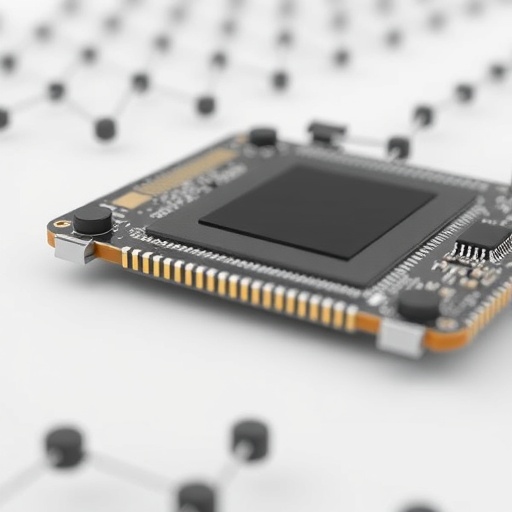
What sets this newly developed graphene-based receiver apart from conventional sub-THz detectors is its remarkable combination of features. Traditional receivers capable of operating in the sub-THz spectrum have typically been either bulky, power-hungry, or incompatible with miniaturized on-chip integration. By contrast, the graphene receiver fulfills all critical requirements for future 6G devices: it achieves multi-gigabit-per-second data rates required for high-volume wireless data transmission while maintaining a compact footprint of only 0.018 square millimeters. It is fully compatible with complementary metal-oxide semiconductor (CMOS) fabrication processes, the industry standard for chipmaking, and operates with near-zero power consumption, all of which are essential for scalable and sustainable wireless technology deployment.
At the heart of the graphene receiver’s exceptional performance lies a remarkable physical phenomenon: the conversion of tiny changes in electron temperature within the graphene layer into strong electrical signals. When sub-THz radiation interacts with the graphene sheet, it induces subtle heating of the electrons, which the device then translates into measurable electric signals without the need for an external power bias. This self-powered detection mechanism contrasts sharply with conventional receivers that require significant electrical input to maintain operation, marking a profound step forward in energy efficiency.
Previous graphene-based detectors had not reached the necessary thresholds for real-world wireless communication applications, hindered either by slow response times or insufficient sensitivity for demodulating high-frequency signals. To overcome these limitations, the ICFO team integrated high-quality graphene with an intricately designed radiofrequency circuit embedded within a sub-THz cavity. This cavity features an antenna and a reflective back mirror, engineered to enhance electromagnetic coupling between the incoming radiation and the graphene layer. The resonant enhancement within this cavity dramatically boosts the speed and sensitivity of the detector, enabling faithful wireless signal reception at sub-terahertz frequencies.
The implications of this technology extend far beyond laboratory demonstrations. As Dr. Sebastián Castilla, co-author of the paper, highlights, this is the first system-level validation that an atomically thin material like graphene can function as a zero-power, ultra-compact receiver in the sub-THz domain. This remarkable advancement transforms graphene’s theoretical promise into a tangible, practical building block for the future wireless communication ecosystem. Integrating such receivers on chips could revolutionize 6G devices, enabling ultra-high-speed connectivity with minimal energy requirements, which is critical for sustainable development in a world increasingly dependent on mobile data.
Moving towards 6G technologies requires addressing not only individual device capabilities but also system-wide integration challenges, including signal processing, antenna design, and network architecture. The compact size and CMOS compatibility of graphene-based sub-THz receivers mean they can be manufactured at scale using existing semiconductor fabrication technologies, facilitating their integration into complex wireless systems without substantial retooling. This creates exciting opportunities for embedding these receivers into mobile devices, base stations, and other critical communication infrastructure, offering a path to meet future demands for bandwidth-hungry applications like holographic telepresence, extended reality, and pervasive sensor networks.
Beyond telecommunications, the capabilities of graphene sub-THz detectors may find applications in high-resolution imaging, spectroscopy, and sensing technologies. For instance, imaging systems operating at sub-THz frequencies can penetrate materials opaque to visible light, enabling applications in security scanning, medical diagnostics, and industrial inspection. The ultra-fast detection and low power consumption enabled by graphene receivers could drive these fields forward by allowing portable, high-performance devices previously unattainable with existing technology.
This landmark study, collaborative in nature, also underscores the power of interdisciplinary research combining material science, electrical engineering, and photonics. Partner institutions including ETH Zurich, the University of Ioannina, and the Catalan Institute of Nanoscience and Nanotechnology contributed complementary expertise that propelled the development from conceptual materials design to practical system implementation. Such collaboration exemplifies how addressing global technological challenges requires harnessing diverse scientific perspectives and capabilities.
In summary, the advent of graphene-based sub-terahertz receivers ushers in a new era for wireless communication technology. By transcending the limitations of existing materials and device architectures, these receivers pave the way for the realization of 6G networks capable of delivering unprecedented data speeds, ultra-low latency, and efficient power consumption. As mobile data traffic surges and new applications demand ever-more sophisticated connectivity solutions, innovations such as this will be instrumental in shaping the future digital landscape.
For those invested in the evolution of wireless technologies, the exploration of two-dimensional materials like graphene marks a paradigm shift. The ability to harness atomically thin materials as key active components in next-generation communication devices suggests a future where devices are smaller, faster, and more efficient than ever. This breakthrough not only accelerates the timeline towards commercially viable 6G but also opens the door for continuous advancements well beyond, fueling a new wave of communication innovations in the decades to come.
Subject of Research: Not applicable
Article Title: High-Speed Graphene-based Sub-Terahertz Receivers enabling Wireless Communications for 6G and Beyond
News Publication Date: 25-Mar-2026
Web References: https://doi.org/10.1038/s41467-026-69186-6
References: K. Pandian Soundarapandian, S. Castilla, et al., High-Speed Graphene-based Sub-Terahertz Receivers enabling Wireless Communications for 6G and Beyond, Nature Communications, 2026.
Image Credits: ICFO
Keywords
Graphene, Two dimensional materials, Telecommunications, 6G technology, Sub-terahertz receivers, Wireless communications, CMOS compatibility, Ultra-low latency, Terabit wireless speed, Nanotechnology, Photonics, Energy-efficient electronics


