

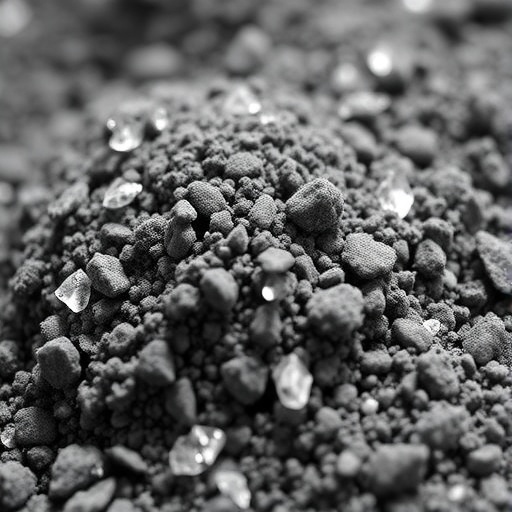
In an era when environmental pollutants pose escalating challenges to global ecosystems, an innovative approach is emerging from the laboratories of Rice University that not only addresses pollution but also offers a sustainable pathway for extracting a critical resource: lithium. Traditionally recognized as persistent environmental contaminants, perfluoroalkyl and polyfluoroalkyl substances (PFAS) have haunted ecosystems worldwide due to their stability and resistance to degradation. However, Rice chemist James Tour and his research team, spearheaded by postdoctoral associate and Rice Academy Junior Fellow Yi Cheng, have devised a groundbreaking method to repurpose PFAS waste into a valuable material for lithium extraction from high-salinity brine pools. Their findings, recently published in the esteemed journal Nature Water, reveal a paradigm shift in managing PFAS while simultaneously advancing lithium recovery technologies essential for energy storage applications.
The research tackles a crucial problem in the lithium supply chain. Lithium, a cornerstone element in battery technologies powering electric vehicles, portable electronics, and grid storage solutions, predominantly originates from mineral mining or extraction from brine pools rich in lithium salts. While brine extraction is generally more eco-friendly than traditional mining, issues persist related to selective recovery, water consumption, and overall economic viability. Yi Cheng illustrates this challenge succinctly: “Extracting lithium from brine can be less environmentally damaging than conventional mining, but it still faces challenges such as selectivity, cost and water use. We saw an opportunity to use the fluorine locked in PFAS to recover the lithium in a fast, lower-impact process.” This statement encapsulates their drive to transform a notorious pollutant into a resource enabler.
PFAS compounds frequently enter the environment through firefighting foams and other industrial applications, often accumulating in activated carbon filters designed to remove them from water and soil. These granular activated carbon (GAC) filters efficiently absorb PFAS, purifying water but subsequently becoming saturated with these persistent chemicals, creating a challenging waste stream. The Rice team’s novel approach treats these spent PFAS-laden GAC materials not as waste but as feedstock, turning an environmental liability into a technical asset. By introducing spent GAC, rich in fluorine from PFAS molecules, into lithium-rich brine solutions, the researchers sought to release fluorine ions and strategically react them with lithium cations present in the brine to form lithium fluoride — a valuable lithium compound useful in battery manufacture.
At the heart of this innovation lies a high-temperature, transient electrothermal heating process. The mixture of spent GAC and lithium-containing brine undergoes rapid heating to temperatures exceeding 1,000 degrees Celsius, followed by swift cooling. This electrothermal “flash fluorination” breaks the robust covalent carbon-fluorine bonds in PFAS molecules, liberating fluorine ions capable of reacting with lithium and other metal cations in the saline matrix. The chemical interplay results in the formation of various metal fluorides, including lithium fluoride (LiF), calcium fluoride (CaF₂), and magnesium fluoride (MgF₂), accompanied by relatively benign residual solids depleted of fluorine content. This fast and intense thermal treatment converts what was once a toxic pollutant into economically valuable salts.
An essential step in isolating lithium fluoride from this multicomponent fluoride salt mixture relies on exploiting their differing physical properties — primarily boiling points. Lithium fluoride boils at approximately 1,676 degrees Celsius, significantly lower than magnesium fluoride’s 2,260 degrees Celsius and calcium fluoride’s 2,533 degrees Celsius. Using controlled electrothermal distillation within this temperature window, the researchers selectively vaporized lithium fluoride, separating it from heavier fluoride salts that remained solid. This precision distillation enabled successful recovery of roughly 82% of lithium fluoride with an exceptionally high purity of 99%, a remarkable yield underscoring the process’s efficiency.
Once the lithium fluoride was recovered, its practical application was scrutinized to validate its suitability for high-performance battery technologies. The team incorporated the reclaimed LiF into lithium-ion battery electrolytes and performed thorough electrochemical testing. The results demonstrated enhanced electrolyte stability and improved battery performance metrics, confirming that the lithium product recovered through this process was indeed battery-grade and fully compatible with existing energy storage systems. This finding not only showcases the scientific sophistication behind the fluorination extraction but also proves its industrial relevance.
In addition to technological validation, the environmental and economic advantages of this PFAS-assisted lithium recovery method were rigorously examined. Comparative lifecycle analyses between this novel flash fluorination approach and conventional lithium brine extraction techniques revealed appreciable reductions in water usage and energy consumption. Notably, the new process exhibited a smaller carbon footprint and lower contributions to global warming potentials. These benefits, combined with reduced operating times — now measured in minutes — and promising projections of lower operational costs, make this approach politically and commercially attractive, especially as global demand for lithium intensifies under the green energy transition.
This research exemplifies a rare synergy where environmental remediation converges with resource recovery, turning pollution into a stepping stone for sustainable materials science. By reconceptualizing PFAS-laden granular activated carbon as a latent source of fluorine—a critical element for lithium extraction—the Rice University team sidesteps traditional waste disposal challenges and maximizes resource use efficiency. James Tour emphasizes the broader impact: “By thinking about waste as a potentially useful compound, we were able to convert the problematic GAC-sorbed PFAS into a valuable metal that can be used in batteries, for example. This promises significant environmental, economic and efficiency benefits.”
The intersectionality of chemistry, engineering, and environmental science embodied in this work spotlights a scalable, innovative solution that stands to revolutionize lithium extraction from brine while simultaneously mitigating PFAS pollution—a dual victory for sustainability. The project received substantial support from the Air Force Office of Scientific Research and the U.S. Army Corps of Engineers, reflecting broader governmental interest in solving critical material and environmental crises with impactful science and technology.
As the world grapples with growing lithium demand and the persistent menace of PFAS contamination, this research offers a beacon of hope. It invites a paradigm shift: confronting environmental pollutants not merely as hazards but as untapped reservoirs of value. Through high-temperature electrothermal treatment and clever chemical engineering, what was once a waste product becomes a cornerstone for the batteries that power tomorrow’s clean technologies. This breakthrough aligns with a global push toward circular economies and sustainable industrial practices where waste streams are creatively reclaimed to meet the rising energy needs of societies transitioning away from fossil fuels.
By reimagining PFAS and lithium brines through the lens of chemical opportunity, the Rice researchers pave the way for cleaner, faster, and more cost-effective lithium extraction. Their methodology could be implemented in existing brine extraction facilities with relative ease, enabling rapid adoption and scaling that meets industrial and environmental expectations. As lithium-ion technology continues to proliferate, innovations like this will be critical in balancing human technological advancements with the stewardship of natural and built environments.
This fusion of waste remediation and lithium recovery represents an inspiring testament to the power of chemical sciences to forge new pathways in sustainable material sourcing, making the inconvenient pollutant a vital partner in the energy transition. With lithium fluoride produced at such high purity and efficiency, and an environmentally friendly footprint, industries reliant on lithium batteries—ranging from automotive to grid storage—stand to gain not only economically but also in corporate responsibility and sustainability goals.
Subject of Research: Not applicable
Article Title: Waste per- and polyfluoroalkyl substance-assisted flash fluorination for lithium recovery from brine
News Publication Date: 10-Mar-2026
Web References: DOI link
Image Credits: Jeff Fitlow/Rice University
Keywords
Chemical compounds, Salts, Lithium extraction, PFAS, Brine, Lithium fluoride, Electrothermal heating, Environmental remediation, Battery-grade lithium, Sustainable materials, Circular economy, Flash fluorination


