

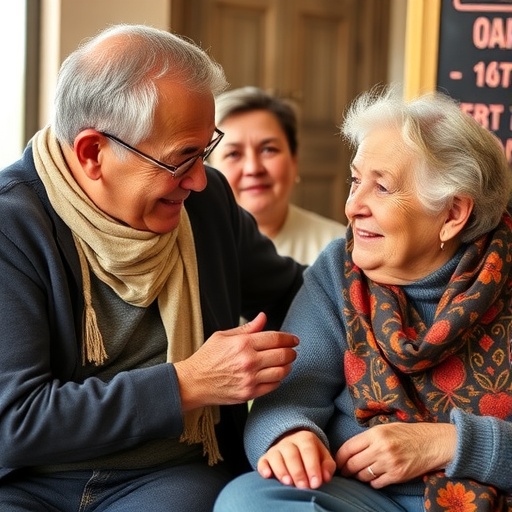
In recent years, the phenomenon of social isolation among older populations has increasingly captured the attention of researchers and policymakers worldwide. Notably, a pivotal study conducted by Li, Han, Wang, and their colleagues delves into this complex issue, specifically examining the impacts of grandparental care on social isolation among older migrants in a megacity in China. This comprehensive analysis not only highlights the significance of familial relationships but also unveils the underlying mechanisms through which these connections can alleviate feelings of loneliness and isolation.
The study unfolds in the context of urban migration, where older adults often find themselves distanced from traditional support systems and social networks. In many cases, these elders, especially those who are migrants, live far from their children and other family members, which can significantly contribute to feelings of abandonment and isolation. The focus of Li et al.’s research is particularly timely, as it responds to urgent calls from the global community to better understand and address the social needs of aging populations.
One of the most intriguing findings of the study is the role of grandparental care as not merely a familial obligation but as a vital source of emotional and social support for older migrants. The researchers argue that engaging in caregiving roles can foster a sense of purpose and relational connection that counters feelings of social isolation. Many older adults find joy and fulfillment in caring for their grandchildren, which simultaneously enhances their own psychological well-being and solidifies family bonds. Such intergenerational exchanges provide a dual benefit—grandparents contribute to the stability and development of their grandchildren while also meeting their own social needs.
The researchers employed a mixed-methods approach, integrating both qualitative and quantitative data to capture the nuances of grandparental engagement. Through surveys, interviews, and observational studies, the researchers gathered rich data that illustrates the emotional landscapes of older migrants managing care responsibilities. These methods not only quantify the impact of grandparental care on mental health outcomes but also unveil stories that highlight the lived experiences of these individuals, emphasizing the human element often lost in purely statistical analysis.
Moreover, the research sheds light on the socio-economic factors that may influence the dynamics of grandparental care. Older migrants often face financial challenges, which can strain familial relationships and impact their ability to engage meaningfully with their grandchildren. Inadequate resources can hamper access to healthcare and social services, which in turn exacerbates feelings of isolation. Li et al.’s study calls attention to the necessity for policies that not only support economic stability for older individuals but also create more inclusive community environments that foster interconnectivity.
An important aspect of the research is its consideration of cultural norms surrounding family and caregiving in China. The Confucian value system, which emphasizes filial piety and the importance of family ties, plays a significant role in shaping the expectations and experiences of older adults. The findings suggest that older migrants who maintain robust connections with their grandchildren often perceive their role as fulfilling these cultural norms, thereby reinforcing their identity within the family unit. This cultural perspective adds a layer of depth to our understanding of social isolation, as it intertwines personal experiences with broader societal expectations.
Furthermore, the study underscores the need for community-level interventions aimed at enhancing familial connections and reducing isolation among older migrants. While grandparental care is a valuable component, it is essential that local governments and community organizations develop programs that facilitate interaction between generations. Initiatives such as intergenerational learning centers, shared community spaces, and caregiving support groups can promote social ties and provide older adults with additional networks of support.
An unexpected finding from the research is the increasing reliance on technology as a means to maintain social connections. Many older migrants have begun utilizing digital platforms to communicate with family members who may live far away. This digital engagement can mitigate feelings of isolation by providing opportunities for virtual interactions and shared experiences. However, it also highlights the digital divide that exists among age groups, as not all older adults are equally equipped to take advantage of technological advancements.
In closing, the study by Li, Han, Wang, and colleagues serves as a critical reminder of the profound impact that familial relationships have on the mental and emotional well-being of older migrants. Grandparental care emerges as a central element in a complex interplay of social, economic, and cultural factors that shape the experiences of aged individuals in urban environments. By addressing these issues holistically, the research offers valuable insights into potential solutions for mitigating social isolation among this vulnerable population.
As global urbanization continues to rise, it is vital that researchers and communities collaborate to create supportive networks for older adults, recognizing the unique challenges they face and the immense value of intergenerational relationships. The findings of this study encourage us to rethink the role of grandparents in societal frameworks, illuminating the need for policies that uphold familial engagement and ensure that the voices of older migrants are heard and valued.
In summary, the implications of this research extend beyond the confines of academic inquiry, calling for a socio-cultural shift in how we approach the care and support of older populations, especially in urban contexts. By valuing grandparental roles and fostering meaningful connections, we can contribute to a world where older adults are not only cared for but are also celebrated as integral members of our communities, actively participating in the fabric of society.
Subject of Research: The impact of grandparental care on social isolation among older migrants in megacities.
Article Title: Impact mechanisms of grandparental care on social isolation among older migrants: evidence from a megacity in China.
Article References:
Li, X., Han, J., Wang, Y. et al. Impact mechanisms of grandparental care on social isolation among older migrants: evidence from a megacity in China.
BMC Geriatr (2025). https://doi.org/10.1186/s12877-025-06867-9
Image Credits: AI Generated
DOI: 10.1186/s12877-025-06867-9
Keywords: grandparental care, social isolation, older migrants, megacity, intergenerational relationships, mental health, China, community support, technology use, cultural norms, urbanization.


