

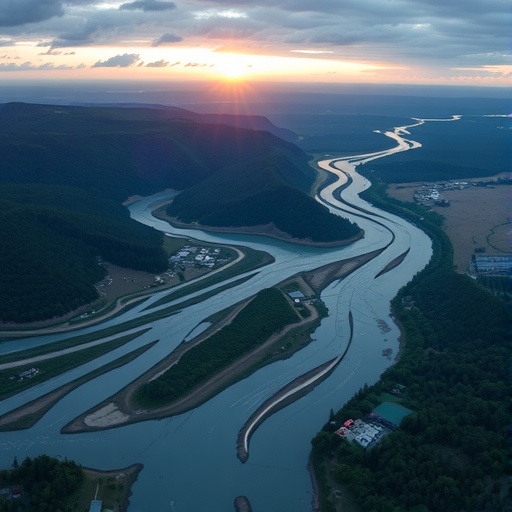
In an era where the intricacies of the Earth’s water cycle are more crucial than ever, a groundbreaking study spanning nearly four decades of satellite data offers an unprecedented lens into the hidden dynamics of river-floodplain systems. This compelling research unveils a global net increase in surface water connectivity—the ebb and flow of water exchange that binds river channels to their adjacent floodplains. Covering an impressive 73% of rivers worldwide, or roughly 1.6 million kilometers of river length, the study presents a transformative leap in understanding how water pathways are evolving across the planet’s diverse ecosystems.
Surface water connectivity, an essential driver of hydrological processes, is intimately tied to everything from sediment transport to nutrient cycling, impacting ecosystem health and geomorphological transformations. Despite its foundational importance, comprehensive global assessments have long remained elusive, hindered by a lack of consistent, wide-ranging observations occurring over extended periods. Leveraging state-of-the-art satellite monitoring from 1984 through 2019, this research bridges the knowledge gap by meticulously tracking the shifting patterns of connectivity and revealing nuanced spatial and temporal trends that hold profound implications for environmental management and climate resilience.
Remarkably, the data reveals a net global increase in surface water connectivity by approximately 3% over the studied timeframe. This trend signifies more than just a numerical shift; it represents a dynamic reconfiguration of hydrological networks that could redefine sediment fluxes, nutrient dispersal, and ultimately, the health of aquatic ecosystems on a planetary scale. The continuous expansion of connectivity zones spans a substantive 17% of river lengths evaluated, outpacing the 11% of stretches where connectivity has declined. This imbalance underscores a world where certain regions are experiencing hydrological rejuvenation, while others face disconnection and fragmentation.
Geographically, these connectivity gains are most pronounced in eastern Asia and the high-latitude expanses of the Northern Hemisphere. Regions like Siberia and parts of China showcase increases potentially linked to both climatic shifts and anthropogenic influences. Conversely, arid and semi-arid regions—often perched precariously on the edge of water scarcity—show widespread declines in surface water connectivity. This dichotomy between water-abundant and water-stressed regions accentuates the role of climatic factors, suggesting that precipitation patterns, evapotranspiration rates, and temperature regimes collectively orchestrate the changing symphony of river-floodplain interactions.
Delving deeper into causality, climatic drivers emerge as the predominant forces shaping connectivity patterns. Variations in precipitation directly influence river discharge volumes, which in turn dictate the extent of floodplain inundation and lateral water exchange. Meanwhile, evapotranspiration—a process by which water evaporates from soil and water surfaces and transpires from plants—modulates the availability and retention of surface water. These factors combine in intricate feedback loops that either enhance or inhibit the natural connectivity networks essential for ecosystem vitality.
Human activities, notably the proliferation of dam construction and river regulation infrastructure, act as critical modulators overlaying these climatic influences. Dams, by altering the natural flow regimes and sediment transport downstream, impose physical barriers that can reduce surface water connectivity. However, in some instances, reservoirs and managed flow releases create new or modified connectivity pathways, further complicating the hydrological landscape. The interplay between nature’s forces and human engineering thus shapes a mosaic of surface water connectivity outcomes, inviting urgent scrutiny into sustainable riverbasin management practices.
One of the most compelling revelations from this research is the strong positive coupling identified between surface water connectivity and riverine sediment transport. Sediment, the lifeblood of riverine geomorphology, nourishes floodplains, supports agricultural productivity, and constructs deltaic landscapes. Enhanced connectivity boosts the flux of sediments from rivers to floodplains and beyond, thereby influencing biogeochemical cycles fundamental to ecosystem function and carbon sequestration. Conversely, declining connectivity could accelerate sediment starvation, potentially triggering habitat degradation and compromising freshwater biodiversity.
The implications of these findings ripple beyond the immediate hydrological domain. By elucidating the spatial and temporal dynamics of river-floodplain connectivity, the study offers critical insights into how biogeochemical fluxes—which underpin nutrient availability, carbon cycling, and aquatic food webs—may be shifting on a global scale. These processes, intricately linked to water flows and sediment pathways, form the backbone of ecosystem services upon which human societies depend.
Moreover, the study’s extensive temporal coverage, encompassing crucial decades of climate change acceleration and environmental alteration, enables a nuanced understanding of long-term trends rather than snapshots. This temporal depth allows researchers and policymakers to discern persistent shifts from transient fluctuations, equipping them with a robust evidential foundation for crafting adaptive water management and conservation strategies.
Notably, the study’s methodology, harnessing four decades of high-resolution satellite data, exemplifies the power of remote sensing in unraveling complex Earth system interactions. Through sophisticated algorithms and spatial analyses, researchers were able to detect even subtle changes in water connectivity patterns, overcoming traditional limitations posed by ground-based observations in remote or inaccessible regions. This technological feat sets a new standard for global hydrological research, integrating big data analytics with environmental science.
The revelation that connectivity gains surpass losses by a ratio of approximately 1.5:1 across global river networks prompts critical questions about the future trajectory of Earth’s water systems. Are these gains sustainable, or do they portend cascading effects such as increased flood risk, altered nutrient dynamics, or shifts in regional biodiversity patterns? Understanding these potential feedbacks is vital as humanity grapples with water security challenges amplified by climate variability and population growth.
This investigation also highlights the vulnerability of arid and semi-arid regions, where connectivity loss may exacerbate drought impacts, reduce groundwater recharge, and intensify ecosystem stress. Given that many vulnerable human populations inhabit these zones, the research underscores an urgent need for targeted interventions that enhance water connectivity and foster resilience against climatic extremes.
In contrast, northern latitude regions experiencing increased connectivity may face a different set of challenges and opportunities, such as changes in permafrost stability, wetland expansion, and novel habitats. These changes could reshape local and global biogeochemical cycles, influencing carbon release and atmospheric feedback mechanisms. Understanding these geographical disparities invites tailored approaches to environmental stewardship that respect regional contexts.
Beyond natural processes and human-induced changes, the study suggests opportunities for active river-floodplain restoration initiatives globally. Enhancing surface water connectivity through targeted ecosystem rehabilitation—such as dam removals or floodplain reconnection—could amplify sediment and nutrient flows, boost biodiversity, and improve flood control. As the world’s river systems face mounting pressures, these insights provide an invaluable roadmap toward harmonizing human needs with ecological integrity.
The comprehensive global record generated by this research also serves as a critical baseline for ongoing monitoring efforts, enabling scientists and managers to detect emerging trends and respond proactively. The integration of surface water connectivity metrics into climate models and water resource planning promises to enhance predictive capabilities, ensuring better preparedness for future hydrological shifts.
Ultimately, this landmark study signifies a pivotal advancement in hydrological science, revealing not only how river-floodplain connectivity is evolving but also illuminating its profound consequences across ecological, geomorphological, and climatic dimensions. As we stand at the crossroads of escalating environmental change, these findings offer powerful insights to guide sustainable management of Earth’s freshwater lifelines, safeguarding their vitality for generations to come.
Subject of Research: Global changes in surface water connectivity in river–floodplain systems and their climatic and anthropogenic drivers.
Article Title: Global net increase in surface water connectivity in river–floodplain systems.
Article References:
Luo, Q., Feng, L., Park, E. et al. Global net increase in surface water connectivity in river–floodplain systems. Nat. Geosci. (2026). https://doi.org/10.1038/s41561-026-01953-y
Image Credits: AI Generated


